
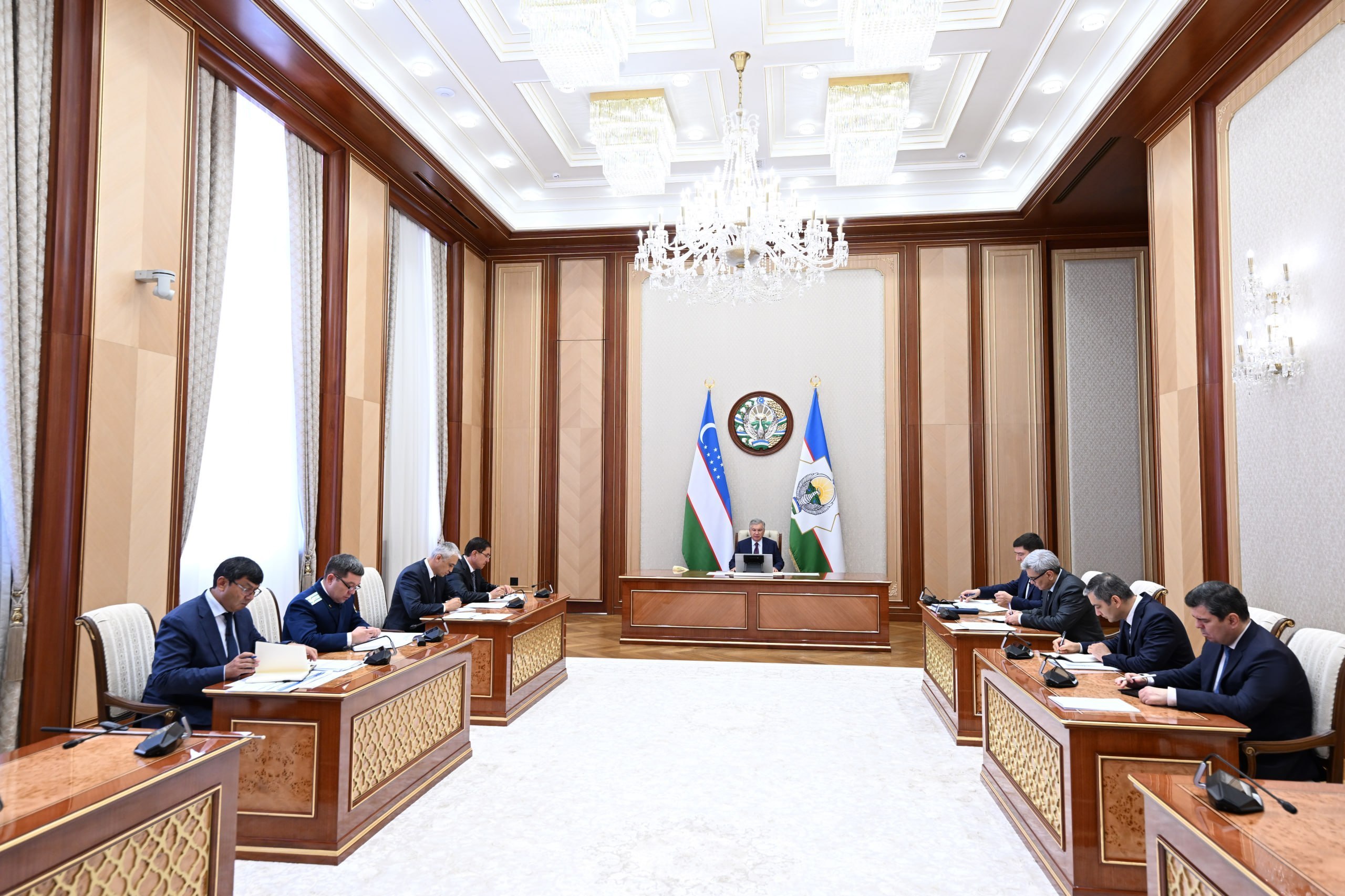
In recent years, investment in the sector has increased tenfold, reaching $2.7 billion. As a result, the share of the population with access to a centralized drinking water supply has risen from 63 percent in 2017 to 83 percent.
During this period, 7.7 million people were provided with centralized drinking water for the first time, water supply services were improved for 11 million residents, and another 1.1 million people were connected to the sewerage system. A total of 39,000 kilometers of drinking water networks and 3,200 kilometers of sewerage networks were built and reconstructed, while 3,400 drinking water facilities and 295 sewerage facilities and pumping stations were built or modernized.
Over the coming years, the goal is to increase drinking water coverage to 90 percent and sewerage coverage in urban areas to 80 percent. To achieve this, an additional $1.3 billion in investment is planned.
Alongside the results achieved, the Head of State pointed out that the system for developing and implementing projects, as well as for the timely identification and resolution of existing problems, has not yet reached the required level.
In particular, 107 billion UZS have been allocated to address problems in the sewerage system of the city of Andijan. Work has also begun on installing modern filtration systems to prevent the spread of unpleasant odors in Tashkent’s Sergeli district.
As part of the project to supply the population of Surkhandarya region with drinking water from the Tupalang Reservoir, a water pipeline has been laid to the city of Termez. By the end of the year, water is also expected to be supplied to Sherabad, Muzrabad, Angor, and Jarkurgan districts.
The presentation identified specific tasks to address the most pressing challenges on the ground. In particular, emphasis was placed on providing 513 mahallas with centralized drinking water supply and improving water supply services in another 3,000 mahallas.
Special attention was paid to completing the work on providing direct drinking water connections to households. To this end, it is planned to replace 232,000 standpipes with water supply networks connected directly to residential homes.
By the end of the year, projects totaling $600 million will be implemented. As part of these projects, 1,600 kilometers of drinking water networks and 387 kilometers of sewerage networks, as well as 80 drinking water facilities and 29 sewerage facilities, will be constructed.
As a result, 310,000 residents of 107 mahallas will receive centralized drinking water for the first time, while water supply services will be improved for 2.5 million people living in 453 mahallas.
The task was set to accelerate the implementation of the project to supply drinking water from the Gissarak Reservoir in Kashkadarya region. The $217 million project will improve drinking water supply for 1.1 million residents of Kamashi, Guzar, and Karshi districts, as well as the city of Karshi.
Responsible officials were instructed to complete the expert review of the project’s feasibility study as soon as possible and identify its source of financing.
In addition, tasks were defined for signing loan and grant agreements for projects to develop drinking water supply and sewerage systems in Fergana, Surkhandarya, and Jizzakh regions, as well as for submitting the conclusion on the project to construct a new sewerage facility in the capital.
The need to complete negotiations with foreign partners on six projects totaling $317 million by September 1 and to identify their financing sources was noted.
The presentation also addressed the financial sustainability of water supply enterprises. It was pointed out that, because current tariffs do not fully cover the actual cost of services and significant disparities exist across regions, the sector’s investment attractiveness is declining.
In this regard, it was proposed to separate the functions of drinking water production and consumer supply, as well as to establish a trunk water supply enterprise. It will supply drinking water to regional enterprises at a unified wholesale tariff.
Tasks were also set to establish an Interdepartmental Tariff Commission to set drinking water and sanitation tariffs based on transparent and economically justified criteria, as well as to introduce a unified tariff for budgetary organizations from April 1, 2027.
According to forecasts, by 2030, demographic and economic growth will increase the country’s drinking water consumption by an additional 230 million cubic meters, bringing the total to 941 million cubic meters. This requires ensuring accurate accounting of water resources and reducing water losses.
In this regard, the President set tasks to transition consumer billing to an online format fully and to equip all consumers in cities and regional centers with modern water meters that support remote data transmission.
A task was also set to reduce water losses from 35 percent to 25 percent by creating a digital map of water supply facilities and networks and by the widespread introduction of SCADA, GIS, telemetry, and a unified billing system.
The presentation also featured projects using artificial intelligence to analyze the operation of pumping equipment, detect accidents and water leaks in advance, forecast consumption volumes, and promptly process citizens’ appeals.
To improve the personnel training system, the proposal to establish a dedicated faculty at the Tashkent National Research University of Irrigation and Agricultural Mechanization was supported. In addition, the President set the task of introducing dual education in the fields of drinking water supply and sanitation at technical colleges in the regions.
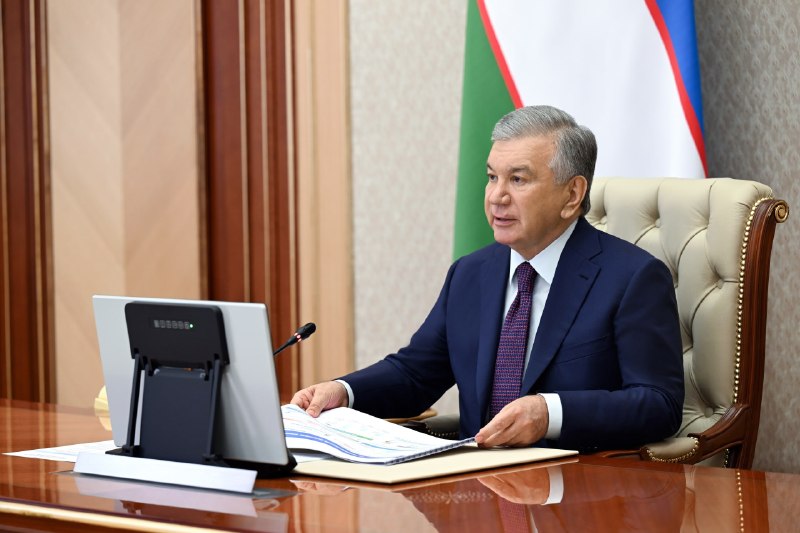
Following the presentation, the President instructed the responsible officials to ensure the timely, high-quality implementation of projects, expand service coverage, strengthen the financial sustainability of enterprises, accelerate digitalization in the sector, and improve convenience for the population.