

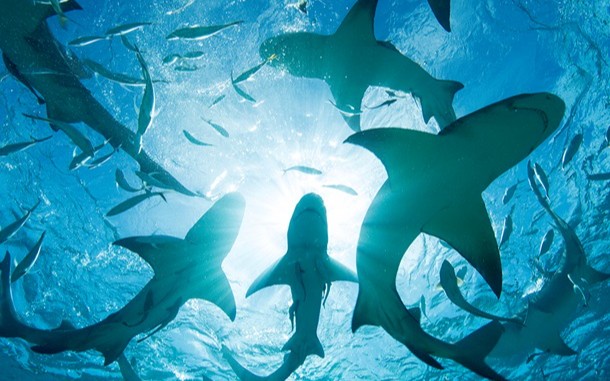
An international team of researchers has found traces of cocaine, caffeine and painkillers in the blood of sharks in the Bahamas, Science Alert reports. We are not talking about behavioral changes in animals, but about the consequence of increasing ocean pollution, which is increasingly affecting marine ecosystems.
The study was conducted by scientists from the Bahamas, Brazil and Chile, who analyzed blood samples from 85 sharks caught near Eleuthera Island. Traces of various substances were found in 28 of them. Caffeine was most often detected, but in two cases cocaine was also found in the blood.
According to biologist Natasha Vosnik from the Federal University of Parana, sharks can accidentally come into contact with drugs by exploring unfamiliar objects in the water. In particular, it is possible that predators bite packages of cocaine that end up in the sea.
In addition to drugs, drugs such as acetaminophen and diclofenac were also found in the samples. This confirms that the ocean is increasingly accumulating pharmaceutical and chemical pollutants that enter there along with wastewater.
The researchers note that the sharks were caught near popular tourist and diving locations. One of the possible causes of pollution is untreated sewage from cruise ships and a general increase in tourist activity. Similar problems have already been reported in other regions - in particular, traces of cocaine have previously been found in sharks off the coast of Brazil.
For the first time in the history of research, caffeine was detected in sharks, and the presence of cocaine was confirmed for the first time in sharks in the Bahamas.
So far, scientists cannot say exactly how these substances affect the health of marine predators. Nevertheless, preliminary data indicate an increased level of stress and an increase in the energy consumption of the body, which is trying to eliminate toxins. korrespondent.net.
The authors of the study call for increased control over wastewater treatment and a deeper study of the impact of pharmaceutical pollution on marine life.