
The
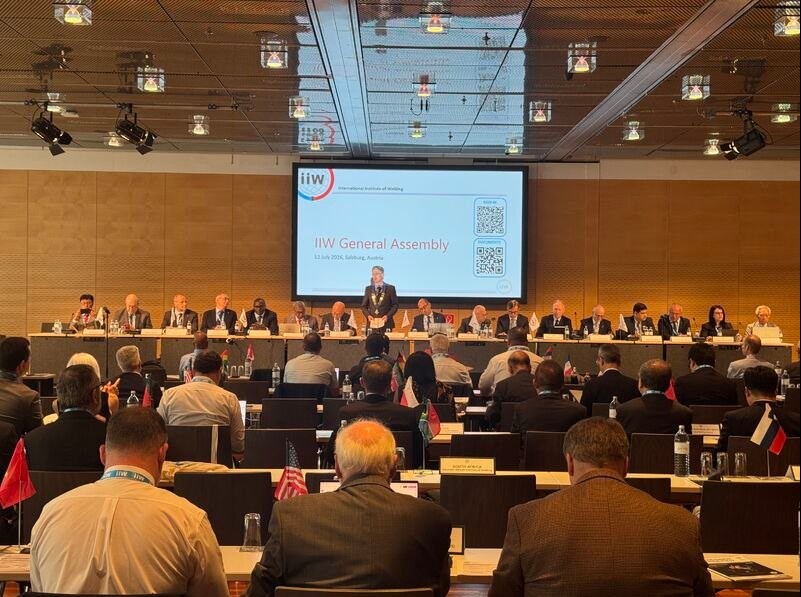
official welcome of Uzbekistan to the IIW community took place within the
framework of the 79th General Assembly of the Institute in 2026.
At first
glance, membership in a specialized international organization may seem like a
highly professional issue. However, this has a much broader meaning for Uzbekistan.
Welding technologies are a critically important part of almost all branches of
modern industry — from mechanical engineering and energy to construction, oil
and gas industry, railway transport and production of complex equipment.
Therefore, improving the quality of welding operations is directly related to
the reliability and safety of industrial products and infrastructure.
The main
advantage of IIW membership is access to an international professional and
technological ecosystem. The organization unites specialists, researchers,
representatives of industry and educational institutions from all over the
world and promotes knowledge exchange, the development of advanced technologies
for welding and joining materials, international standardization, as well as
the improvement of education, training, qualification and certification
systems.
For
Uzbekistan, this means an opportunity to more actively implement international
approaches to personnel training and the formation of professional
competencies. IIW has international specialist qualification systems, including
International Welding Engineer (IWE), International Welding Technologist (IWT),
International Welding Specialist (IWS), International Welding Practitioner
(IWP) and International Welding Inspector (IWI). Such mechanisms make it
possible to form a level of professional competence comparable to international
requirements and increase the competitiveness of national personnel.
This is of
particular importance for industrial exports. The higher the compliance of
products with international requirements for the quality of welded joints,
production processes and personnel qualifications, the easier it is for
enterprises to integrate into international production chains and participate
in large infrastructure and industrial projects. In this context, membership in
the IIW can become one of the tools to increase confidence in the products and
competencies of Uzbek manufacturers.
Another
important area is the development of a national system of training and
certification of specialists. The IIW provides for internationally harmonized
approaches to staff training, qualification and certification, as well as
mechanisms for authorizing national organizations to implement relevant
programs. At the same time, obtaining the status of an IIW member is an
important condition for the further development of the national infrastructure
of international qualifications and certification in the country. The Almalyk
State Technical Institute has been officially approved as the national
representative in this organization.
Technological
cooperation is equally important. Participation in the IIW working structures
allows national specialists to interact with the international expert
community, participate in technical discussions, share best practices and gain
access to up-to-date knowledge in the field of welding and joining materials.
This is especially important in the context of the development of the
automated, robotic and digital industries.
Thus,
Uzbekistan's entry into the International Welding Institute should be
considered not just as joining another international organization. It is a tool
for technological modernization of industry, professional development,
implementation of international quality standards and strengthening the
country's export potential. In the long term, membership in the IIW can
contribute to the formation of a modern national system of welding
technologies, education, qualifications and certification in Uzbekistan,
integrated into the international professional space.