
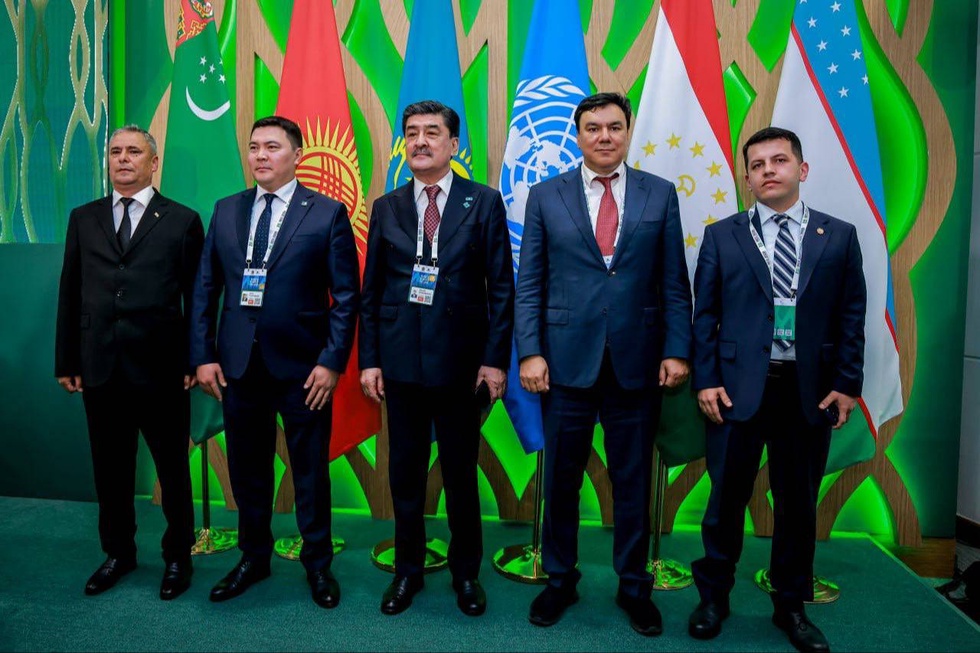
The event
brought together the environmental authorities of the countries of the region,
international organizations and partners, becoming a platform for developing
coordinated approaches to the protection of the unique natural heritage of
Central Asia.
In his
speech, Aziz Abdukhakimov, Adviser to the President of the Republic of
Uzbekistan, Chairman of the National Committee on Ecology and Climate Change,
noted that Shavkat Mirziyoyev had identified development priorities in the
field of biodiversity conservation. In particular, it was proposed to develop
the Red Book of Central Asia as a practical platform for the joint work of the
countries of the region.
It was
noted that Uzbekistan is implementing the national project
"Bio-heritage", and measures are being taken jointly with Kazakhstan
to restore the saiga population in cross-border territories. In addition, an
updated National Strategy and Action Plan for the Conservation of Biodiversity
until 2040 are being developed as part of the implementation of the
Kunming–Montreal Global Framework.
The session
highlighted the importance of regional and international cooperation with the
participation of the United Nations and environmental institutions. Inger
Andersen, Executive Director of the United Nations Environment Programme, noted
the need to consolidate efforts to address urgent environmental challenges.
Special
attention is paid to the transboundary nature of environmental protection
activities. It is emphasized that the migration routes of such species as
saiga, snow leopard, jeyran and kulan cover the territories of several
countries, which requires coordinated actions. In the context of climate
change, land degradation, and increased anthropogenic pressure, joint
science-based solutions play a key role.
The session
announced the launch of the Harmony with Nature for Regional Sustainability
initiative, based on national strategies and international commitments,
including the Convention on Biological Diversity.
The
practical outcome of the meeting was the signing of a Regional Declaration on
Cooperation in the Field of Biodiversity Conservation and Sustainable
Management of Natural Resources. The development of a regional program and
action plan has also begun, providing for financing mechanisms and the creation
of a coordinating working group.
Uzbekistan's
active role in promoting the regional environmental agenda was noted. The
country promotes the principle of "Nature knows no borders", chairs
the Central Asian Mammal Initiative (CAMI) until 2032 and initiates
international environmental processes, including the holding of COP14 and COP20
conferences in Samarkand with the adoption of strategic documents.
Further
steps include the preparation of a joint regional program within the framework
of the new GEF-9 funding cycle aimed at preserving large predators and
increasing the sustainability of mountain ecosystems.