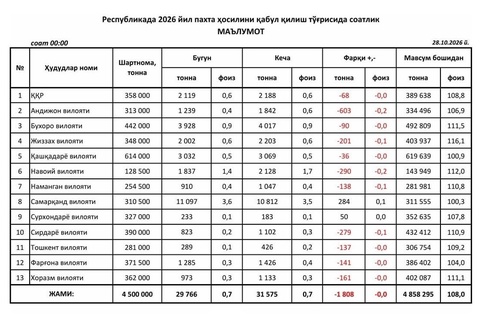


In recent years, average cotton yields across the nation have surged from 21 centners per hectare to 56 centners per hectare. During the current season, an average yield of 70 centners per hectare was recorded across nearly 400,000 hectares, while high-yield plots covering roughly 70,000 hectares achieved yields reaching 100–110 centners per hectare.
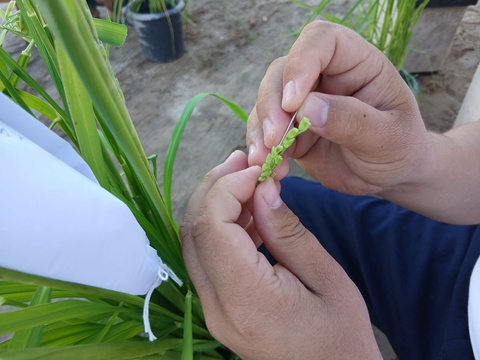
According to the report, this record yield was driven by the integration of science and production, alongside the direct field application of scientific research and recommendations developed by agricultural experts. The adoption of high-yielding, climate-resilient local cotton varieties and modern agrotechnologies was also significantly expanded.
Refined planting, crop management, and advanced agrotechnical methods were widely introduced. Due to water-saving irrigation technologies, water consumption in cotton cultivation has been halved compared to the 1990s.
During the current season, 85 percent of the harvested cotton was picked mechanically within 30–35 days using more than 3,000 modern cotton-harvesting machines. In the Jizzakh and Sirdaryo regions, the level of mechanized harvesting reached 100 percent.
Farmer enterprises are projected to generate 13–14 trillion UZS in net profit from cotton cultivation this year.
Looking ahead to next year, agriculture authorities aim to maintain average yields at 65–70 centners per hectare by leveraging high-yield seed lines, agricultural drones, energy- and water-saving systems, and artificial intelligence technologies.