

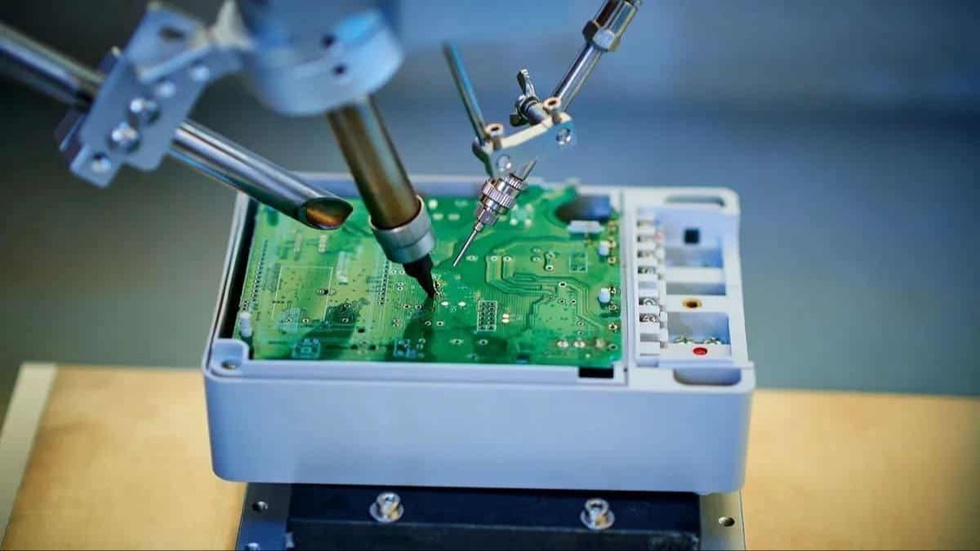
They can become the basis of chips for artificial intelligence technologies. FeFET devices (ferroelectric field effect transistors) simulate the work of the human brain.
Semiconductor chips have opened up new possibilities for humanity. Thanks to them, we can communicate with people on other continents and create the fastest supercomputers. But as quantum technology advances, the disadvantages of silicon chips are becoming more and more apparent. So, a sharp leap in the development of AI required processing a large amount of data. Computing based on previous technologies proved to be insufficiently efficient.
Conventional silicon-based semiconductor chips separate the functions of data storage and computing. During complex operations, data moves between these areas, which takes time and energy.
The new approach of scientists is to combine data storage and processing centers. This saves space and energy consumption, transmits mir24.tv.
The scientists also developed a new transistor structure to reduce the operating voltage. The size of the gate electrode was reduced to just one nanometer (for comparison, the width of the DNA molecule is two nanometers). Due to this, a voltage of 0.6 V is required for operation (for transistors of the previous generation, at least 1.5 V).
The response time of the device does not exceed 1.6 nanoseconds. Peking University has patented the process and design of the chips, according to the South China Morning Post.