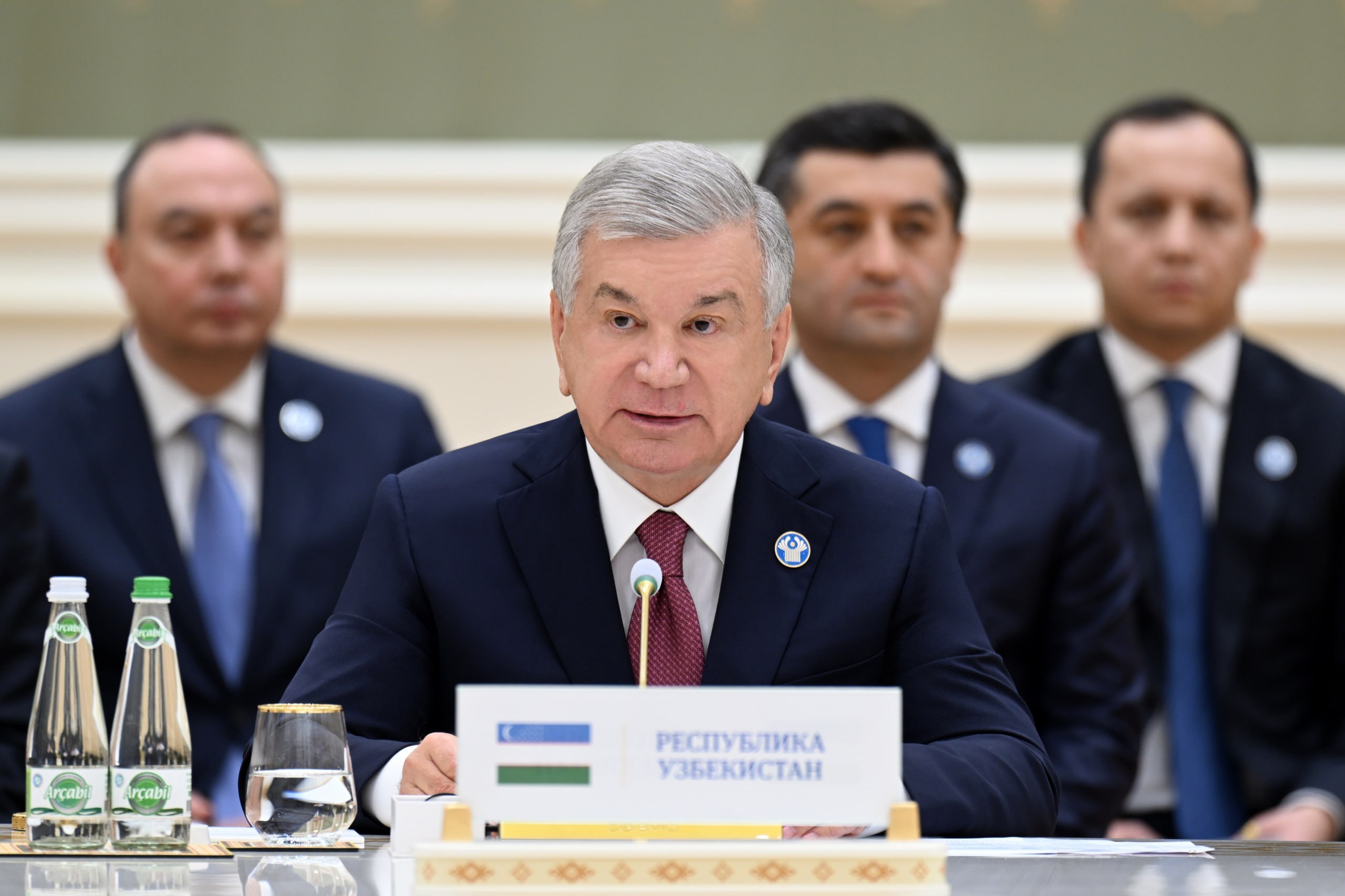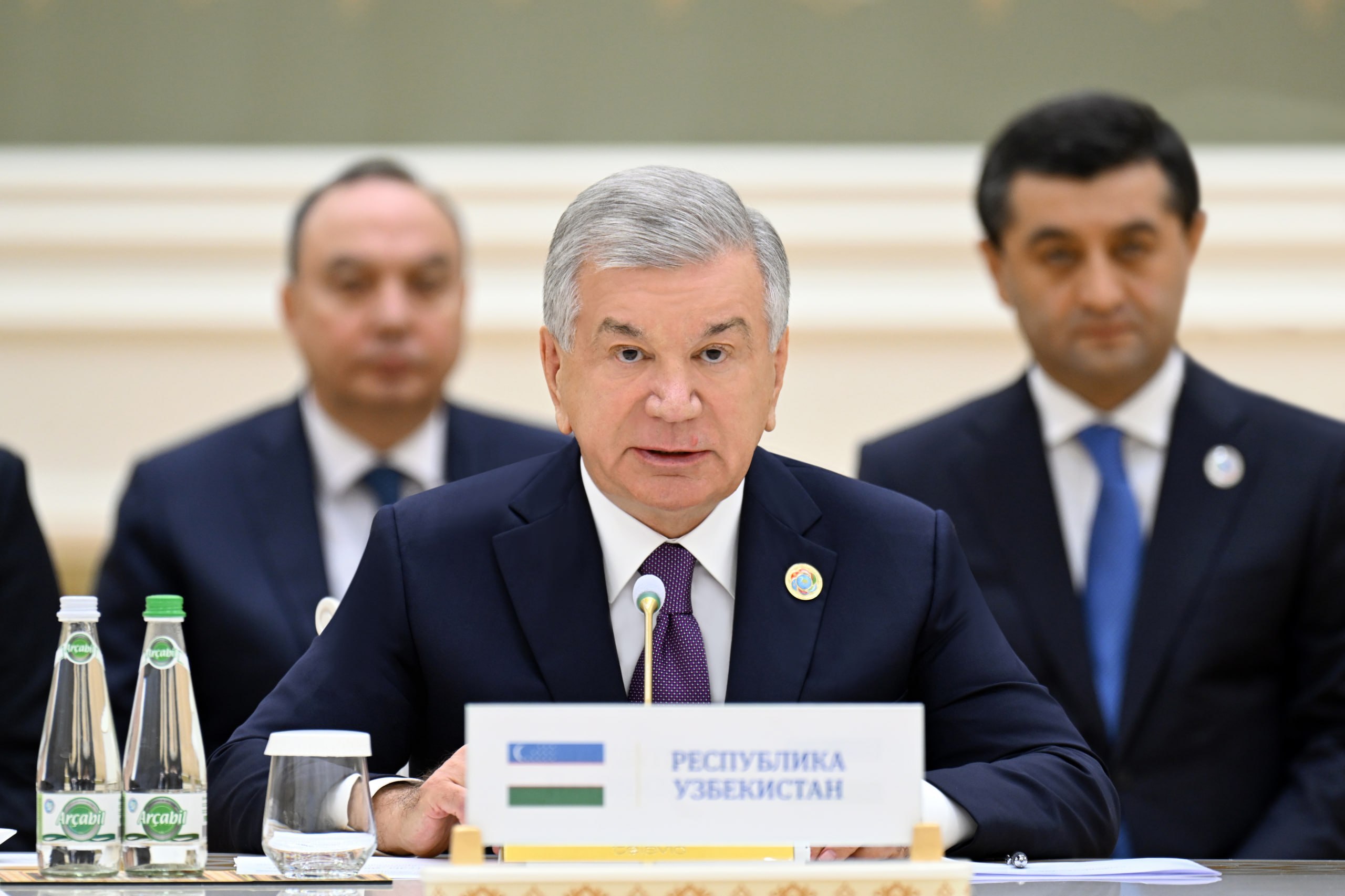

The session was attended by the members of the Security Council under the President of the Republic of Uzbekistan, Cabinet of Ministers, heads of ministries and agencies comprising the Armed Forces, military districts commanders, heads of military and administrative sectors, representatives of other agencies and public organizations.
Over the past years, significant work has been undertaken to strengthen the country’s defense capacity.
The National Army is equipped with modern weapons and equipment. Soldiers’ combat and psychological preparedness is continually improved, and the potential of the defense and security forces is strengthened.
New tactical techniques have been introduced across the Ministry of Defense’s forces, the number and intensity of exercises have increased by 1.5 times, and unmanned aerial vehicle units and specialist training centers have been established.
As a result of the army’s digitization efforts, the effectiveness of information security, management, and services has significantly improved.
On the initiative of the Head of State, the military education system has been radically overhauled, and a University of Military Security and Defense has been established, staffed by qualified professors, teachers, and instructors.
Advanced digital learning technologies, including artificial intelligence-based systems and modern assessment systems, have been introduced into the educational process, elevating the quality of military training.
The meeting discussed priority tasks to ensure national security and further strengthen the country’s defense capabilities.
It was noted that regional conflicts are expanding, the arms race is intensifying, and respect for universal human values, norms of international law, and international diplomacy is weakening.
“One thing must be understood: the nature of modern warfare has changed fundamentally. Anyone who thinks they can win by relying solely on the number of tanks, aircraft, or soldiers is deeply mistaken. Today’s military operations are based on artificial intelligence, digital control, long-range precision strike capabilities, cyber and robot technologies, as well as political and economic pressure”, said the Head of State.
In this regard, it was emphasized that peace and tranquility are becoming the most valuable assets. To preserve these assets, every sphere and industry must switch to a “proactive mode of operation”, that is, to respond in advance to possible risks and threats.
The Supreme Commander-in-Chief outlined the most essential tasks for the future.
Priority attention will be given to further improving the military training system.
“We must not forget that the modernization of the military education and training system is a prerequisite for the formation of a new image of the army”, noted the President.
It was noted that compulsory military service should be organized not only as physical and military training but also as a platform to prepare young people for the labor market and independent professions, so they can secure a firm place in society.
In particular, a new system will be established in the army, enabling young people to master at least one profession upon completion of their service. Based on the main areas of focus and specialties of military units, 3-6-month professional training programs for military personnel will be developed. Upon completion of the program, military personnel will take a qualification exam, after which they will be issued a professional certificate.
Each year, 5,000 conscripts will be selected to undergo training under the “One Million Coders” and “Five Million Leaders in Artificial Intelligence” programs.
During their term of service, military personnel may take entrance exams for admission to higher education institutions directly at their military units. Military personnel who successfully pass the tests and are enrolled as students will begin their studies at the university after completing their term of service.
In addition, young people who have returned from the army and wish to study at higher education institutions will be compensated for the costs of obtaining certificates in foreign languages and specialized subjects. For admission on a contract basis, an interest-free educational loan will be provided.
In addition, separate benefits are provided to ensure employment for young people returning from military service. In particular, for young people seeking to pursue entrepreneurship, 6% of credit costs will be covered by the state. For young people who want to work in government agencies, there’ll be a 10% bonus on test scores awarded by the Agency for Management Efficiency. Young people planning to work in the private sector will have their professional training and certification costs covered.
“In short, compulsory military service should become a path to success for young people”, emphasized the President.
The most critical issue is training highly qualified specialists in engineering and technology, cybersecurity, and countering information attacks.
In this context, the need to strengthen the military-scientific base of engineering and technology and to organize local military technology parks was noted.
It was noted that, in addition to further strengthening the combat readiness of military personnel, the times themselves require regularly enriching their spiritual world.
Reading plays a vital role in this. This year, all military units and institutions will receive 1 million copies of fiction.
In the Armed Forces system, a reading competition for the Supreme Commander-in-Chief’s prize will be organized among students of military schools and lyceums, conscripts, cadets, sergeants, and officers. Conscripts who win or place in competitions at the district, command, ministry, and Supreme Commander-in-Chief levels will have their term of service reduced by one month.
Every year, competitions are held among military personnel in more than 10 traditional sports, including kurash, hand-to-hand combat, and weightlifting. Starting this year, three-stage competitions will also be organized in modern sports such as e-sports, unmanned aerial vehicles, and robotics.
“Constant analysis of the regional and global situation and strengthening the potential of the national army are today’s requirements. The Uzbek army must always be mobile, high-tech, adapted to new combat conditions, and ready to defend the people”, said the President.
Special attention should be paid to equipping the troops with robotic complexes and AI-based unmanned systems, light military equipment, modern weapons, and reconnaissance means, it was noted at the meeting.
Among the priority tasks, the President noted the further development of the defense industry and the introduction of digital technologies and AI at defense industry enterprises.
In the context of the digitalization of all spheres of state and public life, ensuring cybersecurity and strengthening the resilience of the national digital infrastructure is of particular importance. In this regard, responsible officials have been tasked with identifying measures to protect personal data and digital systems.
The meeting also addressed issues related to the development of military infrastructure and issued instructions to those responsible for the construction and repair of defense facilities.
“A fair assessment of the work of military personnel, social protection for their families, and military pensioners must always be at the center of our attention”, noted the President, announcing essential innovations in this area.
Starting April 1, the length-of-service bonus for Ministry of Defense officers will be doubled. The monthly pay for enlisted personnel and sergeants serving under contract will increase by 10 percent.
The salaries of civilian personnel in territorial administrations and departments for territorial defense will increase by 20 percent this year and by an additional 50 percent next year.
For military personnel who have served in the Armed Forces for more than 30 years, the monthly pay used to calculate pensions will increase from 75 to 100 percent.
In addition, housing construction for military personnel will be expanded.
The responsible persons have been instructed to develop and submit to parliament a draft law defining the procedure for providing pensions to military personnel.
Given the rapidly evolving nature and scale of modern risks and threats, as well as the significant challenges facing the defense and security sectors, the Head of State has called for revising the Defense Doctrine adopted eight years ago and the National Security Concept adopted in 1997.
It was noted that the new Defense Doctrine should ensure that the country maintains its non-participation in any military blocs, continues to rely on multilateral diplomacy, and develops a strategy grounded in high technology, military independence, and regional stability.
“In general, the new doctrine should serve as the basis for the technological modernization of the army and the introduction of advanced military solutions”, said the President.
Following the meeting, the Head of State sincerely congratulated soldiers and sergeants, officers and generals, veterans of the Armed Forces, their families, and close ones on the 34th anniversary of the formation of the Armed Forces of the Republic of Uzbekistan and Defenders of the Homeland Day.
“Your courage, loyalty to your oath, and dedication to defending the Motherland are a shining example for the entire nation. May peace, tranquility, and harmony always reign in our country, and may our Motherland be strong and stable!” said the President.
Reports and proposals from the Minister of Defense, military district commanders, and other officials were heard at the meeting.