
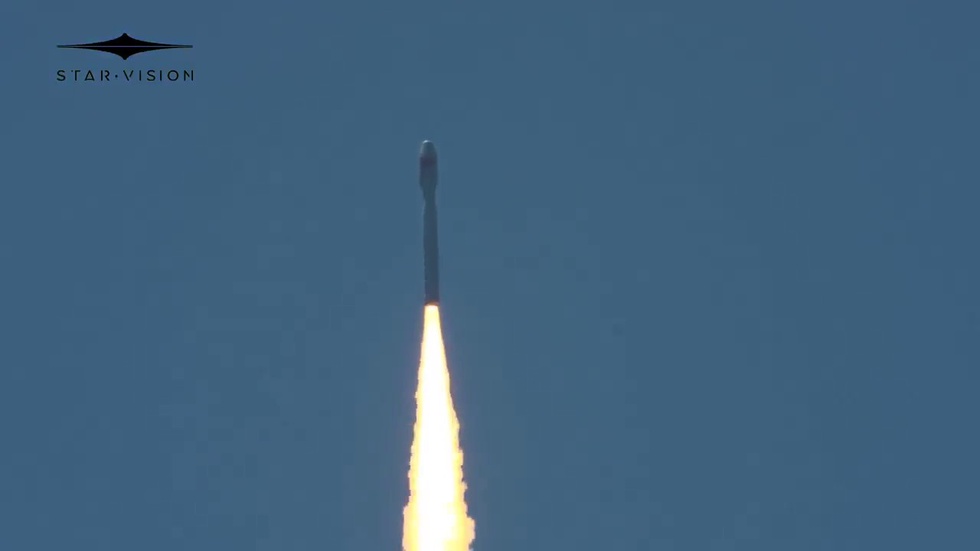
This
project stands as one of the largest international space initiatives in
Uzbekistan's history, marking a new milestone in the development of the national
space program. It also serves to further strengthen scientific and
technological cooperation between Uzbekistan and China.
As part of
the project, specialists from the “Uzbekcosmos” Agency developed a dedicated
artificial intelligence module for the satellite's onboard system. This
technology enables the direct processing of hyperspectral data in orbit,
thereby enhancing the efficiency of data transmission and analysis.
The
"Samarkand-2028" mission will significantly expand the application of
space technologies across agriculture, environmental protection, natural
resource monitoring, water resource management, emergency response monitoring,
urban planning, and other critical sectors.
The choice
of the name "Samarkand-2028" carries profound symbolic significance.
It alludes to the decision adopted at the 2025 International Astronautical
Congress (IAC) in Sydney, designating Samarkand as the host city for the 2028
congress.
This
landmark project plays a crucial role in broadening Uzbekistan's participation
within the global space community, advancing national engineering capacity, and
elevating international cooperation in artificial intelligence and space
technologies to a new level.