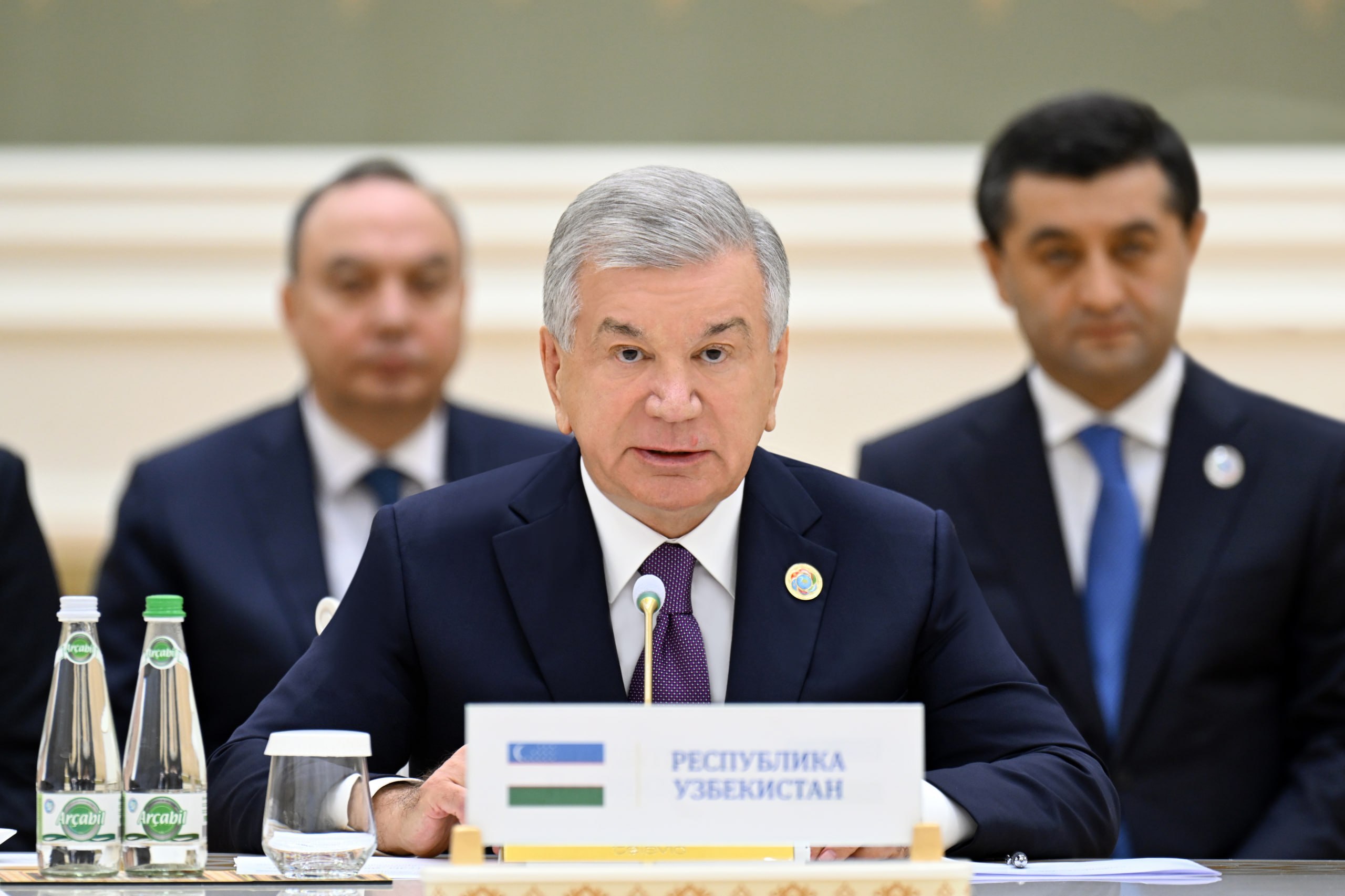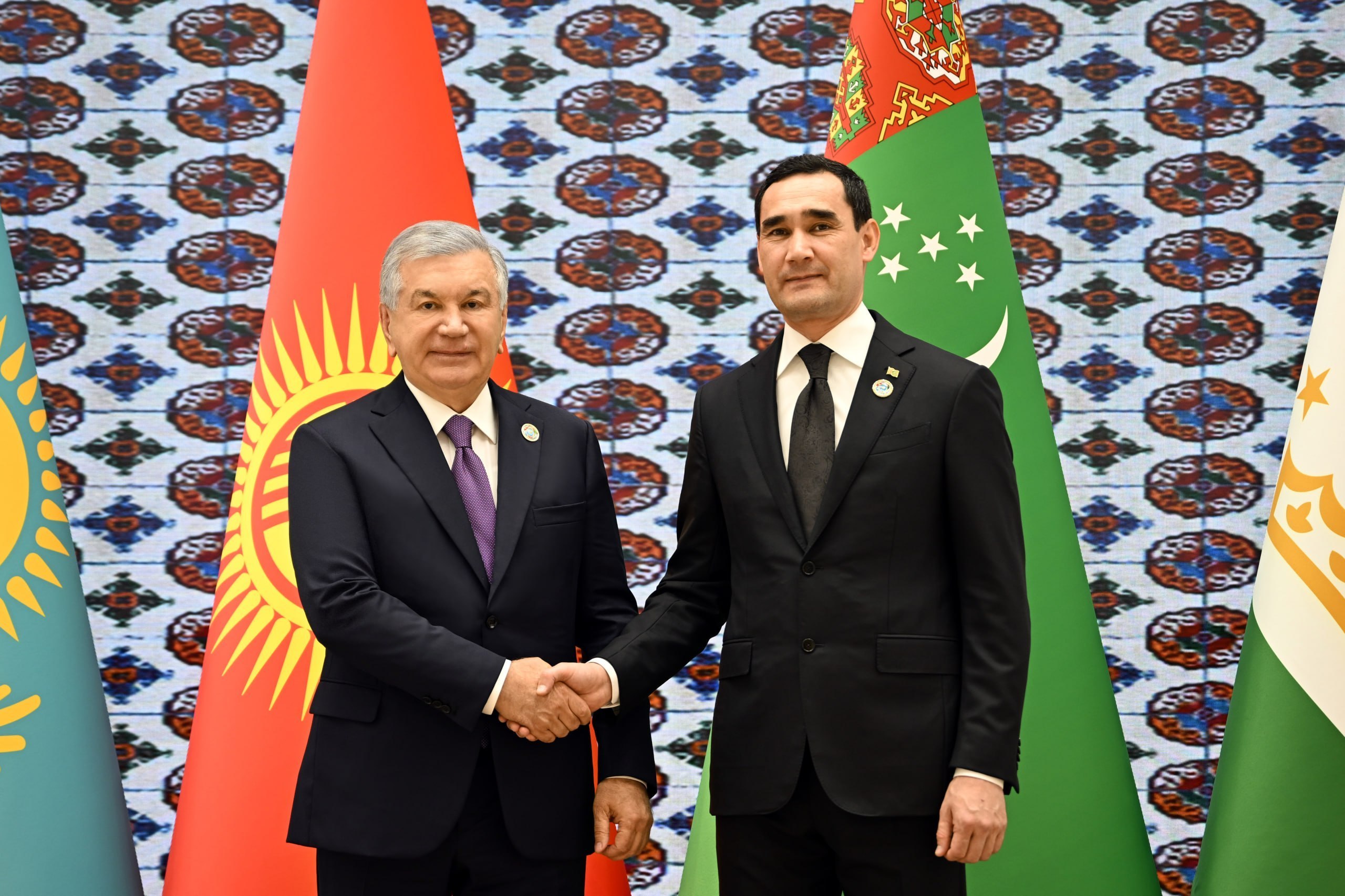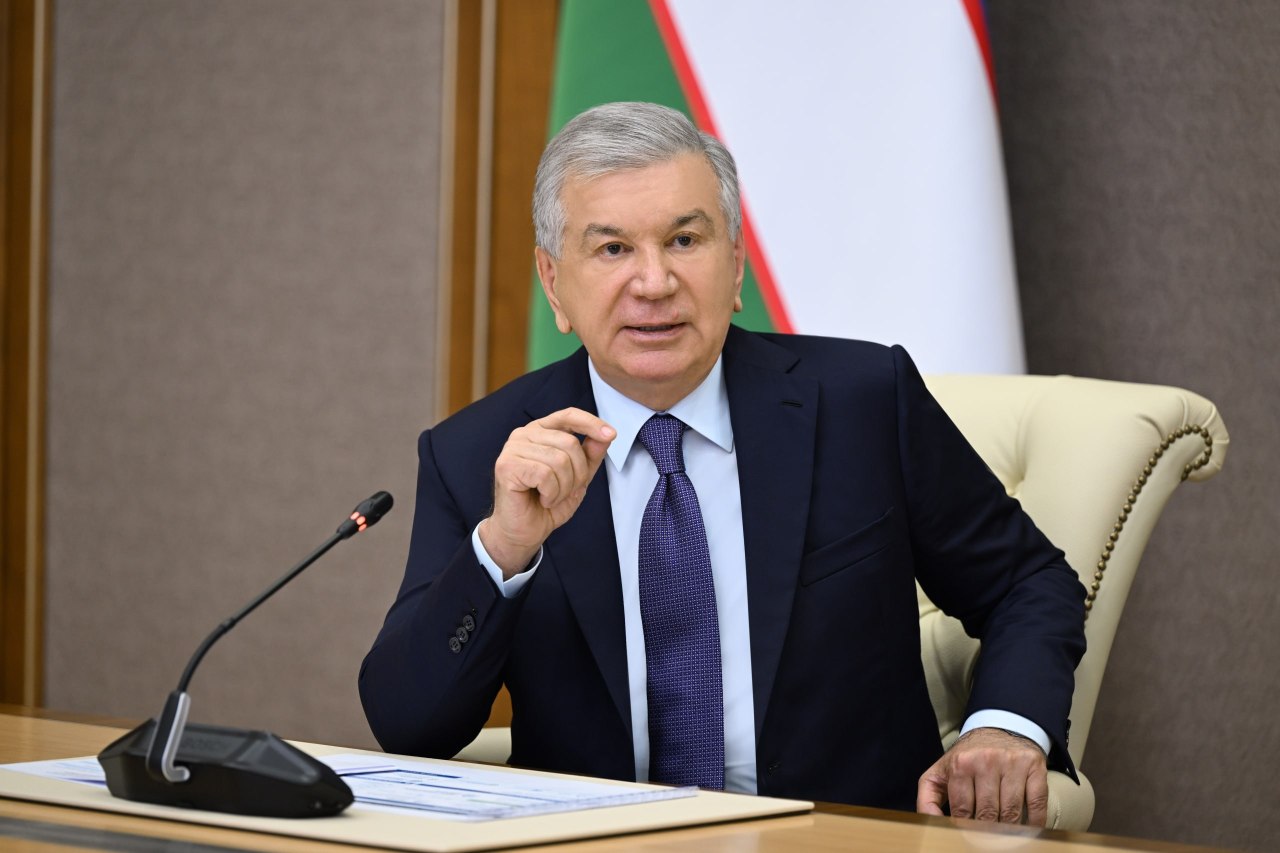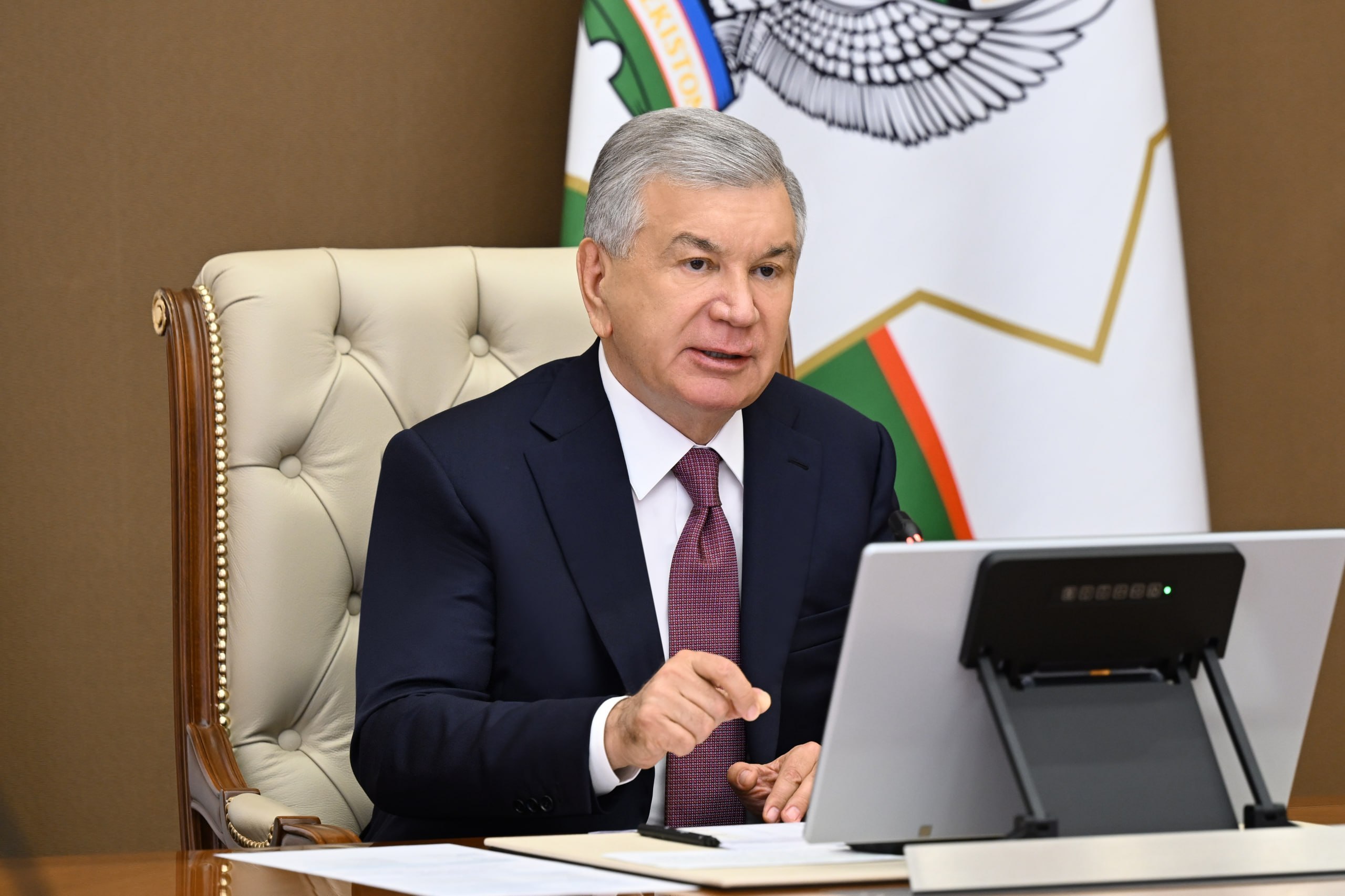

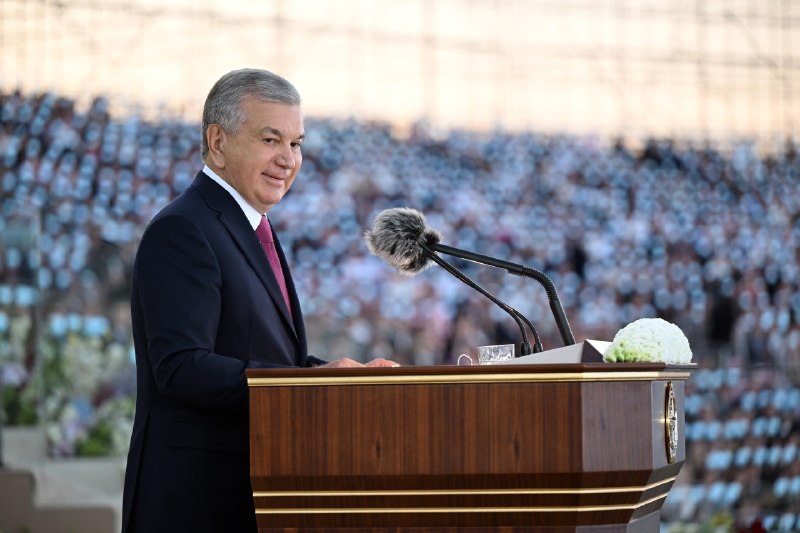
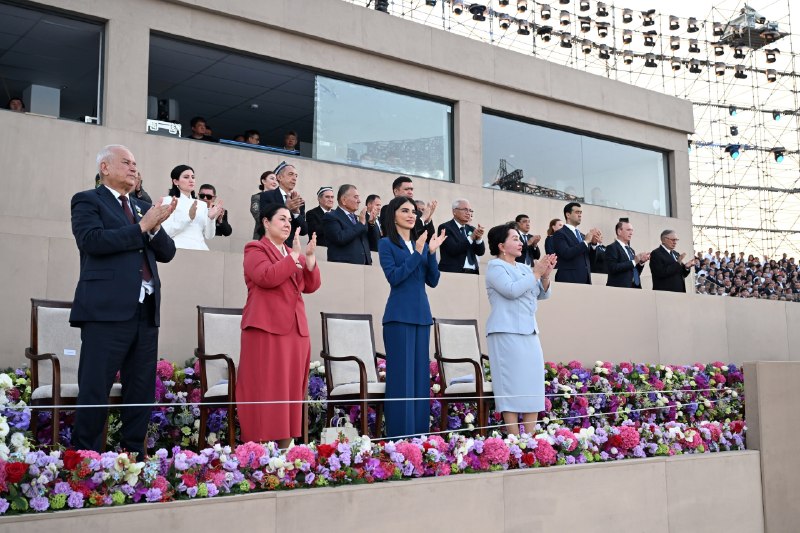
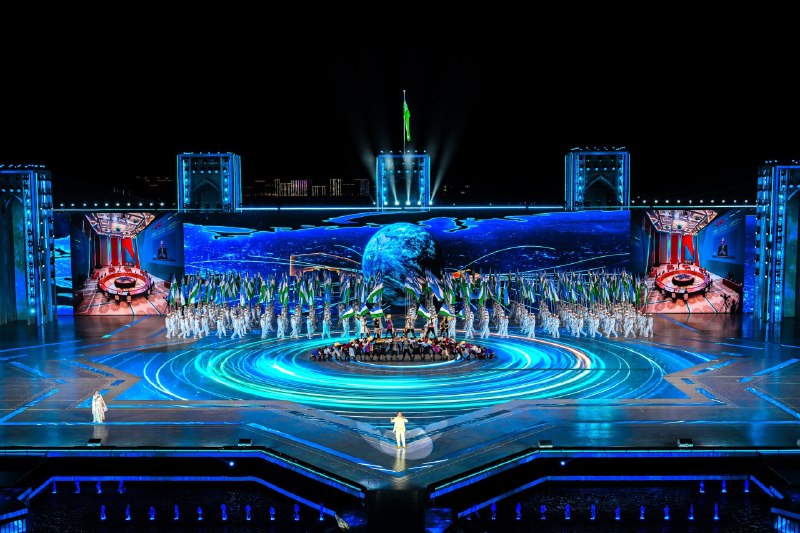
President Shavkat Mirziyoyev attended the event and warmly congratulated the people of Uzbekistan on the holiday.
The Head of State noted that holding the country’s greatest national celebration in New Tashkent lends a special atmosphere to the festivities. Magnificent buildings of New Uzbekistan University, National Pedagogical University of Uzbekistan named after Nizami Ganjavi, and the National Library of Uzbekistan have been commissioned in this area, which is destined to become a center of science, education, and culture.
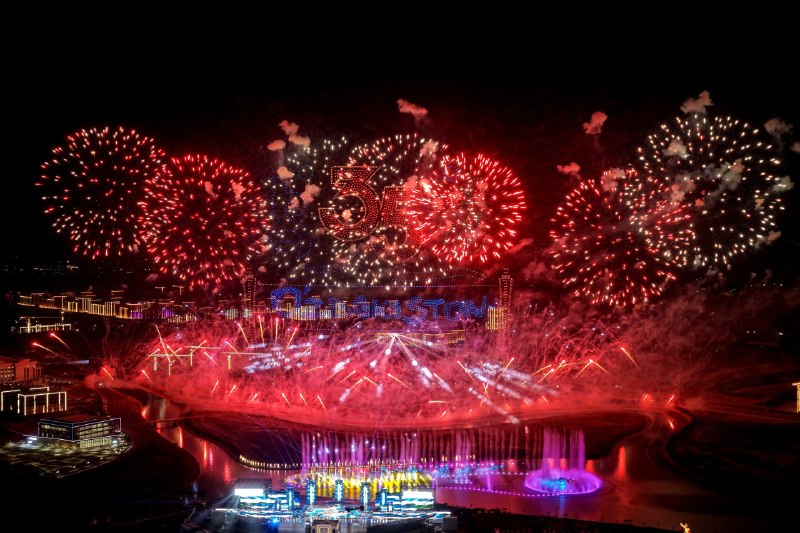
The festive atmosphere is further enhanced by the fountain here, which has been entered into the Guinness World Records as the musical fountain with the world’s highest water jet. The President expressed confidence that New Tashkent will further enhance the capital’s beauty and become a genuine center of development, embodying the strength and power of New Uzbekistan.
The President emphasized that the country gained state independence in 1991 thanks to the people’s firm will and determination. It was noted that the roots of Uzbekistan’s great independence run deep into history, to the traditions of national statehood and its ancient civilization spanning more than three thousand years.
During the First and Second Renaissances, great thinkers such as Muhammad Al-Khwarizmi, Ahmad Al-Fergani, Abu Rayhan Beruni, Abu Ali ibn Sina, Mirzo Ulugbek, and Mir Alisher Navoi enriched the treasury of human thought. The state founded by Sahibkiran Amir Temur became a symbol of justice and creation, while the dreams of the Jadid ancestors for freedom are being realized today in New Uzbekistan.
Independence restored the people’s honor and dignity, sacred religion, native language, and national values that had been fading from memory. At the ceremony, attendees paid tribute to the great ancestors and Jadids who gave their lives for the freedom enjoyed today. The labor and courage of all compatriots who have passed away and helped strengthen the country’s independence were also honored.
The cherished memory of Islam Abduganiyevich Karimov, the First President of the Republic of Uzbekistan, an outstanding statesman and political figure, was honored with profound respect.
The Head of State noted that the great significance of independence is most evident in human dignity and the freedom to live one’s life.
From the first days of the reforms, listening to the people’s voice and helping resolve the population’s problems were defined as priority objectives, while the idea “For Human Dignity!” was placed at the heart of state policy. First and foremost, long-standing problems that had burdened people for years, such as the “cotton yoke”, “forced and child labor”, “currency conversion restrictions”, and “residency registration restrictions”, were addressed.
Most importantly, fear and anxiety in people’s hearts have been replaced by confidence and peace of mind. Thanks to strong political will, Uzbekistan opened itself to the world, resolved border issues, and strengthened friendly relations and cooperation with neighboring countries.
As a result of fundamental reforms in monetary, tax, customs, and investment policies, the country rose 80 positions in the Economic Freedom Index. Previously, the country attracted $2-3 billion in foreign investment annually. Today, this figure stands at $40-50 billion. Along with investment, advanced technologies, modern knowledge, and new economic opportunities are entering the country.
Three years ago, the country set a target to increase gross domestic product to $160 billion by 2030. Despite disruptions in global logistics and instability around the world, this threshold will already be exceeded this year, and Uzbekistan will join the ranks of upper-middle-income countries.
It was emphasized that these results are being achieved through the people’s dedicated labor, intellectual potential, and nationwide unity.
In the new era, more than 650,000 families have become owners of modern homes, while the spirit and appearance of New Uzbekistan are reaching thousands of mahallas. Having openly acknowledged the existence of poverty in the country, a mahalla-level system was established to raise incomes, provide vocational training, improve health, educate children, and enhance the living conditions of families in need.
Thanks to consistent efforts, the poverty rate declined from 35 percent in 2017 to 4 percent. Behind these figures lie the joy and gratitude of 10 million people whose families have achieved greater prosperity and a better quality of life. Thus, the principle has become firmly established that the main criterion of social policy is not statistics but tangible changes in the lives of individuals and families.
As the President noted, to take a worthy place in the global community, the country needs a generation of independent-minded specialists with deep knowledge and mastery of future professions. Therefore, the educational process is being enriched with higher-quality content. Teachers’ prestige is growing, and their incomes are increasing.
Over the past 10 years, while the country’s population has grown by 8 million, preschool education coverage has risen to 78 percent, and an additional 1.5 million student places have been created in schools. The establishment of Presidential, creative, and specialized schools, along with expanded opportunities to learn foreign languages and pursue professions, has given the education system new substance.
The number of university students has reached 1.6 million. For parents, seeing their children receive higher education is no longer merely a dream but an attainable goal. More than half of all students are young women, a distinctive feature of the Third Renaissance. “Educated girls mean an educated family, an educated generation, and an enlightened society”, the President emphasized.
Alongside education, science, modern technologies, and innovation have been identified as key drivers of development. New impetus has been given to advancing IT, artificial intelligence, and the creative economy. A goal has been set to engage 10 million young people in the digital industry and future professions.
It was remarked with special pride that, just before Independence Day, the Samarkand 2028 satellite was successfully launched into space in collaboration with Chinese partners.
The President emphasized that Uzbekistan should become a center for progressive technological initiatives, while the Uzbek language should become the language in which knowledge and technologies are created in the digital space.
In recent years, spending on healthcare development has increased more than eightfold. Opportunities to receive high-quality medical care have expanded in both the capital and the regions. 652 new medical institutions have been established, and the private sector has been given broader opportunities.
As a result, the volume of medical services has tripled, and more than 100 sophisticated diagnostic and treatment methods previously available only abroad have now been successfully introduced in Uzbekistan. Average life expectancy has increased from 66.4 years in 1991 to 75.4 years in 2025. Infant and maternal mortality rates have decreased fourfold.
Unique scientific and educational centers worthy of the people’s priceless spiritual heritage have been established, including the Islamic Civilization Center and the memorial complexes of Imam Bukhari and Burhaniddin Marginani. These sites are gaining wide recognition in Uzbekistan, across the Islamic world, and internationally. The creative work aimed at studying and widely promoting the scientific and spiritual legacy of the great ancestors will continue consistently.
The Head of State described the youth of New Uzbekistan as the country’s greatest wealth and the decisive force of tomorrow. It was noted that 20-25 trillion UZS is allocated annually to support purposeful, hardworking young men and women, and that young entrepreneurs account for 35 percent of business representatives.
Historic achievements at the Olympic and Paralympic Games in Tokyo and Paris, the national football team’s first-ever participation in the FIFA World Cup, and victories by young people at international academic olympiads, competitions, and festivals are a source of great pride for the people. Ahead of the World Chess Olympiad in Samarkand and Grandmaster Javokhir Sindarov’s bid for the world chess crown, young people were wished great victories. Young men and women were urged never to rest on their achievements, to keep moving forward, and to strive for new horizons constantly.
The President noted that the country is entering a new stage of development. “The next decade will be a period of national advancement for us”, the Head of State said, emphasizing that this goal will be achieved through the people’s intellectual potential, labor, and unity.
To this end, seven national programs will be implemented in the coming years to elevate the individual’s value and dignity. They will unite priority areas around a common goal – spanning education, healthcare, a high-tech economy, environmental protection, justice, mahalla development, and foreign policy.
The first national program aims to make knowledge and skills the country’s main capital for development.
Under the program, coverage of six-year-old children in preparatory groups will reach 100 percent within a short period, while the existing benefits for establishing private kindergartens will be retained. International assessment programs will fully cover all schools.
Technical schools will introduce international educational standards, and the number of young people trained in high-income professions will increase to 1 million. A task has been set to ensure that no young man or woman in New Uzbekistan is left without a profession and to place at least 10 of the country’s universities among the world’s top 1,000 in the coming years.
The second national program will help ensure people’s health and longevity.
Government spending on public health will increase to 5 percent of GDP over the next five years. By strengthening prevention, the healthcare system will shift to a health-preservation model.
State health insurance will cover all households in the country. To strengthen competition in specialized medicine, at least five of the world’s most reputable clinics will be attracted, and Uzbekistan will become a center for the development of modern medicine, pharmaceuticals, biotechnology, and medical education.
The third national program aims to transition the economy to a model based on high technologies and labor productivity.
To this end, $450 billion in foreign investment will be attracted over the next ten years while sustaining high rates of economic growth.
By 2030, gross domestic product will reach $300 billion, and 2 million high-income jobs will be created in industry. The development of startups, venture capital, and artificial intelligence will become a priority, and a comprehensive ecosystem will be created to enable small businesses to grow into medium-sized enterprises and medium-sized enterprises to grow into large companies and corporations.
As a result of these measures, GDP per capita will exceed USD 10,000 over the next decade. This will ensure that economic development translates into tangible improvements in people’s incomes and quality of life.
The fourth national program calls for a fundamental change in attitudes toward water and nature.
Over the next five years, water-saving technologies will be introduced across 100 percent of cultivated land, making this a nationwide goal.
The nationwide “Yashil Makon” movement will be elevated to a higher standard. Green areas around schools, kindergartens, hospitals, and apartment buildings will be protected as inviolable public assets, while greenery in district and city centers will increase to 30 percent in the coming years. It was emphasized that attitudes toward nature reflect a people’s culture, the state’s responsibility, and the quality of development.
The fifth national program aims to strengthen judicial independence and make the rule of law a shared value.
Legal education will be organized in schools on a clear system, while reforms to strengthen legal guarantees for citizens and entrepreneurs will be pursued resolutely.
Measures to prevent cybercrime, drug addiction, and human trafficking will be further strengthened. Efforts to combat the shadow economy, organized crime, and violations of women’s and children’s rights will be taken to a new level.
The sixth national program aims to make the mahalla the principal driver of community development.
It was noted that people’s sentiments, family well-being, the aspirations of young people, and the initiative of entrepreneurs are first and foremost expressed in the mahalla. From now on, district budgets, investment programs, and infrastructure projects will be developed based on the needs identified by mahallas, and citizens’ demands and needs, as well as the well-being of the mahalla, will serve as the main criteria.
The seventh national program aims to comprehensively enhance Uzbekistan’s standing as a country of peace and friendship and a land of tolerance.
It was emphasized that representatives of more than 130 nations and ethnic groups, as well as 16 religious denominations, live in peace and harmony as one family in the country, and that interethnic harmony and religious tolerance constitute a priceless asset of the people.
Uzbekistan’s open, pragmatic, and peace-loving policy helps ensure long-term development. Historic achievements include expanding good-neighborly relations, strategic partnerships, and friendly ties in Central Asia, and strengthening relations with the countries of the Commonwealth of Independent States, the European Union, the Americas, the Asia-Pacific region, and the Arab-Muslim world.
New areas of cooperation have been opened with the countries of Eastern Europe, Africa, and Latin America. The number of states that have established diplomatic relations with Uzbekistan has reached nearly 170. The country will continue its multifaceted, carefully considered, and balanced foreign policy and economic diplomacy.
In 2027-2029, Uzbekistan will, for the first time, chair the Non-Aligned Movement and put forward initiatives to enhance the effectiveness of this global organization, which brings together more than 120 states. It was noted that Uzbekistan’s constructive policy toward Afghanistan will be pursued resolutely.
The President expressed gratitude to the representatives of the diplomatic corps and foreign media, as well as to distinguished guests from the United States, Türkiye, and Singapore, for their effective cooperation during the solemn event.
At the end of his speech, the Head of State confidently told the people, “Today, we are stronger than yesterday. God willing, tomorrow we will be even stronger”. The President highlighted that 35 years of independent progress have proven one consistent truth: when the people and the government unite behind a shared goal and act with full dedication, any achievement is possible.
The President urged all citizens to unite and collaborate in building a new life and a promising future. He expressed strong confidence that, through the people’s resilience, hard work, and unity, the Homeland’s golden era and new historic chapter will be realized.
The Head of State once again congratulated all compatriots on the 35th anniversary of Uzbekistan’s independence and extended wishes for peace, well-being, and prosperity to every family.
Honoring the people as the true architects of independence, the Head of State ended his speech with, “Long live the Republic of Uzbekistan! Long live the people of Uzbekistan!”