
The forum
on "Housing the World: Safe and Sustainable Cities and Communities"
is organized by the United Nations Human Settlements Program (UN-Habitat) in
cooperation with the State Committee for Urban Planning and Architecture of
Azerbaijan.
The theme
chosen for the forum is based on the priorities of the UN-Habitat Strategic
Plan for 2026-2029 and is essential for addressing the global housing crisis.
It should
be noted that in recent years, much attention has been paid worldwide to
housing construction and urbanization. In this regard, the United Nations has
developed the concept of a "unified city-village system", according
to which the city is considered not as a separate administrative unit, but as
part of a single transport, economic, food and environmental system with
adjacent territories.
Large-scale
reforms in the field of housing construction and urbanization are also being
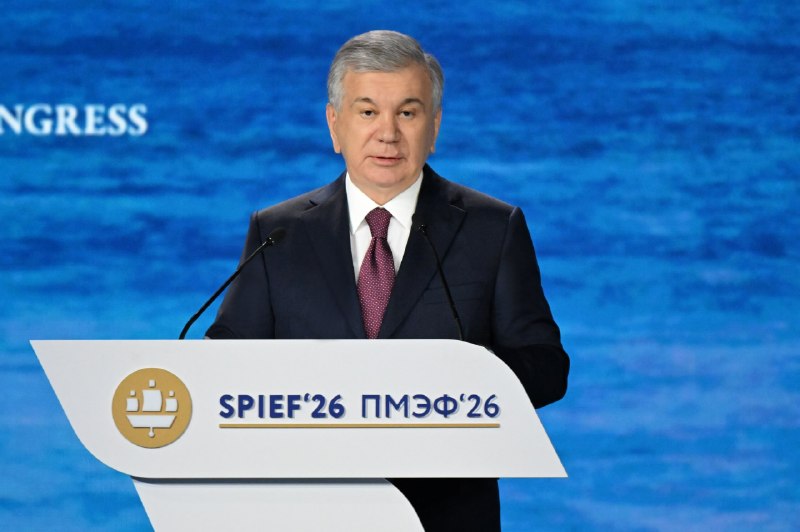
implemented in Uzbekistan at the initiative of President Shavkat Mirziyoyev.
Over the past eight years, 120 million square meters of housing, or more than
600,000 houses and apartments, have been built and commissioned in the country.
To support the purchase of housing, 541 thousand citizens have been allocated
preferential mortgage loans and subsidies in the amount of 103 trillion soums.
As a result, the level of urbanization increased from 40.3% in 1991 to 51%.
The
National Committee for the Sustainable Development of Urbanization and the
Housing Market was established by the decree of the President of Uzbekistan for
the systematic and effective implementation of urbanization policy. He is
charged with the tasks of implementing state policy in the field of
urbanization, housing construction, renovation and mortgage lending, as well as
coordinating relevant programs.
If we look
at statistics, over the past nine years, almost 10,000 construction companies
have started operating in Uzbekistan. 20 large companies with a turnover of
more than 1 trillion soums and 365 companies with figures over 100 billion
soums have been formed. The number of design organizations has exceeded two
thousand, of which more than 650 have received international certificates.
During this
period, the time for obtaining permits in the construction sector was reduced
by 3 times, and the time for procedures was reduced by 4 times. 420 urban
planning rules and regulations were consolidated, outdated ones were abolished,
140 new ones were approved.
As a
result, 210 million square meters of buildings and structures have been built
in recent years, more than 15,000 multi-storey buildings with 647,000
apartments. The volume of construction work increased from 30 trillion soums in
2016 to 314 trillion soums last year. Today, the population of Uzbekistan
exceeds 38 million people, the level of urbanization has reached 51%, and
almost 20 million people live in cities.
These
indicators indicate dynamic urbanization processes in Uzbekistan and their
harmonization with international trends. In such conditions, the issues of
sustainable development of urban infrastructure, the formation of modern
settlements, as well as ensuring environmental and social balance become
particularly relevant. In this regard, further integration of Uzbekistan's
urbanization policy with international experience and expansion of
international cooperation is an important direction.
The
UN-Habitat Programme, headquartered in Nairobi, is a specialized agency for
human settlements. It is aimed at supporting sustainable urban development,
shaping the global urbanization agenda and coordinating UN activities in this
area.
The World
Urban Forum (WUF), established in 2001, is the United Nations' largest global
conference on urban development. It is hosted by UN-Habitat to discuss the
impact of urbanization on society, the economy, and climate change.
In
accordance with UN General Assembly Resolution 71/256, the forum has been
identified as one of the key platforms for evaluating the implementation of the
New Urban Agenda.
Today, WUF
is seen as a leading international platform bringing together various
stakeholders in the field of housing and sustainable urban development. It
involves national, regional and local authorities, civil society, the private
sector, international organizations, academia and other stakeholders.
The final
document of the forum is expected to be the Baku Call to Action, which will
reflect the key issues of the global housing crisis and practical measures to
address them. This document should become an important guideline for policy
development and implementation of practical mechanisms at the local, national
and global levels.
During the
Baku forum, special attention will be paid to issues of social housing
construction, modernization of informal settlements, development of urban
infrastructure, including transport, water supply, sanitation and waste
management, as well as improving the quality of life of the population.
The UN also
pays great attention to the issues of urbanization in the context of climate
and digitalization. Cities are considered as a key climate crisis zone, while
emphasizing the need for annual investments of 4.5–5.4 trillion US dollars to
create climate-resilient infrastructure by 2030.
The concept
of "smart cities" is currently developing towards a human-oriented
approach: digital technologies and artificial intelligence are seen not only as
a symbol of technological progress, but also as a tool to reduce inequality and
expand access to services.
At the same
time, cities are becoming key recovery centers in the face of humanitarian
crises, forced displacement of the population, destruction of housing and an
increasing burden on infrastructure.
At the same
time, one of the key challenges of UN policy remains the gap between
international regulatory documents and the practical capabilities of states and
local authorities. With a lack of financial resources, high-quality data, and
effective management mechanisms, even the best strategies risk remaining
declarative.
In this
regard, modern urban policy is increasingly focusing on the transition from
general principles to practical mechanisms - issues of financing, management
and responsibility.
News agency "Dunyo".