
An answer thirteen years in the making
Uzbekistan's RNAi-based gene-knockout technology became one of the earliest such technologies in global cotton breeding to reach official cultivar release. This was never a one-day or one-season project. The idea began in fundamental genetics, with efforts to understand the structure and DNA sequences of cotton's light-sensing photoreceptor gene family. Then came the first gene-knockout cells in the laboratory, the regeneration of whole plants from single cells, confirmation of useful traits, international patent protection, transfer of the genetic effects into local cotton cultivars, and the creation of the Porloq cultivar series. In 2013, those cultivars reached farmers' fields. Thirteen years later, the most important question could finally be asked with evidence behind it: had the technology stood the test of time? Had repeated generations, seed multiplication, and widely different field conditions weakened its defining traits? This was not a theoretical concern. Molecular genetics has long recognized that some RNAi constructs can lose effectiveness over generations, including through DNA methylation and transcriptional self-silencing. Porloq's thirteen years in the field have now given a new answer to that question.
That answer appears in our new study, accepted for publication in npj Science of Plants, part of the Nature Portfolio. We analyzed research-station records from 2012 through 2025 and multiyear data collected from farmers' fields across 13 cotton-growing areas of Uzbekistan from 2013 through 2025. The results show that the defining phenotype of the Porloq cultivars, especially longer fiber and their overall fiber-quality profile, persisted for more than a decade of broad field cultivation while maintaining competitive yield potential. In other words, the technology did not lose its biological meaning after leaving the laboratory and entering farmers' fields. Today, we can judge its fate not from a single season, but from thirteen years of field life.
This story began in Texas
To understand how we reached this point, we need to go back a little. After graduating from university in 1997, I had the opportunity, through Uzbekistan's Umid Foundation, to study and conduct research at Texas A&M University in the United States. There, my late mentor, Professor Kamal El-Zik, asked me to work on increasing cotton fiber length. Professor Alan Pepper suggested that I study cotton's phytochrome gene family. The idea was bold for its time: could genes that sense light and coordinate plant growth, flowering, and development be used to change fiber length and other important traits? The idea immediately resonated with me. I had often noticed how plant stems elongate rapidly in shade or darkness, and the connection between light signaling and growth fascinated me. I began studying the genetic signatures, structure, and functional potential of the cotton phytochrome gene family. In 2001, I defended this work in my doctoral dissertation, and we later published our findings in BMC Plant Biology.
When I returned to Uzbekistan, the biggest challenge was to keep this scientific direction alive. Beginning in 2003, grants from USDA-ARS international research programs helped us establish a small molecular genetics laboratory, bring in modern equipment, and train a group of young scientists. The laboratory was not large, but the goal was clear: regulate phytochrome-gene activity through gene-knockout technology, observe the result in whole plants, and then move the useful biology into breeding. After several years of work, the first generation of new lines appeared. Their fibers were longer, flowering and maturity were earlier, root and vegetative growth were stronger, and, most importantly, yield did not decline. A fundamental laboratory question was gradually becoming a result that mattered to farmers. I should also acknowledge my mentor, Academician Abdusattor Abdukarimov, whose support and the conditions he created for me in his laboratory after my return from the United States were invaluable to these successes.
In 2008, President Shavkat Mirziyoyev, then Prime Minister of Uzbekistan, visited the Academy of Sciences and saw our small laboratory and the new lines. I was a young scientist then. He first looked at the results from a farmer's perspective: these lines, in an American genetic background, were promising, but Uzbek farmers would not grow them. Could the same traits be transferred into the local cultivars widely planted in the country? He specifically mentioned AN Bayaut-2, S-6524, Tashkent-6, and Namangan-77 as important cultivars of that period, and supported linking the work directly to national breeding. That question made our next task completely clear: turn a laboratory result into a cultivar, and turn that cultivar into something farmers could actually grow.
Over the next two to three years, we repeatedly transferred the RNAi trait into local cultivars through backcrossing. When the new genotypes were shown in the field in 2011, Shavkat Mirziyoyev asked about their future and suggested the name Porloq, a word associated with brightness and a promising future. That same year, the door opened to testing the cultivars in different parts of the country, placing seed with trusted farmers for multiplication, and evaluating them across 13 environments. At a time when not everyone believed the new technology would succeed, his answer was direct: "We are Uzbeks, and we will see this work through to the end." That conviction and the decisions that followed were decisive. Had the seed never left the laboratory and experimental plot, these valuable genotypes might have remained only in a scientific collection. Reaching farmers' fields gave Porloq its real agronomic and commercial life.
At the same time, another major issue came to the forefront: intellectual-property protection. The technology needed protection not only as a scientific publication, but as an Uzbek scientific product with licensing potential. With state-level support from President Mirziyoyev, Uzbekistan, Texas A&M, and USDA-ARS moved the technology into the U.S. patent system, followed by the international PCT route and national patent protection in Uzbekistan, the United States, China, Russia, Egypt, and India. In 2014, the team published the fundamental scientific results in Nature Communications. Three paths came together: fundamental science, international intellectual-property protection, and moving the technology into farmers' fields. The President's personal attention to the process provided important institutional backing for turning scientific knowledge into cultivars and practical technology.
The Porloq story also helped drive the creation of the Center of Genomics and Bioinformatics. The young scientists trained around our small laboratory, the emerging genetic technologies, and the breeding work all required modern infrastructure. The Center was established around that need, equipped with modern sequencers and other genomic technologies, and given land for an experimental station. In 2013, its new building and modern field station began operating. At a difficult time for science, that support mattered enormously. In 2017, President Shavkat Mirziyoyev's decision further strengthened the Center within the Academy of Sciences. Looking back today, Porloq helped build not only a cultivar series, but an entire scientific school and a platform for genomic technologies.
A different approach to an old cotton-breeding problem
To understand Porloq's scientific importance, it helps to remember a long-standing problem in cotton breeding. Breeders around the world have spent decades trying to combine high fiber quality, early maturity, and high yield in the same genotype. Yet these traits are often negatively linked. Push fiber quality too far, and yield or maturity may suffer; emphasize yield and fiber quality, and you may be constrained. This was never a simple breeding problem. It was a long-standing fundamental challenge in cotton genetics.
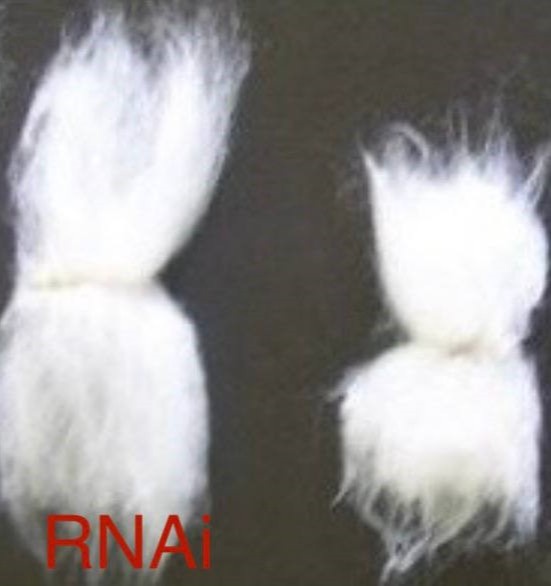
We approached that problem through the cotton phytochrome A1 gene, a light-sensing regulator that helps coordinate growth, flowering, maturity, and other developmental processes. When we reduced its activity using RNAi gene-knockout technology, the response was broader than expected. Fiber length and strength improved, micronaire decreased, flowering and maturity came earlier, root and vegetative growth strengthened, and yield was not sacrificed. The real advance was not improving one trait. Several agronomic traits that often pull against one another in breeding moved in a favorable direction at the same time.
Later molecular studies helped explain why. When phytochrome A1 activity was reduced, other phytochrome genes became more active, showing that the plant had engaged internal compensatory mechanisms. Researchers also saw changes in small regulatory RNAs and in gene systems related to cell walls, development, and stress responses. The important point is that the effect did not stop with one gene. Acting on a high-level regulatory node rebalanced broader gene networks inside the plant. That gave Porloq technology significance far beyond a conventional single-trait approach.
Science, patents, and farmers' fields on the same path
The 2014 Nature Communications paper brought international scientific attention to the finding that reducing phytochrome A1 activity could improve fiber quality, earliness, and yield potential at the same time. But the practical path had started earlier. Through five generations of backcrossing, researchers transferred the RNAi trait from the original Coker-312 genetic background into elite Uzbek cultivars. The result was Porloq-1, Porloq-2, Porloq-3, and Porloq-4. Each retained its local genetic background while carrying the shared phytochrome A1 RNAi trait.
From 2012 to 2014, the cultivars went through expanded testing across 13 soil and climate environments. They entered farmers' fields in 2013, followed by a gradual expansion of seed multiplication and production. By 2015, more than 60,000 hectares were involved in testing, seed multiplication, and production. Cumulative implementation records indicate that total Porloq plantings over more than a decade have exceeded 500,000 hectares. Later national data show that this was not merely a historical project. A 2026 Scientific Reports analysis of Uzbekistan's cotton sector described Porloq as one of the region's earliest commercially deployed RNAi cotton cultivar series and reported 24,786 hectares of RNAi cultivars in 2025 alone. The same national study showed that RNAi, marker-assisted breeding, and newer Bt/Gt cultivars together formed part of a modern technology portfolio covering 38.51 percent of the country's cotton area by 2025. These numbers place Porloq in a larger context: not simply as a successful cultivar series, but as one of the practical foundations that opened the way for biotechnology-based breeding in Uzbekistan.
Why thirteen years in the field produced new fundamental knowledge
RNAi has powerful capabilities, but long-term durability has always been a serious scientific question. Some RNAi genetic constructs can weaken over time as DNA methylation increases and the construct begins to silence itself. In practical terms, an effect that works well in the laboratory may fade after multiple generations. That is why Porloq's life through thirteen years of seed multiplication, breeding, and cultivation in farmers' fields became a question with significance well beyond one cultivar series.
In the new study, researchers compared Porloq cultivars at the research station with the recurrent parental cultivars from which they were bred. In farmers' fields, they were compared with Sulton, one of Uzbekistan's most widely grown traditional cotton cultivars for many years. At the research station, RNAi cultivars produced an average yield 14 percent higher than the traditional comparison group, while their fiber remained longer, finer, and stronger. In the regional data, Porloq cultivars maintained competitive yields, and the most consistent advantage was greater fiber length. Environment accounted for much of the yield variation, yet genotype still mattered significantly. In other words, amid real-world differences in water, soil, climate, and farm management, the technology retained its defining fiber-quality "signature."
Porloq-2 and Porloq-4 also performed well in stability analyses. Later, farmers selected Porloq-5 and Porloq-7 individually from the Porloq-1 background in their fields. Porloq-5 was selected under the saline and drought-prone conditions of Syrdarya, while Porloq-7 was selected in Namangan in the Fergana Valley. Current data on these later cultivars remain too limited for broad conclusions, but their story illustrates something important: breeding does not stop when a technology reaches a farmer's field. Different environments can reveal new possibilities and become arenas for natural and breeder selection for the next generation.
This is why the new npj Science of Plants paper matters for more than the statement that Porloq yielded well. Its main result is that an RNAi phenotype previously characterized at the molecular and breeding levels persisted through seed multiplication, repeated backcrossing, and years of cultivation in farmers' hands. Long-term field evidence for a complex, multi-trait RNAi phenotype of this kind remains rare. The thirteen-year record therefore gives us not only the history of a cultivar, but new fundamental knowledge about the agronomic durability of RNAi-based gene-knockout technology.
Not one gene, but the balance of an entire system
Today's gene-editing technologies have opened enormous opportunities for breeding. They are especially powerful when we know the precise gene change we want, whether that means correcting a harmful variant or fixing a beneficial allele. But many of agriculture's most important traits are not controlled by the presence or absence of a single gene. Yield, earliness, fiber quality, root development, water response, and stress adaptation emerge from networks in which many genes and signals work together. For some breeding problems, the best solution may therefore be not to eliminate a gene, but to tune its activity to the right level.
That is one strength of RNAi gene-knockout technology. By partially reducing the activity of an upstream regulatory gene, it can sometimes trigger compensatory responses within the plant itself. That is what happened with phytochrome A1. One gene became less active, other phytochromes became more active, and multiple systems involved in development and fiber formation were readjusted. The result was an opportunity to move traits that are usually considered antagonistic in breeding in a favorable direction at the same time. Porloq showed that gene knockout can be broader than a "one gene, one trait" concept. That, when the right regulatory node is chosen, it may be possible to find a useful balance across an entire biological network.
I explored this idea more broadly in a 2026 review on RNAi published in Frontiers in Plant Science. The future is not a choice between RNAi and gene editing. They can complement one another. RNAi can help identify which regulatory gene, and what degree of suppression, produces the most useful multi-trait state. Gene editing, pangenomics, and conventional breeding can then help fix or refine that favorable state in more precise and durable genetic backgrounds. For global science and for our own breeding programs, Porloq stands as an early practical example of this integrated breeding logic.
The platform is expanding beyond Porloq
Porloq's thirteen-year record is useful not only for looking back. It gives us confidence in building the next stage. Today, the Center of Genomics and Bioinformatics is using gene-knockout, RNAi, and other modern genomic technologies to create promising crop lines and cultivars and to improve those already in production. One of the closest next steps is to strengthen Porloq itself with new protection traits. Porloq-1, Porloq-2, and Porloq-4 have been crossed with materials carrying Bt-based bollworm resistance and herbicide-tolerance traits, and the resulting materials have reached the second-backcross BC2F1 generation. The goal is straightforward: preserve Porloq's earliness and high fiber quality while adding the pest and weed-management protection that today's farmers need.
Another important direction is climate-stress resilience. By knocking out a regulatory gene involved in responses to drought, salinity, and low temperature, we obtained stress-tolerant cotton lines. We transferred that trait into the Porloq-1 background to create the Matonat-1 cultivar. In 2025, Matonat-1 was planted on 20 hectares in Khorezm and 40 hectares in the Republic of Karakalpakstan, where it produced encouraging results. This is not yet the final scientific verdict, but it is another important step: a laboratory genetic idea has moved into a cultivar and then into field testing.
Work on earlier maturity is continuing as well. Knocking out another regulator involved in light signaling led to the early-maturing Renaissance cultivar. Reducing phytochrome B activity produced a promising cotton line with earlier maturity and improved micronaire; that line has reached the advanced BC4F5 breeding generation. We have also developed new genotypes by targeting a cryptochrome gene involved in flowering, and those materials are now in the T1 generation. Together, these programs show that the light-sensing and developmental-control system still holds many breeding opportunities.
We also have new results in disease resistance. Using molecular mechanisms associated with the Fusarium wilt pathogen, we developed the wilt-resistant Bardosh cultivar and multiplied its seed on 25 hectares in Jizzakh in 2025. In parallel, we crossed another gene-knockout genotype aimed at wilt resistance with Porloq-1 and Porloq-4, and have now obtained BC2F1 plants. Porloq is therefore becoming more than a finished cultivar series. It is becoming a genetic platform into which new useful traits can be introduced to build the next generation of cultivars.
The platform did not stop with cotton
The idea of regulating phytochromes and rebalancing complex traits through RNAi has also moved beyond cotton. At the Center of Genomics and Bioinformatics, researchers developed the Barkamol wheat cultivar by regulating phytochrome A1 activity. According to Center data, it has a yield potential of about 7.8 to 8.0 metric tons per hectare, matures five to seven days earlier than standard cultivars, and combines large grain with strong bread-making quality. In 2026, 168 metric tons of seed are being prepared. Planting is planned on 560 hectares in 2027, with expansion to 7,500 hectares in 2028. This shows the scientific logic first developed through Porloq moving into another strategic crop.
In potato, the Bisyor biotechnology cultivar was developed by reducing the activity of phytochrome B, another regulator of plant development, through RNAi. Its growing period is about 80 to 85 days, and its average yield has been estimated at 41 metric tons per hectare. In 2025, Uzbekistan granted both an invention patent for the technology and a plant-variety protection patent for the cultivar. That year, initial plantings were also carried out under farm and household conditions in the Amudarya district of Karakalpakstan. The RNAi platform began with cotton fiber, but today it is also becoming a practical breeding tool for food crops.
Can agriculture also become part of the climate solution?
Another new direction brings agriculture and climate into the same conversation. Since 2022, the Center has been conducting experiments to increase suberin accumulation, a natural biopolymer, in cotton roots. What is suberin? Put simply, it is a natural material that can help retain part of the carbon a plant absorbs from the atmosphere through photosynthesis in a relatively stable form within root tissues. Ordinary plant residues eventually decompose and return much of their carbon to the natural cycle. Suberin is more resistant to enzymatic breakdown, so it may help keep carbon in roots and soil for longer.
There is already an early result. By working with genes involved in suberin synthesis, we obtained first-generation cotton genotypes that accumulated 3.1 times more of this biopolymer in root tissues than control plants. We are now multiplying their seed, and work is underway to transfer the trait into local cultivars such as Porloq and Ravnaq. If future field testing confirms this behavior, cotton could eventually become not only a crop that produces fiber and yield, but also a crop that helps retain a portion of atmospheric carbon in the soil for longer periods.
These programs are not all at the same stage of development. Some have reached field testing, some are in breeding generations, and others remain in the laboratory or early multiplication stage. But they share one logic: understand the plant's high-level regulatory systems, control the activity of the right genes with precision, and then move the useful state into local genetic backgrounds suited to farmers. Porloq became the first major practical school for this approach, and the cultivars and lines that followed are an expanding continuation of that platform.
From one technology to a scientific school
Porloq should no longer be viewed simply as the story of one cultivar series or one scientific paper. It began with fundamental genetics at Texas A&M, continued through a small laboratory established in Uzbekistan, international collaboration with USDA-ARS, the training of young scientists, breeding into local cultivars, farmers' fields, patent protection, and sustained state support. That chain turned a laboratory question into a Center, a cultivar series, and a program of next-generation genomic technologies. The 2021-2025 national analysis published in Scientific Reports showed that modern domestic RNAi and marker-assisted cultivars, together with the later arrival of Bt/Gt technologies, are creating a diversified technology portfolio in Uzbekistan's cotton sector. That may be one of Porloq's most important legacies: it helped move the country from being only a recipient of ready-made technology toward becoming a system capable of creating biotechnology solutions of its own.
This history offers another lesson. The value of a scientific idea is not measured only by how interesting it looks in a laboratory. To turn an idea into a cultivar, breeders, molecular biologists, tissue-culture specialists, seed producers, agronomists, farmers, patent experts, and public institutions have to work as one chain. If a single link breaks, a valuable genotype may disappear or remain only as a paper. Porloq's thirteen years in the field show what can happen when that chain remains intact: a scientific technology can become a national breeding product and then a foundation for the technologies that follow.
What did thirteen years in the field show?
We can now answer the question at the heart of this article. What happened to the gene-knockout technology created in Uzbekistan? It didn't stay in the laboratory. It moved from a fundamental genetic idea to internationally patented technology, then into local Porloq cultivars, from there into farmers' fields, and ultimately into thirteen years of agronomic life. Over more than a decade, these cultivars have been grown cumulatively on more than 500,000 hectares, and their defining phenotype, especially fiber length and quality profile, has persisted. In that sense, the new npj Science of Plants study is not simply another report about a cultivar. It provides new knowledge about the agronomic durability of an RNAi gene-knockout effect.
The result also strengthens another fundamental conclusion. If the right regulatory gene is chosen, partially reducing its activity can rebalance the plant's internal regulatory network and improve several traits usually considered in conflict. With Porloq, we approached the long-standing breeding trade-off among fiber quality, earliness, and yield potential in precisely this way. Thirteen years in the field now show that this multi-trait state was not simply a laboratory phenomenon. It can persist in real farming systems over time.
The next stage is already underway. Work continues to strengthen Porloq with bollworm and herbicide-tolerance traits, advance new cultivars such as stress-resilient Matonat-1, early-maturing Renaissance, and wilt-resistant Bardosh through field testing, extend phytochrome-based technology into wheat and potato, and direct genomic technologies toward new goals such as keeping carbon in soil longer. The greatest result of Porloq, which entered farmers' fields thirteen years ago, is therefore not Porloq alone. It left Uzbekistan with an expanding scientific platform for next-generation genomic breeding, one that is steadily moving closer to farmers and the challenges agriculture must solve next.
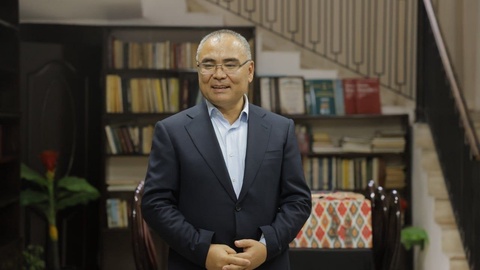
Ibrokhim Abdurakhmonov,
Minister of Agriculture of the Republic of Uzbekistan, Academician of the Academy of Sciences of Uzbekistan