
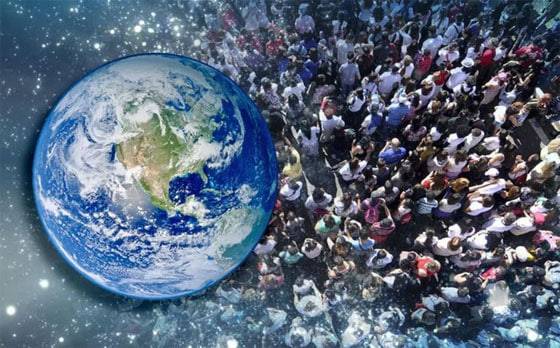
Scientists note that the ability of the environment to support a population is called "throughput" - it is an estimate of the number of individuals that can exist for a long time, based on the available resources and the rate of their recovery. Historically, the rapid population growth of the 20th century was made possible by the widespread use of fossil fuels, including for industry and agriculture.
Using more than two centuries of demographic data, Bradshaw and his team analyzed population changes at the global and regional levels. They distinguished between the maximum capacity, a theoretical limit that does not take into account the consequences of hunger, disease and war, and the optimal capacity, which ensures a sustainable existence and a minimum acceptable standard of living. mk.ru.
The study showed that the population grew rapidly until the 1950s, but growth has slowed since the early 1960s, which the authors call the "negative demographic phase." If current trends continue, the global population could reach 11.7–12.4 billion people by the end of the 2060s or 2070s. The absolute maximum that the Earth can withstand is estimated at about 12 billion people, and the sustainable capacity is only 2.5 billion.
The environmental consequences of exceeding the planet's capabilities are already being felt: in January 2026, the United Nations declared the world in a state of water bankruptcy, animal populations are declining due to the inability to compete with humans for resources, and dependence on fossil fuels is exacerbating anthropogenic climate change, destroying ecosystems and natural resources. The study shows that population growth has a more significant impact on global climate anomalies and environmental changes than per capita consumption.
"The planet's life support systems are under serious strain. Without rapid changes in the way we use energy, land, and food, billions of people will face increasing instability," Bradshaw warns.
Scientists emphasize that there is still time for action. The planet needs a fundamental change in the way we use resources - water, land, energy, and biodiversity - and the introduction of humane and sustainable mechanisms that will replace environmentally hazardous short-term solutions. This is the only way to ensure the existence of the future human population and preserve life on the planet in the long term.