
Farish is the largest district in the region. However, land use efficiency was quite low. Livestock was mainly raised on hills and pastures, and there were no industrial enterprises.
Seven years ago, the industry came to Farish – the extraction of basalt stone from the Olmossoy deposit began, and basalt fiber production was established. Based on unique, innovative technologies, the production of reinforcement and mesh, which is essential for the construction industry, began.
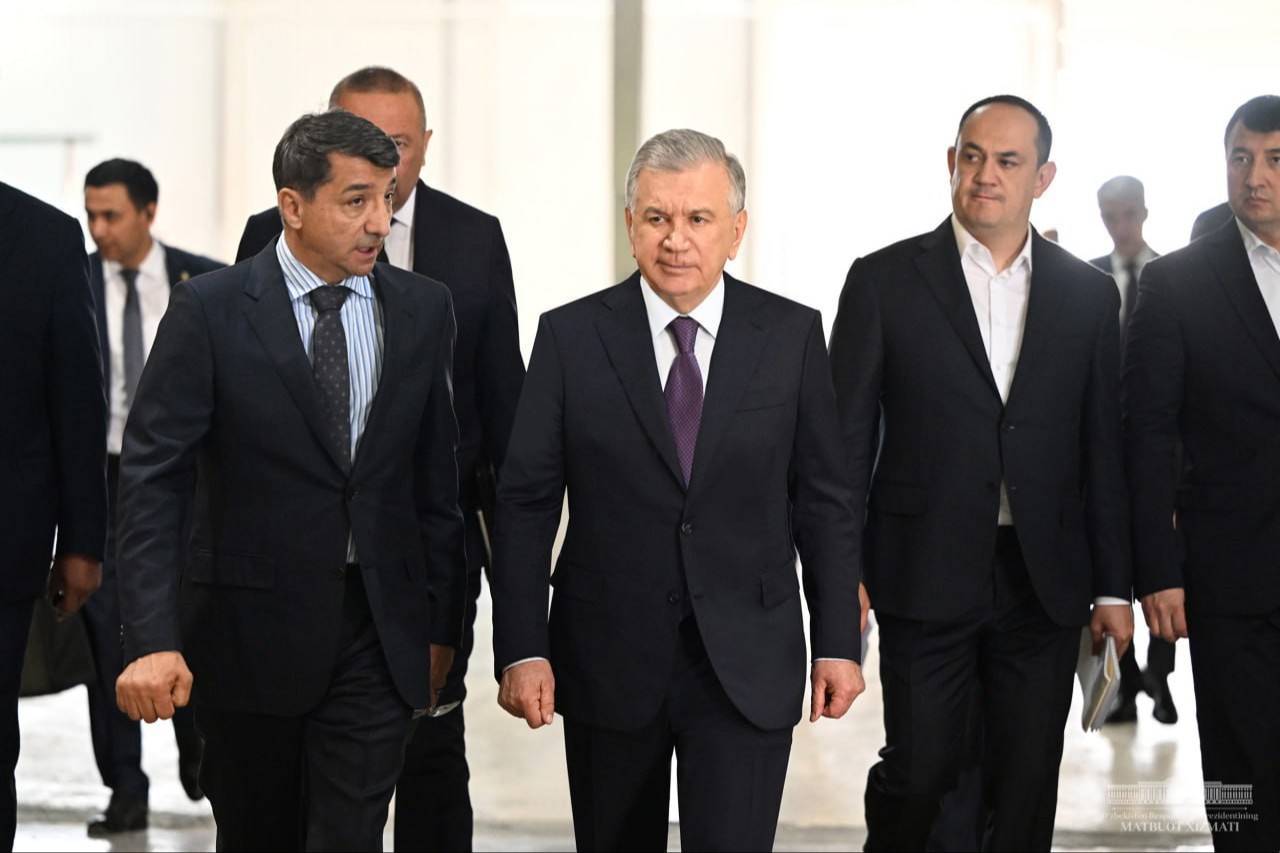
In January 2019, the Head of state visited the enterprise and instructed on expanding its activities and product range.
In accordance with this, market demand was analyzed, and raw material deposits were studied. The most modern technologies were brought from Germany, France, Italy, and the Czech Republic. As a result, six projects worth $498 million were implemented on 300 hectares, forming a cluster.
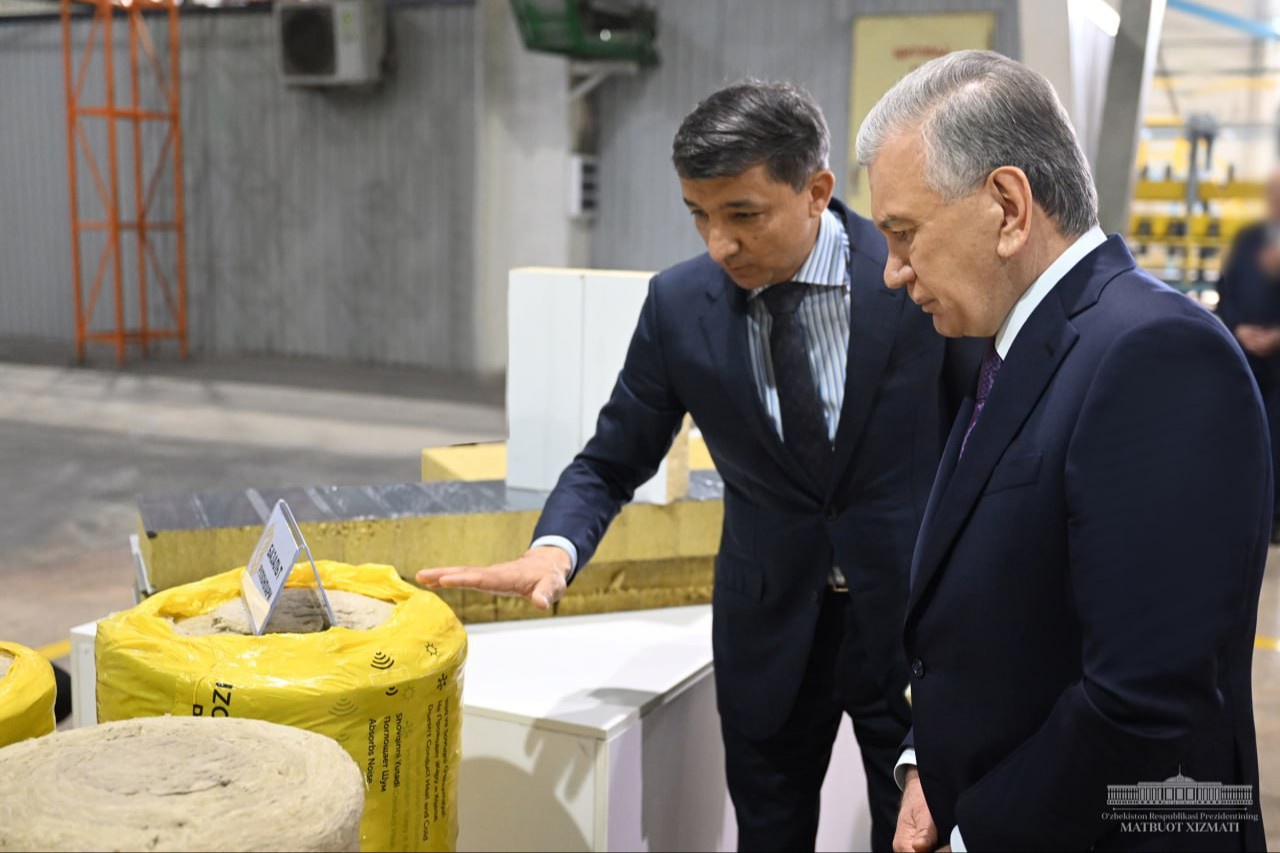
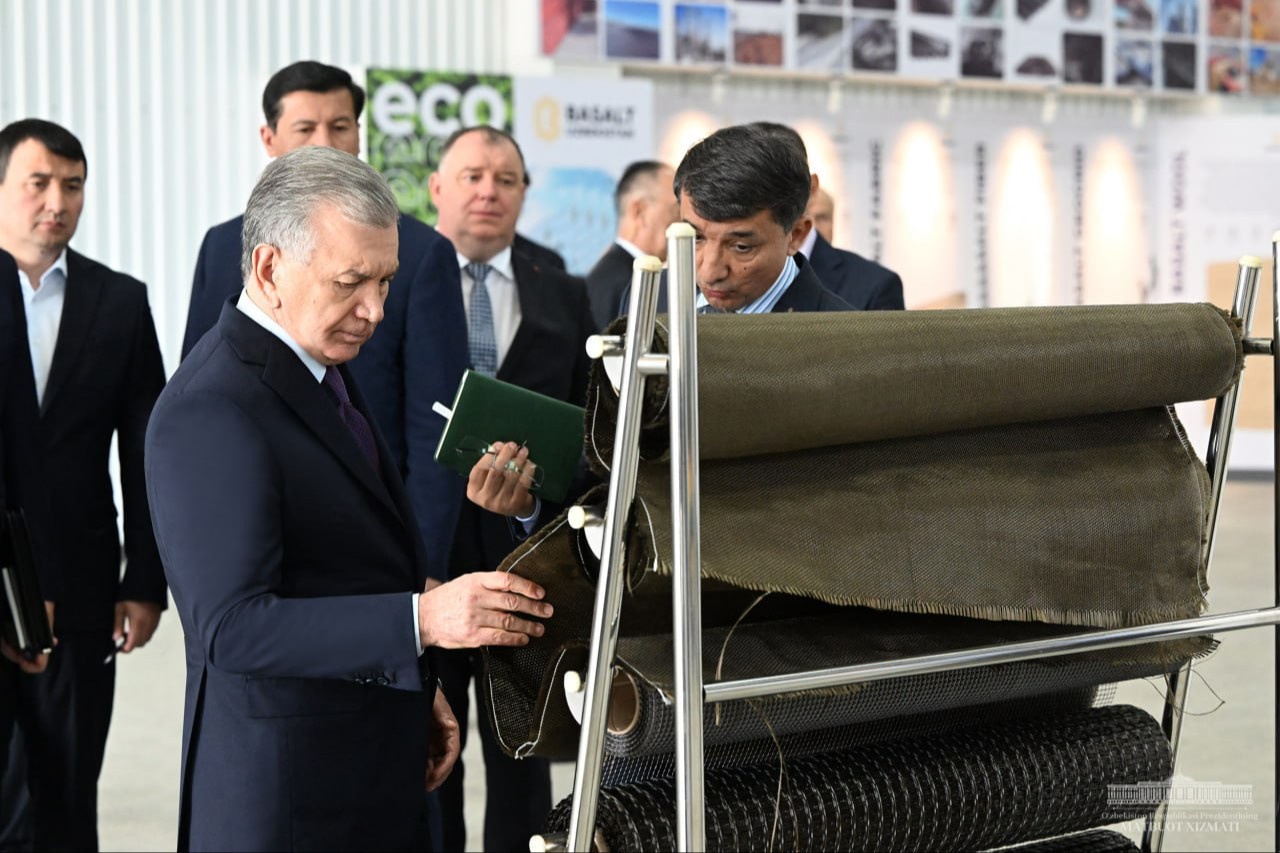
The Head of state inspected samples of raw materials and finished products.
The cluster processes 177 thousand tons of basalt stone per year and produces 42 types of products, including special fiber, roving, fiber, reinforcement, composite geogrids, pipes, fabric and thermal insulation boards. In particular, 45 thousand tons of products worth 554 billion UZS were produced last year. 80 percent of goods in high demand in the world are exported to the United States, the United Kingdom, Poland, Italy, the Czech Republic, Georgia, Russia, Türkiye, Belarus, Kazakhstan, Kyrgyzstan, and Tajikistan.
The cluster employs 1.7 thousand people.
As experts note, building materials made from basalt do not rust. They are lightweight, but very durable, resistant to the alkaline environment of concrete mixtures, saline and acid solutions. Using basalt materials for walls increases strength and provides good thermal insulation. Another significant advantage is that they are not flammable. With all these advantages, the products are relatively inexpensive.
Options for using materials in utilities, automotive, textile, oil and gas, and other industries were presented.
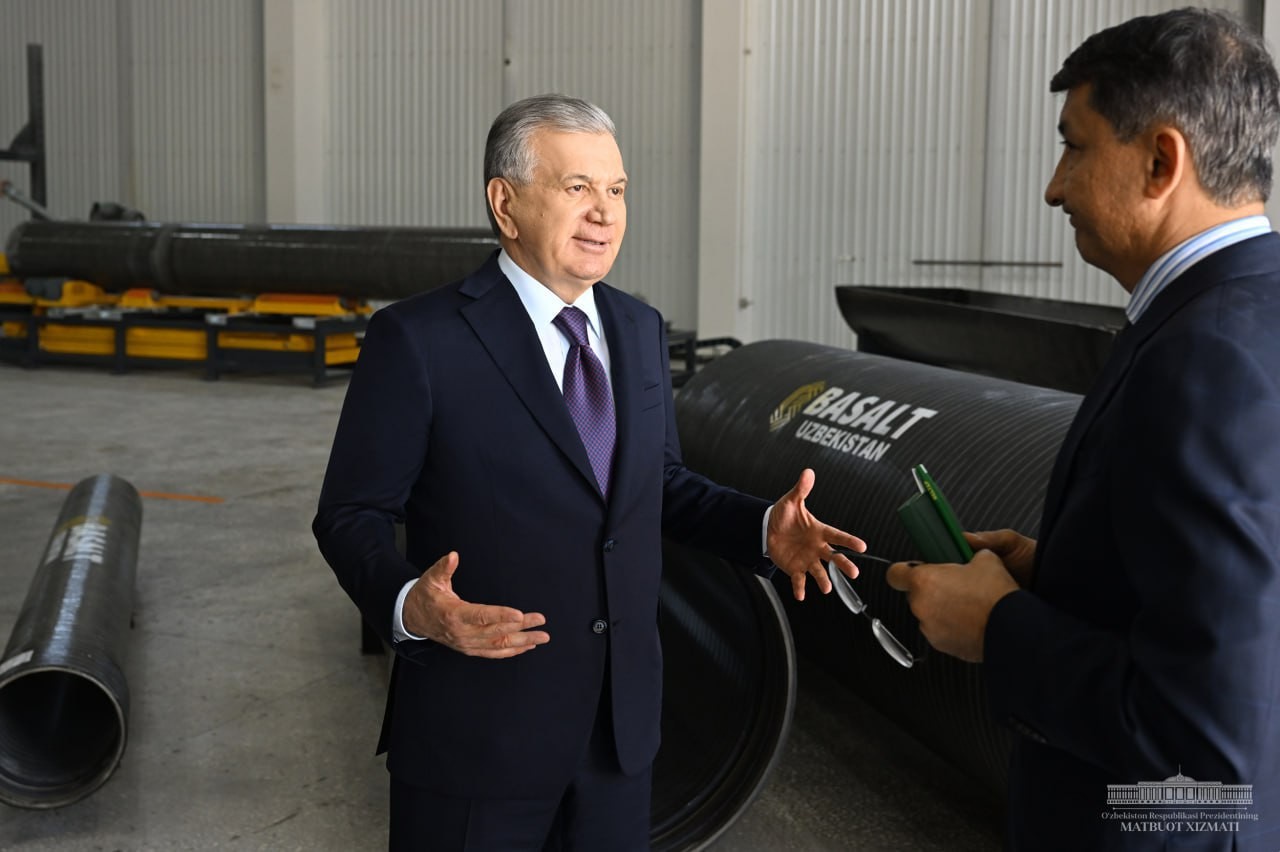
The President emphasized the need to explain the benefits of basalt materials to entrepreneurs and develop their cooperation. Instructions were given on obtaining quality certificates in new countries, more active promotion in the foreign market, and establishing interaction with international construction and industrial companies.
One of the cluster enterprises, Basfiber Trade, plans to create the capacity to produce 25,000 tons of basalt fiber and fabric per year next year. So far, equipment worth $145 million has been imported. In addition to meeting domestic needs, the new project will allow 90 percent of products to be exported.
The responsible persons were tasked with placing new projects worth $500 million on the cluster’s territory to produce 20 types of high-added-value products. As a result, another 2,000 jobs will appear.