
The Head of State noted that Tashkent has further strengthened its role as the country’s economic, social, and cultural center. In other words, the level of the capital’s economic development has increased significantly.
At the same time, it was emphasized that where quality of life improves and incomes rise, criminal groups seeking “easy money” become more active, and new methods and forms of crime often emerge primarily in such places.
It was noted that the system for maintaining law and order in the capital is failing to keep pace with ongoing changes. The work of the heads of the capital’s law enforcement agencies was criticized, as they are not setting an example for the regions, despite Tashkent having the necessary resources, personnel, and equipment, as well as scientific potential. At the same time, despite these opportunities, several officials continue to rely on outdated approaches.
It was emphasized that the key to crime prevention lies at the mahalla level. However, due to the improper organization of preventive services in Tashkent, systemic problems have accumulated.
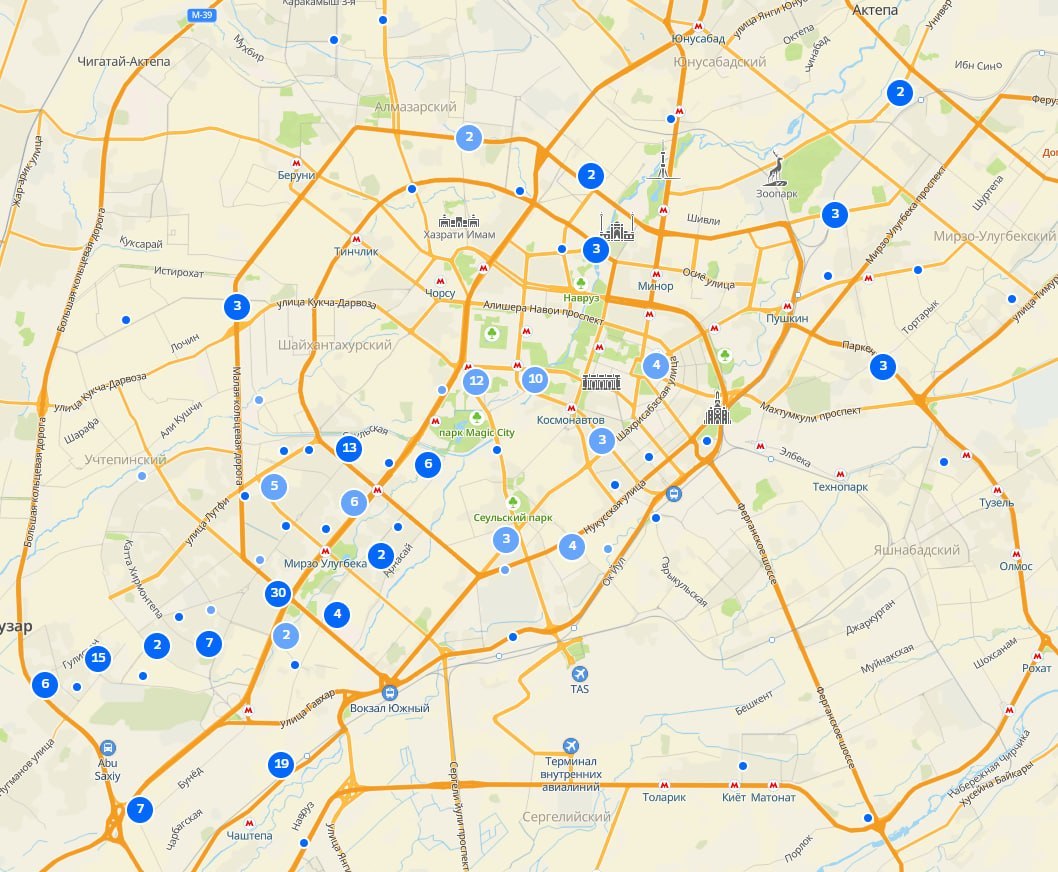
Thus, among the country’s 208 districts, Chilanzar ranks first in cases of domestic violence, robbery, and hooliganism, while Yunusabad ranks first in armed robbery. Last year, the highest number of murders was recorded in Yashnabad and Mirabad, cases of bodily injury in Almazar, and robberies in Shaykhantakhur.
In this regard, a reprimand was issued to the Head of the Tashkent City Main Department of Internal Affairs, R. Sultonkhujayev, and Acting Prosecutor of Tashkent, A. Urmonov, and a six-month probationary period was established.
It was noted that coordination among the National Guard, internal affairs bodies, and emergency services to ensure public safety at major markets and mass gatherings remains insufficient.
The lack of tangible results in the digitalization of the system on the part of the Deputy Minister of Internal Affairs responsible for information technology was criticized. Weak performance by the Ministry of Internal Affairs’ cybercrime unit was also pointed out.
The President criticized the insufficient resolve of responsible officials in combating drug-related crime and organized groups, emphasizing the need to pursue efforts to identify drug trafficking channels through to their ultimate sources and sponsors.
Instances of delays in suppressing the activities of individuals who have gone abroad, established organized criminal groups there, and committed crimes against citizens of Uzbekistan were also noted.
It was emphasized that the fight against the shadow economy and tax administration in the capital is being carried out unsatisfactorily. An increase was reported in cases of illegal VAT refunds obtained through the creation of artificial overpayments and the receipt of budgetary compensation. In this regard, the First Deputy Chairman of the Tax Committee, M. Mirzayev, was relieved of his post.
The Head of State reported the identification of multi-billion-sum embezzlement at Uzbekneftegaz JSC and the Agency for State Asset Management. For example, he cited a case in which agency officials put a land plot with a market value of at least 250 billion UZS up for a closed auction and sold it for 120 billion UZS. In this regard, the agency’s director, A. Ortikov, was dismissed from his post.
It was noted that compliance systems and internal anti-corruption controls are being introduced across government bodies.
Within a short period, highly alarming facts were uncovered: violations of budget revenues, embezzlement, and financial irregularities totaling 53 trillion UZS, as well as debts from foreign trade operations exceeding $8 billion. Damage totaling 4.2 trillion UZS was established due to corruption schemes, 1.3 trillion UZS was recovered, and 55 individuals were taken into custody.
It was also reported that embezzlement of budget funds amounting to 186 billion UZS was identified within the Ministry of Internal Affairs system during public procurement. Criminal proceedings were initiated against Deputy Minister B. Abdullayev and Department Head R. Tursunov.
It was emphasized that the time has come to critically review the performance of responsible officials in ensuring security within state bodies and organizations.
It was noted that the competent authorities must place four areas under strict control: organized crime, drug-related crime, cybercrime, and the shadow economy.
A fundamentally new system will be established in these areas, to be launched first in Tashkent. In particular, a “capital model” for creating a safe environment is being introduced.
The President explained the new approaches using the Chilanzar district as an example.
The management of public security forces and resources here will be reorganized. The patrol service, traffic patrol service, security, and prevention services will switch to a round-the-clock, three-shift schedule. A system will be introduced to ensure that patrol units arrive at the scene within five minutes of receiving a report.
Five deputy heads of district internal affairs departments will directly organize night duty in the mahallas. At night, they will be granted the authority of supervisors, will be able to make independent decisions, and will bear full responsibility for the results.
Officers of internal affairs bodies and the National Guard will be paid compensation for each hour of night duty at 5 percent of the base calculation value.
Based on advanced practices, drone-based patrol surveillance will be organized at locations of mass gatherings.
It was also noted that officers of the internal affairs bodies of Chilanzar district will accept citizens’ appeals regardless of their scope or territory, and appeals to an officer on the street will be treated as equivalent to a report made to “102”.
In all 55 mahallas, the offices of prevention inspectors will be equipped with communication buttons for prompt appeals. Residents will be able to contact the inspector around the clock via mobile devices and tablets.
The Head of State separately focused on combating drug-related crime.
It was noted that 95 percent of synthetic drugs are distributed via the internet, payments are made in cryptocurrency, and drug laboratories are being established within the country. It was also emphasized that the responsibilities of state bodies in this area are not fully defined in the legislation.
The Agency for Control of Drugs and Firearms, which had limited itself to analysis and international cooperation, was criticized. In the future, the agency’s responsibility will be strengthened: it will be granted the authority to coordinate the work of relevant departments, exercise oversight, and assess effectiveness.
Instructions were given to build a comprehensive system to counter transnational and virtual organized crime. A separate service to combat organized crime will be established within the Ministry of Internal Affairs.
It was noted that among members of organized criminal groups detained in the capital last year were 259 young people and athletes from a “high-risk” category – a situation described as extremely alarming.
An increase in cases of street hooliganism involving athletes, as well as the organization of underground fights for money, was also reported. Instructions were given to ensure oversight in this area and to create a system of professional training and employment for young people engaged in combat sports.
It was emphasized that various radical and extremist ideas are attempting to influence the minds of young people through information technologies, and that this problem cannot be solved solely through prohibitions and punishments.
In the future, “return groups” activities will be organized permanently in every district of the capital.
It was noted that cybercrime is on the rise, with the number of its types increasing from 18 to 62. The theft of personal data, the imitation of voice and appearance using artificial intelligence, the distribution of malicious files, and the transfer of stolen funds abroad in cryptocurrency cause particular concern.
It was emphasized that for the prompt detection and suppression of such crimes, law enforcement officers must have a thorough command of cyber technologies and artificial intelligence tools.
In this regard, a separate Cybercrime Department will be established within the Ministry of Internal Affairs, for which the Minister will bear personal responsibility. A separate Directorate for Cybercrime and Digital Law will be created within the Ministry of Justice.
The need to ensure personnel stability and to support and encourage qualified and dedicated employees was also emphasized.
In this regard, additional measures were announced to support prevention inspectors and enhance their authority in society. Starting July 1 this year, prevention officers in the capital will receive a monthly bonus of up to 5 million UZS for length of service in this field. From February 1, the period of study at a law university will be counted toward service for those who, after graduation, join the internal affairs system. Housing rental compensation for employees arriving from the regions and working in the capital will increase from 1.8 million to 3.1 million UZS per month. Thirty percent of housing under construction for internal affairs personnel will be allocated exclusively to prevention inspectors.
Instructions were given to submit a draft decree on transferring internal affairs units that work directly with the public and are responsible for public safety and crime prevention to a new system.
For these units, unified standards of service, communication culture, operational response, and the use of force and weapons will be introduced, thereby creating a truly service-oriented structure.
The need to strengthen the justice system was also noted. As a first step, the Ministry of Justice will introduce a mechanism for a “legal audit” of law enforcement agencies’ activities. A draft law “On Law Enforcement Activity” will be developed, defining the clear roles of justice bodies and their new tasks and powers.
The Head of State emphasized that, in the other areas discussed, it is also necessary to improve existing regulatory and legal acts and to adopt new documents.
Responsibility measures were determined for officials who committed serious violations, and tasks were set to ensure the rule of law.
At the meeting, reports from the heads of law enforcement agencies were heard.