
The Presidential Decree adopted in October, “On additional measures for the further development of artificial intelligence technologies”, and the Resolution “On the approval of the Artificial Intelligence Technologies Development Strategy until 2030” have created all the conditions in the country for developing the necessary infrastructure and training specialized personnel.
In particular, a strategy for the period until 2030 has been established, and a profile center has been opened under the Ministry of Digital Technologies. Necessary computing infrastructure for the use of artificial intelligence technologies is being created. In particular, a project to launch a supercomputer cluster in collaboration with the American Nvidia company is being developed.
Five artificial intelligence projects are being implemented in healthcare. Notably, the diagnostic time for identifying stroke and breast cancer has been reduced by 80 percent, which contributes to the determination of life-threatening conditions at an early stage.
The President pointed out the need to expand the list of diseases that can be diagnosed using artificial intelligence.
In this regard, in cooperation with foreign partners, it’s planned to implement systems of analyzing medical images using AI to diagnose liver, lungs, and prostate cancer, as well as heart strokes and complex bone fractures in the republican health centers.
Starting next academic year, programs on artificial intelligence will be launched in schools, technical schools, and universities. Informatics professors are being prepared for this. The need was noted to teach how to use AI not only to staff in computer science, but also to the whole school, in order to reduce the burden on teachers. The free time will allow them to work more on themselves.
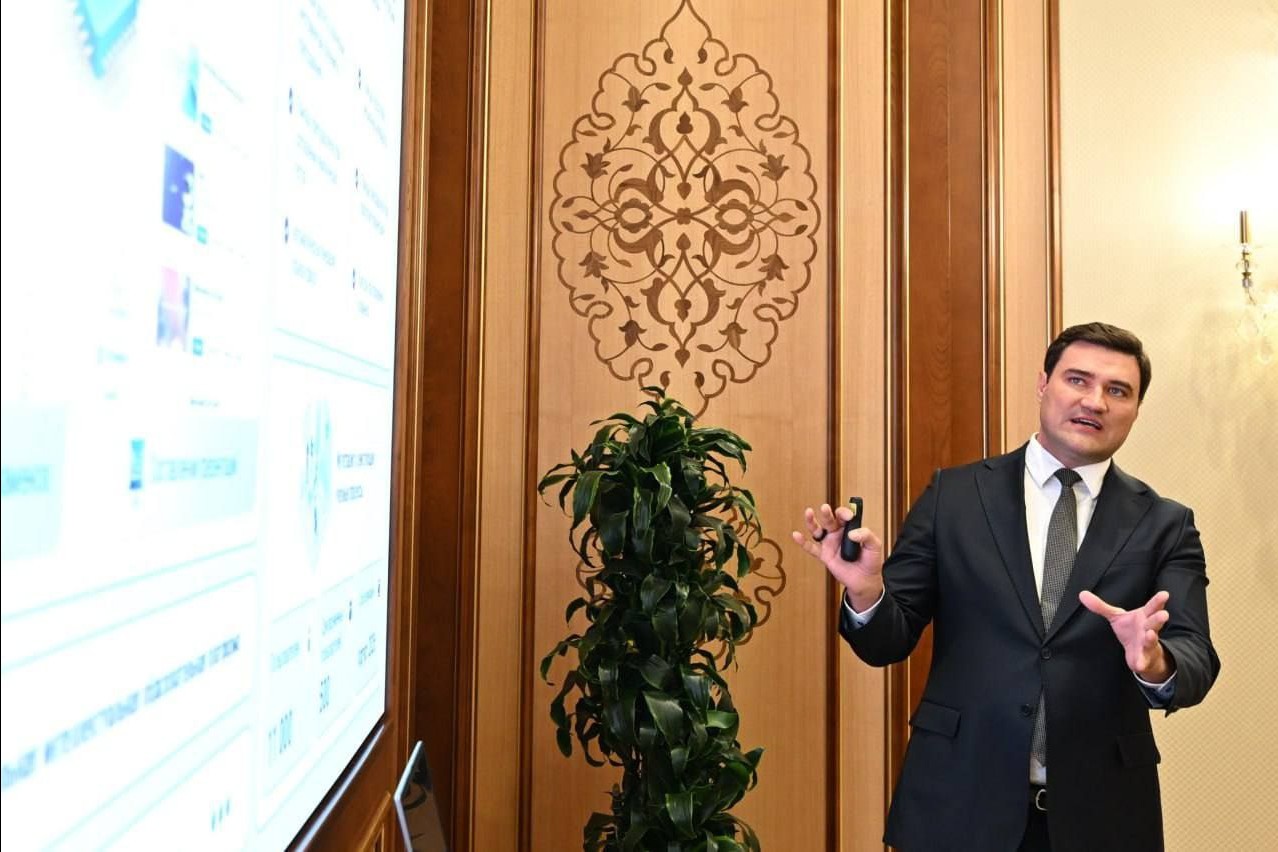
New approaches in this area were reviewed during the presentation.
Specifically, it was proposed to implement a platform based on artificial intelligence for school education. A virtual teacher’s assistant will be developed and integrated within its framework. This solution will help teachers prepare lecture materials, presentations, tests, and lesson plans, as well as manage the process for conducting exams.
Information on the program for training hokim advisors in digital technologies and artificial intelligence was also provided.
The implementation of projects in the field of artificial intelligence is also planned in the transport sector. In particular, proposals were presented for the automatic detection of traffic violations and the reduction of the risk of railway incidents through monitoring the technical condition of wagons using AI.
In addition, new initiatives in space technology have been developed. The progress of work on the creation of the artificial satellite “Samarkand-2028” was reviewed. An artificial intelligence module is being developed for this spacecraft, which is intended for Earth remote sensing. The satellite images obtained will be used for preliminary air quality assessment and for monitoring crops and forests.
Following the presentation, the Head of State gave specific instructions to the responsible officials to accelerate the implementation of the discussed projects and expand the use of artificial intelligence technologies across the economy and the social sphere.