
Today, food security is not just about having a full stomach. It is about human health, the proper growth of children, the healthy lives of mothers, the income of dehqans (farmers) and peasants, water conservation, soil fertility, product quality, processing, export, digitalization, and responsibility to future generations.
Simply
put, food security begins in the field and ends on the family dastarkhan (table).
What seeds are sown in the field, how much water they require, how they affect the
soil, how the harvest is stored, how the product serves the health of our children
– all of these are today's strategic questions. I personally need to look at this
topic from two points of view: as a minister, from the perspective of practice,
reform, and the daily problems of the Dehqan; as a scientist, from the perspective
of where world science is heading and what the scenarios for 2050 show.
The conclusion
that emerges from the unification of these two views is this: future food security
is not just about producing more products, but about building a healthy, fair, water-saving,
science-based, and humane food system. Let us discuss these one by one, from the
perspective of the future.
The
Question of 2050: What awaits humanity?
The world's
population has exceeded 8 billion today. It is expected to exceed 9 billion by 2050.
This means the number of people who will sit around the table in the future is increasing.
But the land, water, and natural resources to feed them are not infinite.
Analyses
by the Food and Agriculture Organization of the United Nations (FAO) on the topic
"How to Feed the World in 2050?" state that, to feed more than 9
billion people in 2050, global food production needs to increase by
approximately 70 percent over 2005–2007 levels. For this, production in developing
countries must almost double. But the FAO emphasizes another important fact: the
world is technically capable of producing enough food, but this does not mean hunger
will automatically disappear. Hunger often arises not from a lack of food, but
from people's limited economic and social access to food.
This is
also a great lesson for us. So, the question for 2050 is not just "how much
needs to be produced?" The question should be: will the produced food reach
every family, is it affordable, is its quality safe, does it serve the health of
the child and mother, and were water and soil preserved in producing this food?
Scientists
who have studied food security for decades – France's Bernard Hubert, America's
Mark Rosegrant, the Netherlands' van Boekel, and Peru's Rodomiro Ortiz – point to
two paths in scientific scenarios for the future of food. The first is "Agrimonde
GO" – a path that prioritizes economic growth and consumption above all
else. On this path, calorie intake increases – average daily calories per capita
rise to 3590 kcal – consumption of meat and resource-intensive products grows,
but pressure on water, soil, and nature intensifies. The second is "Agrimonde
1" – a path of sustainable, wise, and fair development. Its goal is to
provide every person with fair, healthy, environmentally acceptable food of 3000
kcal per day, increase the share of plant-based products, save water and land, and
increase the income of the rural population.
So, which
path is Uzbekistan choosing? The reforms of recent years, attention to water-saving
technologies, reducing cotton areas while increasing productivity, the priority
given to horticulture, vegetable growing, livestock, fisheries, processing, and
digitalization, provide a concise answer: Uzbekistan sees its future not just
in quantity, but in quality, efficiency, and human interests.
FAO
Lesson: The fight against hunger depends not only on harvest but also on income
Here,
another important conclusion of the FAO is relevant: growth in agriculture has
a very strong impact on reducing poverty and hunger. According to international
analyses, economic growth in agriculture can be at least twice as effective for
the poor as growth in other sectors. This is natural: in developing countries, most
of the poor population lives in rural areas, and their income is directly linked
to land, livestock, water, labor, and agricultural services.
From this
perspective, food security is not just grain in the barn or vegetables in the market.
It is also about rural jobs, farmers' incomes, the dehqan's access to markets,
and women's and youth's access to land, credit, knowledge, and technology.
The FAO
also notes that food price volatility will increase in the future, and
fluctuations in climate, energy markets, trade, and raw material prices will
strongly affect agriculture. Therefore, future agriculture must not only produce
a lot of food but also be resilient to external shocks, capable of managing risks,
and protecting small-scale dehqans.
New
threats: microplastics, climate, and antibiotics
Today,
the threats affecting global food security are much more complex than before. They
are not just drought or reduced harvest. In recent years, scientists have been paying
special attention to three new serious threats.
The
first is microplastics. Tiny, invisible particles of plastic waste are no
longer just a problem of urban cleanliness. They are penetrating soil, water, plants,
fisheries, and the entire food chain. Some scientific assessments indicate that
microplastics can reduce photosynthesis in plants and algae, potentially
negatively affecting the yields of major crops globally. International research
published in 2025 found that microscopic plastic particles reduce photosynthesis
in terrestrial plants, fish, and algae by 7–12 percent. Simply put, this means that
for every 10 hectares of sown field, the yield is reduced by 1 hectare compared
to a clean field. Globally, this means a loss of 110–360 million tons of major crops
annually.
The
second is climate change. Droughts, heat waves, water scarcity, and extreme weather
events are affecting wheat, rice, corn, vegetables, and livestock. In the "bread
baskets" of China and India, wheat yields are projected to decline by 13% by
the 2080s. New varieties of grain crops are being developed to address this threat,
but even with current investment, by 2100, they would reduce losses by only 17–18
percent. For Uzbekistan, this issue is even more pressing: our country is located
in an arid climate zone, water resources are limited, and the population and food
demand are growing.
The
third is antimicrobial resistance. Research data from 2025 show that in the
Eastern Mediterranean region, deaths from antibiotic-resistant bacteria reached
380,000 in 2021 and are expected to exceed 752,000 by 2050. This is not just a medical
problem. Improper use of antibiotics in livestock, poultry, and aquaculture
poses a risk to human health. It reminds the whole world of the necessity of the
"One Health" concept – considering human, animal, and environmental health
together.
These
threats are not foreign to Uzbekistan either. This means that in the future, not
only agronomists, farmers, or economists, but also biologists, ecologists, veterinarians,
doctors, engineers, digital technology specialists, and educators will be jointly
responsible for food security.
What
does world experience teach us?
When discussing
food security in 2050, it is important to consider the world's experience. Because
today each country seems to be working in its own field, in reality, all
countries are seeking an answer to one common question: how can we healthily
feed people with limited water, limited land, and a changing climate?
According
to FAO calculations, the main part of global crop production growth until 2050 should
come not from opening new lands. Still, from increasing yields and obtaining more
harvests per year – that is, from intensification. In other words, in the future,
the decisive factor will be obtaining more and higher-quality products per hectare
through science, technology, and wise management, rather than expanding land area.
This is a very suitable direction for Uzbekistan. Because we have limited land and
water. So, the future is not an era of "more land" but of "more
knowledge", "more efficiency", and "more added value".
European
and Chinese markets offer another lesson: in the future, it is not enough to grow
a product; its "history" must also be clean. For example, to export a
pomegranate to China or dried fruits to the European market, the orchard must be
registered, pest control, pesticide residues, phytosanitary certificates, and packaging
requirements must be fully complied with. Standards like Global G.A.P. prove not
only the product's quality but also its safety, traceability, and reliability. So,
Uzbekistan must move from the "tonnage" stage to the "proven quality"
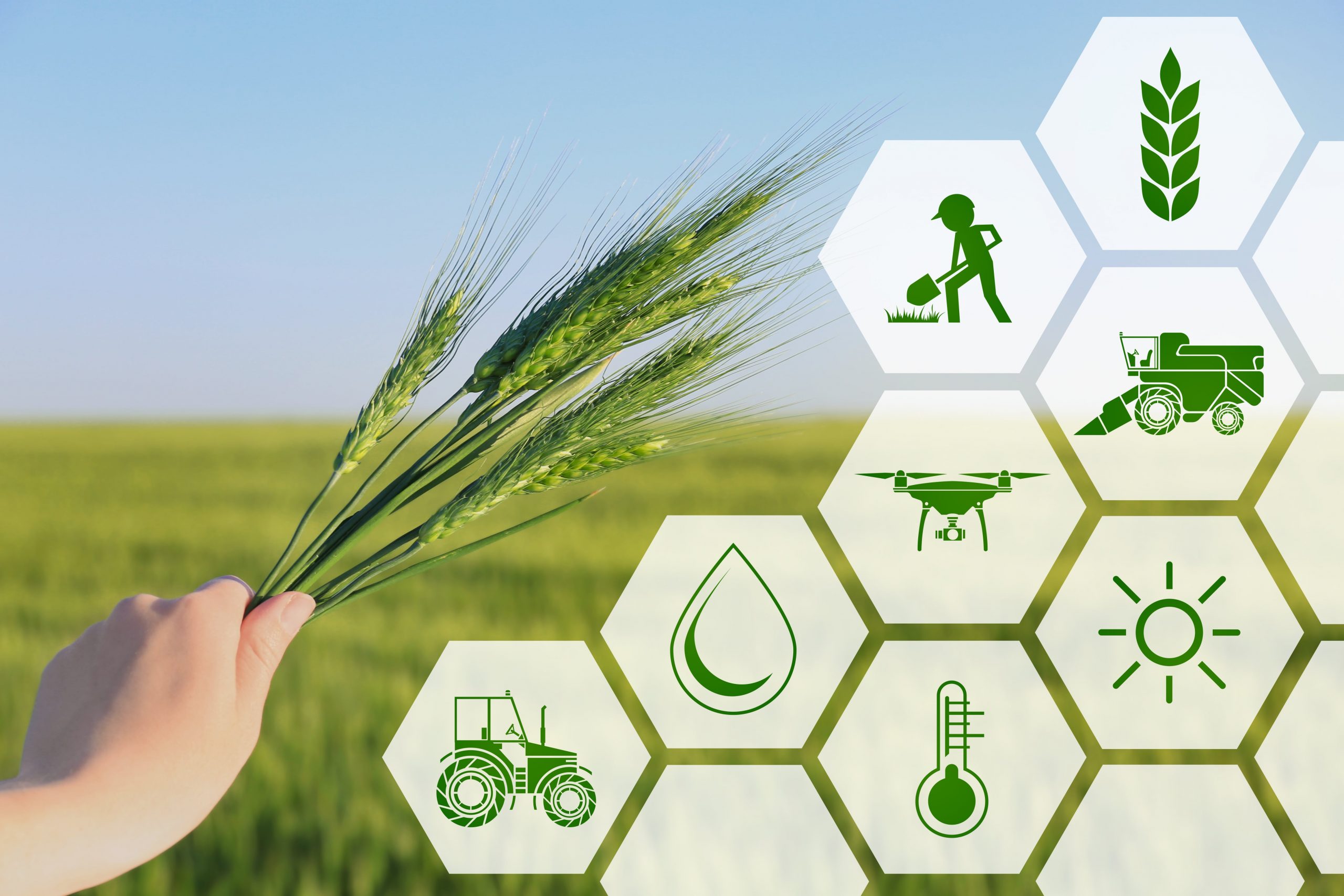
stage in exports. Concepts like "smart farm", "precision agriculture”,
"digital water metering", and "sensor-based greenhouse management"
are becoming common practice worldwide. Sensors measure water and moisture, drones
monitor crop conditions, artificial intelligence predicts harvests, and laboratories
confirm product safety. In Uzbekistan, Agricultural Service Centers, digital platforms,
and the international agricultural education system are the national foundation
of this global process.
Another
important lesson is not to lose the harvest. Many countries around the world, even
when producing large quantities, incur significant losses due to poor storage, cooling,
packaging, and processing. Simply put, in 2050, the winning countries will not
be those that produce a lot, but those that do not waste products, process them,
and create added value.
Geopolitical
risks and the path chosen by Uzbekistan
In today's
world, food security has become not only an agricultural issue but also a matter
of geopolitical stability. Wars, disruptions to trade routes, sharp changes in fuel
and fertilizer prices, export restrictions and risks at ports and along logistics
routes show that political events on one continent can affect the harvest in a field
on another continent. Under such conditions, the essence of the carefully
considered agricultural reforms carried out under the leadership of our
President becomes even clearer. The gradual abandonment of state orders and old
administrative systems, granting freedom to farmers and dehqans, introducing market
mechanisms in grain and cotton cultivation, expanding water-saving
technologies, increasing transparency in land use, allocating land to dehkan
farms, and developing processing and export infrastructure – all of these are not
just economic reforms. This is the path to strengthening the country's food independence
and internal stability during a period of heightened external risks.
Today's
geopolitical situation teaches us one truth: every state must be able to provide
the main part of its own dastarkhan, while being reasonably connected to the world
market. Uzbekistan's path is this: a stable supply for the domestic market,
increasing farmers' incomes, expanding exports, conserving water and soil and creating
added value through science and technology. As our President has emphasized, any
problem can be turned into an opportunity if we use science, technology, and
innovation effectively. Today's food policy is based precisely on this principle:
the response to geopolitical risks – not isolation, but strong domestic production,
diversification, science-based agricultural management, digitalization, water conservation,
and human-centered reforms.
From
"white gold" to a colorful dastarkhan
For many
years, Uzbekistan's agriculture was known for "white gold" – cotton. This
crop greatly influenced the country's economy, rural life, and water system. But
history also showed the consequences of over-dependence on a single crop: pressure
on water, soil salinization, the Aral Sea tragedy, and periods when insufficient
attention was paid to food crops.
The book
"Beyond the White Gold", published this year by the International Trade
Center (ITC), reflects this historic turning point in New Uzbekistan: Uzbekistan
is moving from a narrow cotton-specialized system to a diversified, market-oriented,
innovative, and sustainable agricultural system. Most importantly, this is not
just crop rotation; it is a change in attitude towards land, water, dehqan labor,
and the future. If yesterday's agriculture was known for "white gold",
then tomorrow's agriculture in Uzbekistan must be known for a healthy,
colorful, water-saving national dastarkhan that upholds human dignity. On this
national dastarkhan, there are bread, fruits, vegetables, legumes, milk, eggs,
fish, poultry meat, high-quality oil, nuts, and melons. This is not just product
diversity; it is the foundation of a healthy nation.
Cotton
farming also takes on new meaning.
The post-"white
gold" period does not mean abandoning cotton. It means managing cotton not
as a regionally dominant crop in the old way, but in harmony with science, technology,
water conservation, high added value, and food security.
Our national-scale
study, recently published in the prestigious journal Nature-Scientific Reports,
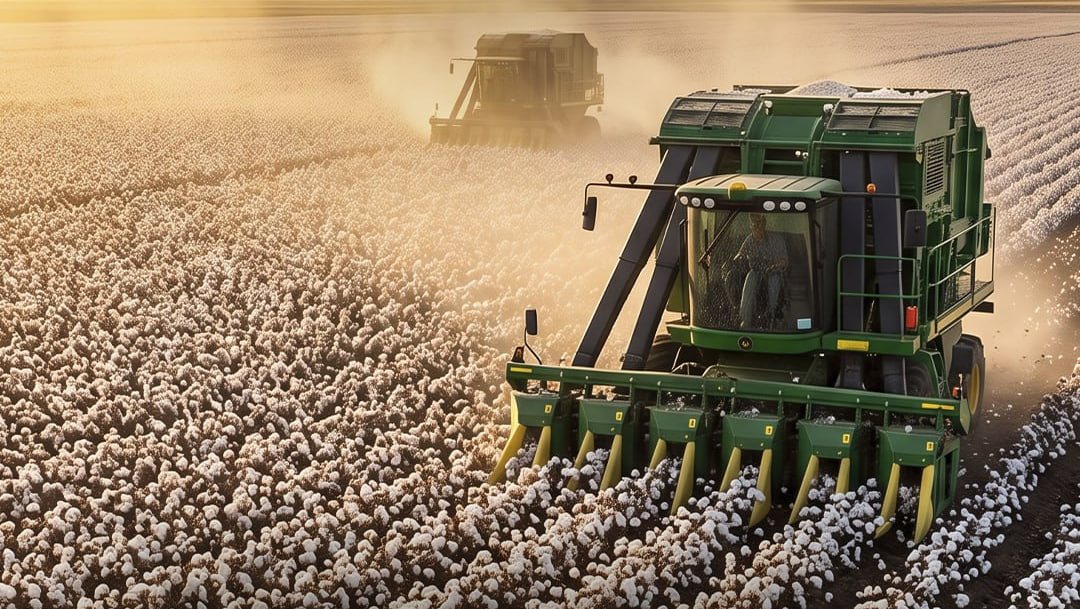
showed that a new stage has indeed begun in Uzbekistan's cotton farming. In 2021–2025,
cotton area decreased from 1 million 31 thousand hectares to 875.6 thousand hectares,
a reduction of 15.1 percent. However, during this same period, total cotton production
increased by 19.3 percent, reaching 3.99 million tons. Most importantly, average
yield increased from 3.24 tons/hectare to 4.55 tons/hectare – a growth of 40.4 percent.
The meaning of this result is very simple: Uzbekistan's cotton farming is moving
from the logic of "more area" to the logic of "more knowledge, technology,
and efficiency". That is, obtaining more yield from less land, saving water,
reducing costs, increasing farmer income, and simultaneously expanding land availability
for food crops – this is becoming the main content of the new cotton policy.
At the
same time, it is evident that new intensive agrotechnologies in cotton farming are
also economically effective. The study noted that with the intensive 76 cm planting
pattern, drip irrigation, and fertigation (irrigation with mineral fertilizers or
necessary substances), production costs per hectare are significantly reduced, water
consumption is reduced by up to 40 percent, and the efficiency of mineral fertilizer
use increases. Thus, the scientific approach benefits the farmer, nature, and the
national economy. This is also directly important for food security. Because if
the principle of "more yield – less area – less water – more added value"
is strengthened in cotton farming, more opportunities are created for vegetable
growing, horticulture, animal feed, legumes, and other food crops. In other words,
modern cotton farming can become not an obstacle to diversification, but rather
a factor that expands its possibilities.
Of course,
these results should be assessed not as a final destination but as important
scientific evidence during the reform period. Our study also emphasizes that 2021–2025
is a short yet highly important period of transformation. Now the task is to turn
this growth into a long-term, environmentally sustainable, and fair system for farmers.
Cotton will continue to have economic significance. But it should not be a single
dominant crop, but rather part of a colorful, food-oriented, humane, and sustainable
agricultural system.
The
foundation was laid in recent years.
In recent
years, extensive work has been carried out in our country to ensure food security,
comprehensively develop agriculture, create added value chains, introduce market
relations, expand processing and export infrastructure, efficiently use land and
water resources, digitalize the sector, and apply innovative technologies. In 2025,
the volume of agricultural products increased 4.5 times compared to 2016.
Steady growth is observed in the production of vegetables, fruits, potatoes, melons,
meat, milk, eggs, and fish. Fish production, which was 84.0 thousand tons
in 2016, reached 206 thousand tons in 2025. This is a great opportunity
to increase protein intake, enrich national food culture and create new sources
of income in rural areas.
A particularly
huge step was taken in the field of water-saving technologies. In 2016, the area
where water-saving technologies were applied was only 9.0 thousand hectares. Today,
this figure has reached 2.6 million hectares, with drip and sprinkler
irrigation, along with laser leveling, contributing to this result. It is worth
noting here that according to this indicator, Uzbekistan ranks 1st in Central
Asia, 2nd in the CIS, 4th in Asia, and 13th in the world. These
numbers are not just statistics. Behind them stand a farmer who saved water, an
entrepreneur who implemented new technology, a dehqan who increased his harvest,
youth provided with employment, products that reached the market, and national brands
that embarked on export.
The
biggest test is overcoming water scarcity.
When talking
about 2050, the primary issue for Uzbekistan is, of course, water. Because our country
has an arid climate, agriculture has a high water demand. According to some estimates,
in the coming decades, water flow in the Amu Darya and Syr Darya basins may decrease,
and water scarcity may intensify. In Uzbekistan, a large share of water
resources is used for agriculture. Therefore, efficient use of water is no longer
just an agrotechnical task; it is a matter of national security, economic stability,
and responsibility to future generations. The principle "Every drop of water
– future rizq (sustenance)" should not remain just a slogan. It must enter
agricultural policy, farmer practice, mahalla culture, and children's education.
Water conservation begins with technology but is strengthened by culture. Drip irrigation,
sprinkler irrigation and discrete irrigation – all these are very necessary. But
without responsibility throughout the entire water chain – from canals to the head
of the field – technology alone will not be fully effective.
Soil
is living wealth.
Soil is
not just ordinary land. It is living wealth. If the soil is exhausted, neither the
best seed nor the most modern technology will give the expected result. Therefore,
in the future, Uzbekistan's agricultural policy should rely not on "opening
up more land" but on "using every hectare with knowledge and responsibility."
In recent years, important work has been done on soil protection, increasing its
fertility, compiling agrochemical maps, combating land degradation, crop rotation,
and restoring low-productivity areas. In 2019–2023, 692 thousand hectares of land
were put back into use, creating the opportunity to produce an additional 6
million tons of agricultural products and to create 213 thousand jobs. In the future,
legumes, crop rotation, organic matter, biohumus, biochar, soil microbiome, agroecology,
and low-water-demand crops will be of great importance for increasing soil fertility.
From
market to humaneness: the need for STEM+HECI
Market
reforms set agriculture in motion. This was a necessary stage. But now we need to
move to an even higher stage. Just "market-oriented agriculture" is not
enough. We need "market-oriented + humaneness-infused agriculture." The
market tells us which product sells best. But a humaneness-oriented approach asks
another question: how does this product affect children's health, water, soil, farmer
income, and future generations?
This is
where the STEM+HECI approach is very important. STEM – Science, Technology, Engineering,
and Mathematics – gives us productivity, digitalization, artificial intelligence,
genomics, breeding, water-saving systems, sensors, and drones. HECI – Humanity,
Ethics, Creativity, and Imagination – directs these technologies with humanistic
virtues, ethical boundaries, and creative intelligence towards the benefit and future
of nature, humans, animals, and plants. Simply put, STEM asks, "How can we
produce more and more efficiently?" HECI asks, "Is this solution beneficial
to humans, animals, plants, water, soil, society, and the future?" Therefore,
the agronomist of the future is not just a specialist who knows varieties and fertilizers.
They must be a new-generation specialist who understands climate, water, soil,
markets, nutrition, digital data, and ethical responsibility.
The
principle "From field to dastarkhan."
In the
future, the winning countries will not be those that produce a lot, but those that
do not lose products, store, process, package, maintain quality, and deliver
them safely to consumers. If a dehqan grows 100 tons of fruit, but most of it is
lost during storage, transport, or delivery to the market, this is not just an economic
loss. It is a loss of water, labor, soil, fertilizer, and human hope. Therefore,
processing is one of the central issues of food security in 2050. Today, the number
of food industry enterprises in Uzbekistan is increasing, and processing capacities
are expanding in the areas of fruits and vegetables, meat, milk, flour, and vegetable
oil. But this is just the beginning. Deep processing of fruits and vegetables, freezing,
drying, natural juices, baby food, functional foods, high-value export products,
organic products, and packaging that meets international standards are great opportunities
for the future.
Digital
agriculture – a factor of transparency and trust
The dehqan
of the future will work not only with a ketmen (traditional hoe) and tractor, but
also with digital data. What soil is where? In which region will water scarcity
intensify? Which variety is resistant to heat or salinity? Which product is in demand
on the market? Which subsidy was given to which farmer? Without clear answers to
these questions, neither efficiency nor justice can be fully ensured. From this
perspective, the introduction of systems such as "Agrosubsidy", "Agroplatform",
and "Digital Agriculture" is highly important. They not only speed up
public services but also create transparency for farmers and dehqans, build
trust in banks, provide accurate data for the state, and establish a fair mechanism
for society.
In the
future, these systems should be deepened into a national agro-information
system capable of predicting yield, water consumption, disease and pest risks,
food prices, logistics, and export opportunities using artificial intelligence.
But digitalization should not forget the human. If a farmer cannot use the digital
system, there is no internet, consultants are lacking, or information is not provided
in a language he understands, even the best platform will not give the expected
result. Therefore, along with digital agriculture, digital literacy, agro-advisory
services, services in local languages, and training for youth and women are also
necessary.
National
food culture – strategic wealth
Future
food security is not only about production, but also about consumption culture.
If products are available on the market but the family does not choose them
correctly, the child's diet is unbalanced, and meals in schools and
kindergartens are not properly organized, then food security is not fully ensured.
The Uzbek national dastarkhan has a great advantage: it has a natural place for
vegetables, greens, legumes, yogurt, dairy products, fruits, melons, fish, and poultry
alongside bread. This culture needs to be enriched with modern science. That is,
while preserving our national dishes, they should be properly promoted in accordance
with the health of children, mothers, older people, and the working population.
The dastarkhan of 2050 should not just be a symbol of abundance like a wedding dastarkhan,
but a dastarkhan for daily healthy living.
Seven
national directions for 2050
The
first direction – turning water conservation into a new national culture. Along with expanding
water-saving technologies, canals, water meters, digital monitoring, farmer skills,
and local water management must be strengthened. The second direction – preserving
soil fertility as national wealth. Each region must have a soil passport, an agrochemical
map, a crop rotation plan, and an organic matter balance. The third direction
– sharply increasing processing and storage. In every region, the system for storing,
drying, freezing, packaging, and deep processing of fruits and vegetables must be
strengthened. The fourth direction – linking legumes, oilseeds, fisheries,
poultry, dairy farming, and horticulture with the national nutrition strategy. These
sectors are needed not only for exports but also for people's health—the fifth
direction – expanding organic and "green" farming. Global demand for
organic products is growing. Uzbekistan's sun, soil, and traditional farming culture
offer great opportunities in this direction—the sixth direction—by
creating specialized agricultural models for Karakalpakstan and water-scarce regions.
Salt-tolerant varieties, low-water-demand crops, low-cost greenhouses, pasture restoration,
and fisheries are of great importance for these regions—the seventh direction—bringing
youth and women to the center of agricultural innovation. If access to land, credit,
technology, advice, and markets expands, agriculture will become not only a source
of products but also a worthy profession and source of income for the new generation.
Conclusion:
The seed sown today becomes tomorrow's bread
2050 is
not far from us. The children going to school today will be the main workforce,
scientists, farmers, entrepreneurs, and leaders of our country in that era. What
bread, what milk, what vegetables, what fruits and what water will be on their
dastarkhan depend on our decisions today. Global threats are real: water scarcity,
climate change, microplastic pollution, antimicrobial resistance, soil degradation,
geopolitical disruptions, and food price instability. But the solutions are also
clear: science, innovation, water conservation, digitalization, organic and green
farming, processing, healthy eating culture, STEM+HECI education, and fair market
relations. The most important lesson from the FAO is that the world can produce
enough food, but to overcome hunger, people must have access to that food, income,
infrastructure, knowledge, and a sustainable rural economy. Therefore, the agrarian
reforms in Uzbekistan are not just about increasing production but also about
creating income in rural areas, liberating farmers, bringing dehqans to
markets, providing opportunities for youth and women, conserving water and soil,
and bringing science closer to the field.
In recent years, Uzbekistan has taken a great step on this path. Now, the next task is the transition from an abundant harvest to a healthy dastarkhan, from market efficiency to human dignity, from technology to responsible innovation. Food security is not just the task of the Ministry of Agriculture or the farmer. It is the research of the scientist, the upbringing of the teacher, the advice of the doctor, the mother's dastarkhan, the honest product of the entrepreneur, the responsibility of the water manager, the labor of the dehqan, and the choice of every citizen. The dastarkhan of 2050 begins in today's field. It begins with today's seed, today's water conservation, today's attitude towards the soil, today's science, and today's human responsibility. Therefore, the new meaning of food security for New Uzbekistan should be this: let abundant harvest serve the healthy human, let the market serve fair prosperity, and let technology serve the benefit of nature and future generations.
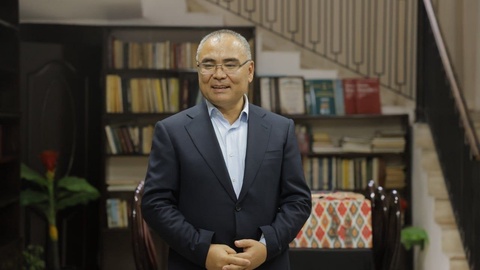
Ibrokhim Abdurakhmanov,
Minister of Agriculture of the Republic of Uzbekistan, Academician