
In the country, special attention is paid to ensuring a peaceful and safe life for the population and protecting the inviolability of property. Modern approaches based on advanced foreign experience are being introduced in this area. These priority tasks are entrusted to the Security Department under the Ministry of Internal Affairs.
In accordance with the relevant decisions of the Head of State, in 2025, the Security Department was transferred from the National Guard to the system of internal affairs bodies.
To implement the tasks defined in these documents, specific plans were developed, and appropriate measures were adopted.
New systems for organizing technical security and providing technical security services to the population have been introduced.
In particular, by installing “panic buttons” at apartment building entrances, the number of apartments covered by security patrols has increased significantly, and a practice has been introduced to ensure the safety of women who have protection orders.
A system of cooperation has been established with the relevant services of internal affairs bodies for safeguarding facilities and apartments.
As a result, over the year, the number of guarded facilities increased by 99 percent, and the number of protected apartments by 118 percent. The number of technical security centers rose by 19 percent, while the number of rapid response teams servicing them increased by 15 percent.
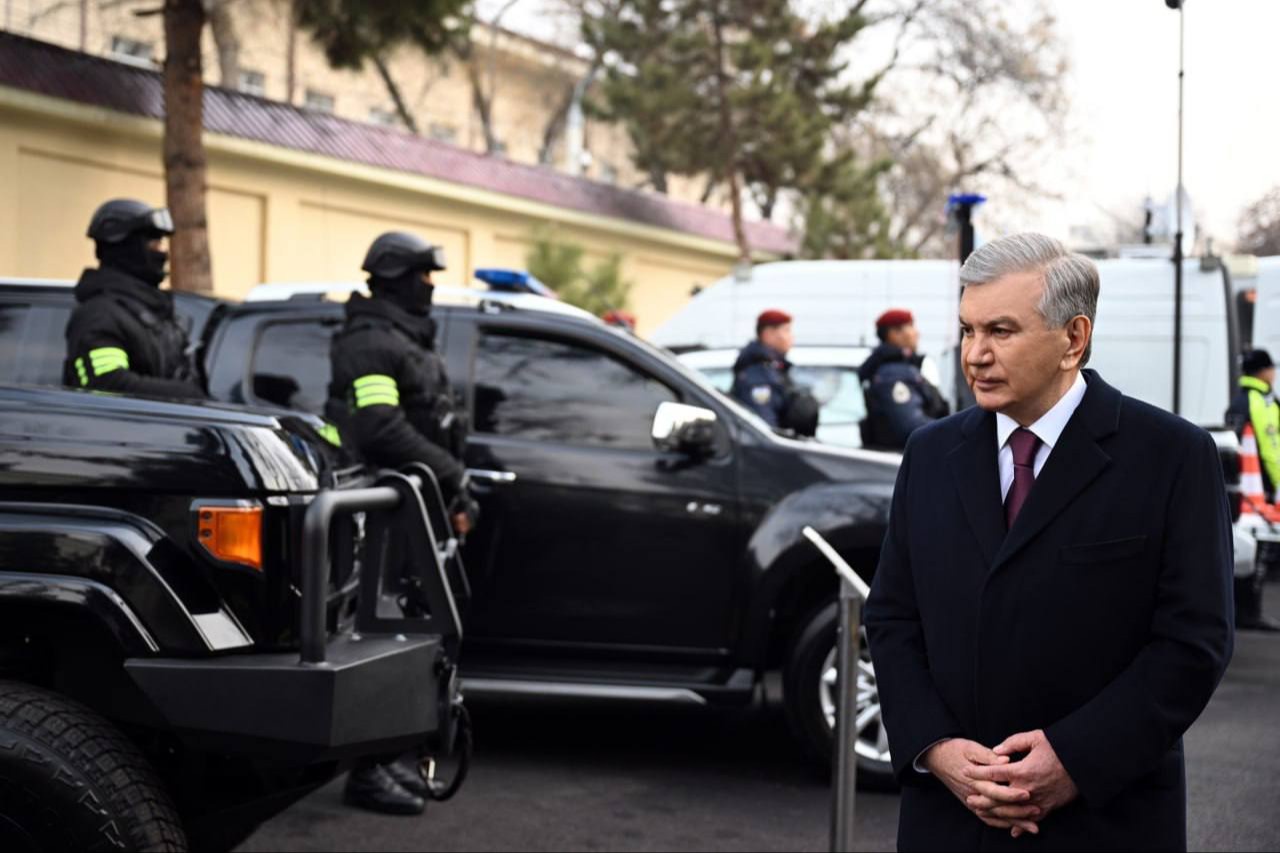
In the courtyard of the service building, the Head of State inspected the special equipment used by the service, drone maneuvers, and vehicles employed to maintain public order.
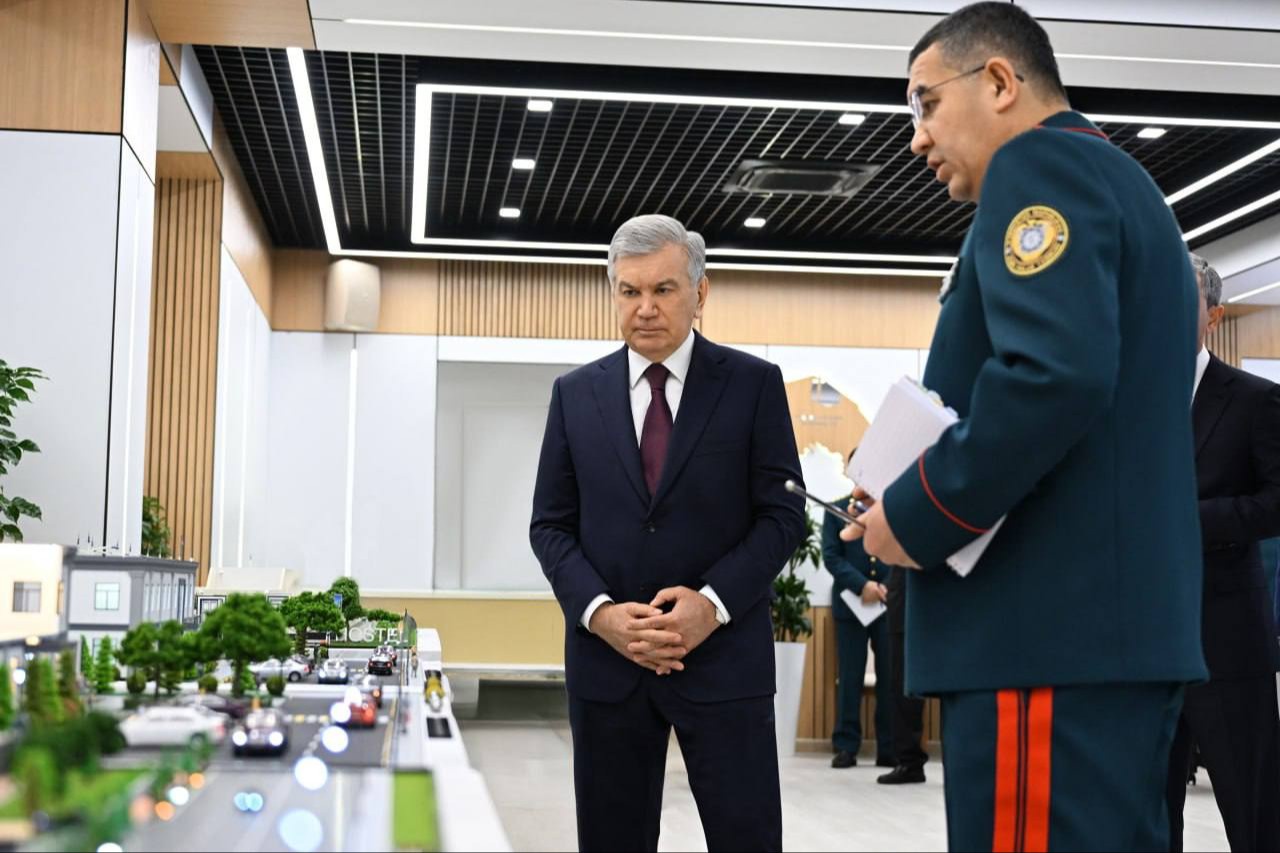
The President then reviewed a demonstration of security equipment. Detailed information was presented on the work being carried out to introduce and consistently develop the “Safe City” concept.
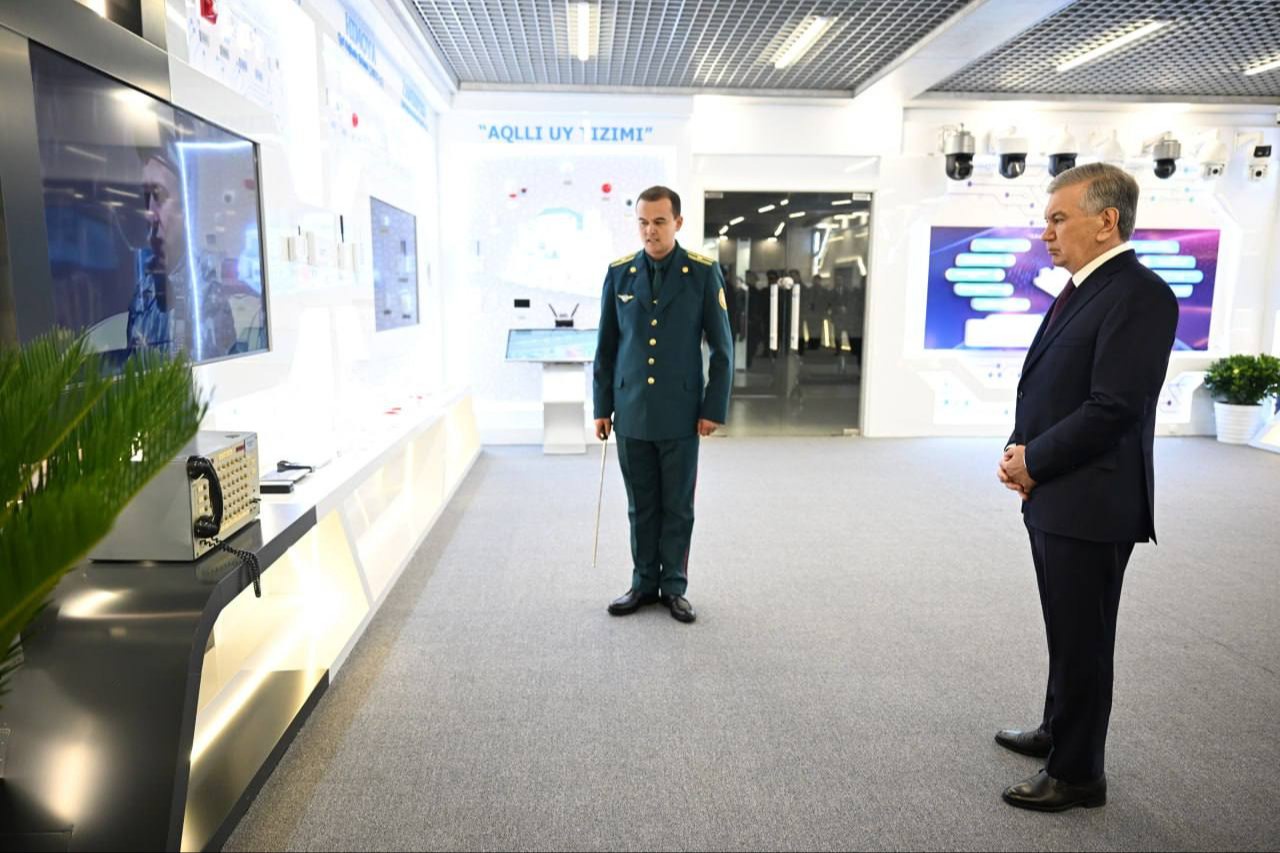
As a result of the introduction into practice of specific mechanisms defined by the relevant resolution of the Head of State, adopted in 2023, the “Safe City” concept is being implemented nationwide in stages. At the exhibition site, the operation of video surveillance systems and various types of cameras installed with due regard to the requirements and needs of legal entities and individuals was demonstrated in real time, their technical capabilities were explained, and practical recommendations were provided.
As part of the presentation, the capabilities of various cameras equipped with rotation and facial and license plate recognition were demonstrated. This equipment is being installed in mahallas, residential areas, public places, buildings, educational institutions, and at the entrances and exits of cities and districts.
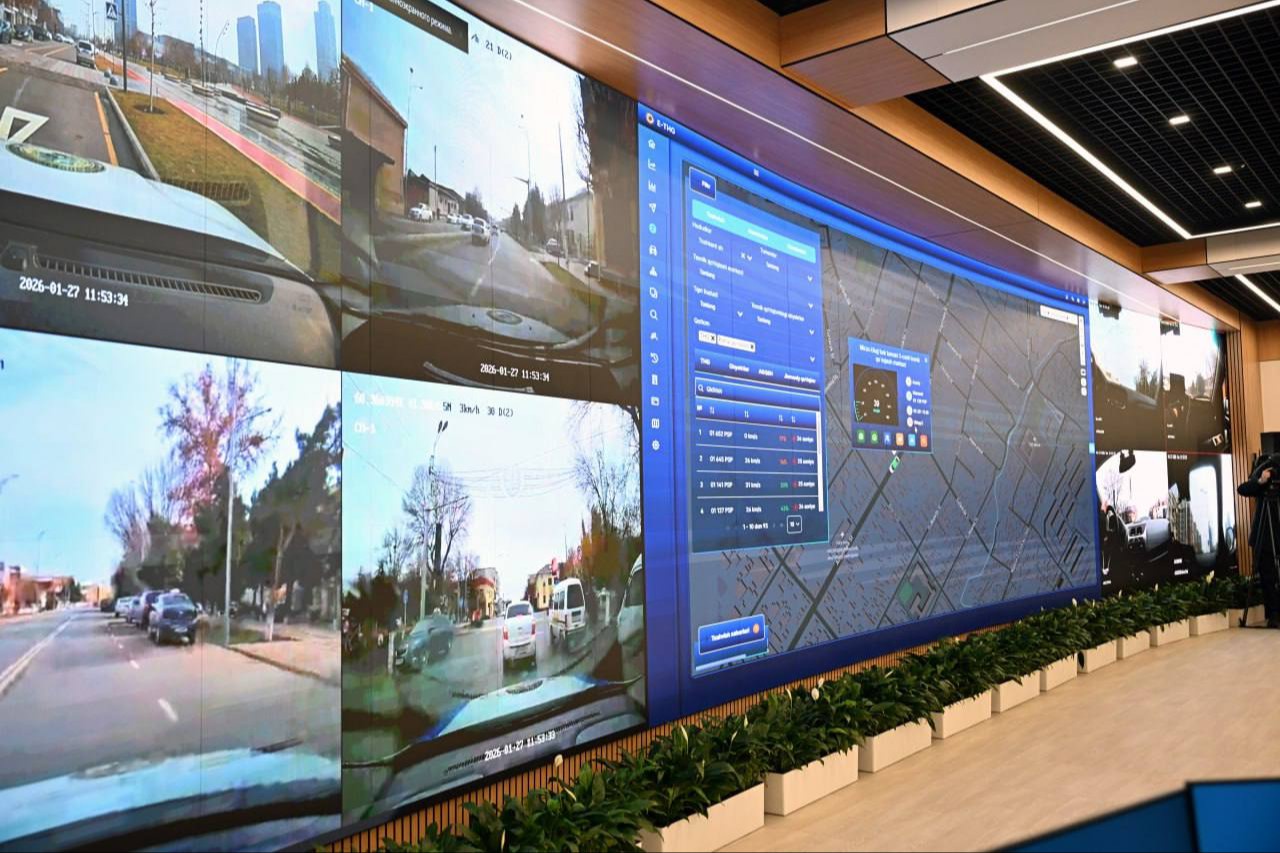
Today, the “Qalqon” information system has been fully launched across all regional internal affairs departments, enabling online monitoring of territories, conducting search operations, managing forces and resources, and detecting crimes “in hot pursuit” using artificial intelligence.
The President emphasized that internal affairs bodies and security services must begin their work at the mahalla level, assess the condition of apartments, and ensure their safety. Given that Tashkent is a megacity, he stressed the need for regular analysis of the factors contributing to offenses and crime.
As part of the “Safe City” concept, a unified platform has been created, comprising 13 operational data processing centers, a single electronic map, 42,750 intelligent cameras, and 17 fire safety monitoring systems. These systems form the core structural components of the concept.
It was noted that efforts to introduce and integrate intelligent transport systems, vehicle parking management systems, environmental and seismological monitoring, and emergency alert systems, carried out jointly with ministries and agencies, will continue this year as well.
It was emphasized that, thanks to the integrated use of the technical capabilities of the unified “Safe City” platform by law enforcement and government bodies, several hundred billion UZS in budget funds have been saved. Uzbekistan’s experience in implementing the “Safe City” concept has attracted significant international interest.
The President was informed that construction has begun at the Academy of the Ministry of Internal Affairs on a new building for the Digitalization Department that meets modern requirements. By the end of the year, it is planned to expand network coverage, integrate at least four new artificial intelligence-based systems into the platform, and raise the level of digitalization to international standards.
The President noted that the forms and factors of crime are currently changing, while corresponding systems and countermeasures have yet to be fully developed. It was emphasized that cybercrime has increased in particular and that failure to accelerate efforts to neutralize these threats could create severe difficulties for the population.
It was pointed out that the main problem is the shortage of qualified specialized personnel. Special attention must be given to improving the knowledge and skills of employees of banks and internal affairs bodies, and to providing them with regular training. It was also noted that when introducing video surveillance systems, it is critically important to train specialists to install and operate them effectively and to organize periodic training courses.
The visit continued with a review of the measures being implemented in Tashkent to ensure public safety within the framework of the “Safe Street”, “Safe Sidewalk”, and gastronomic street projects.
During the visit, the training process for security service personnel, as well as practical exercises involving prevention inspectors, were observed.
During a presentation on the activities of the situation center, the Head of State was informed about the role of modern management and monitoring systems in ensuring security.
The situation center has been established to control and monitor the actions of security service units, as well as to manage, coordinate, and conduct online supervision of their forces and resources during operational and emergencies.