
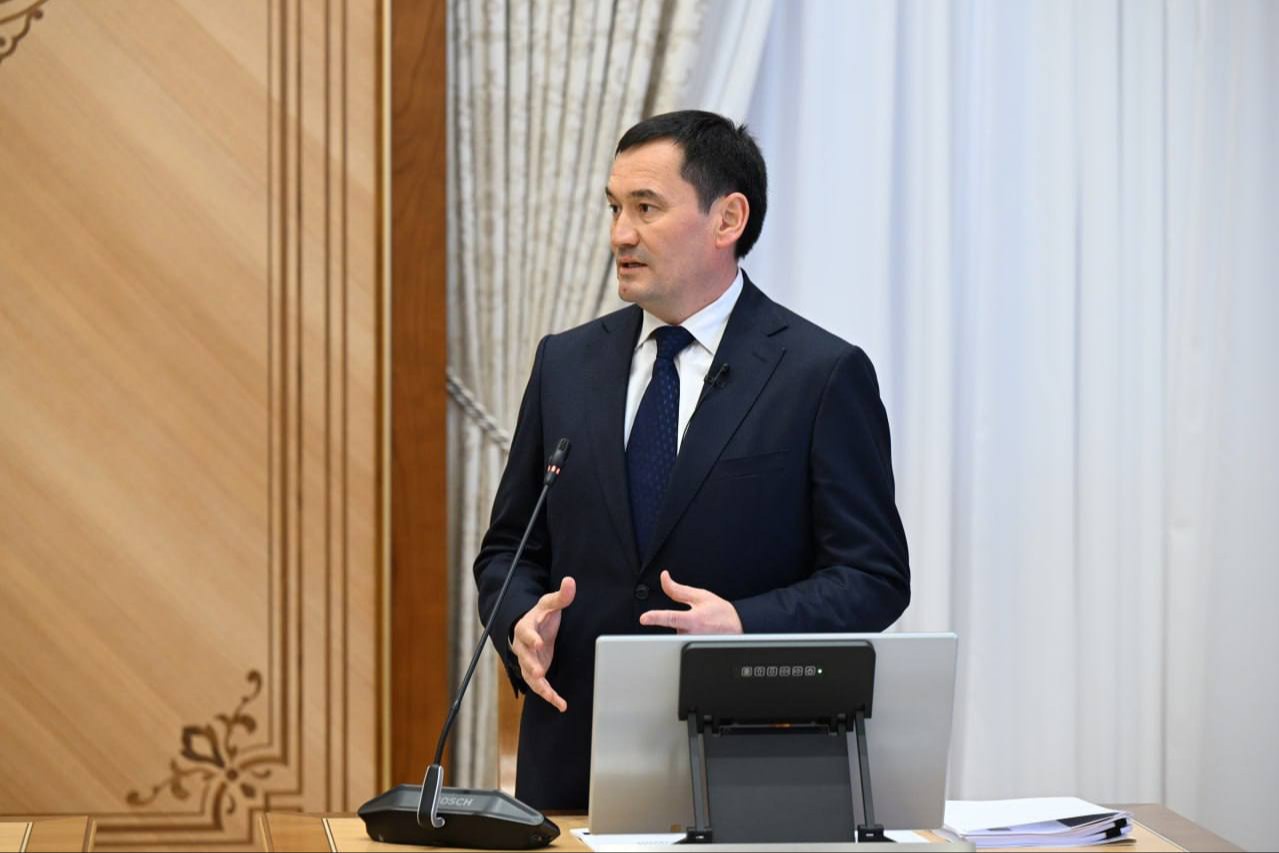
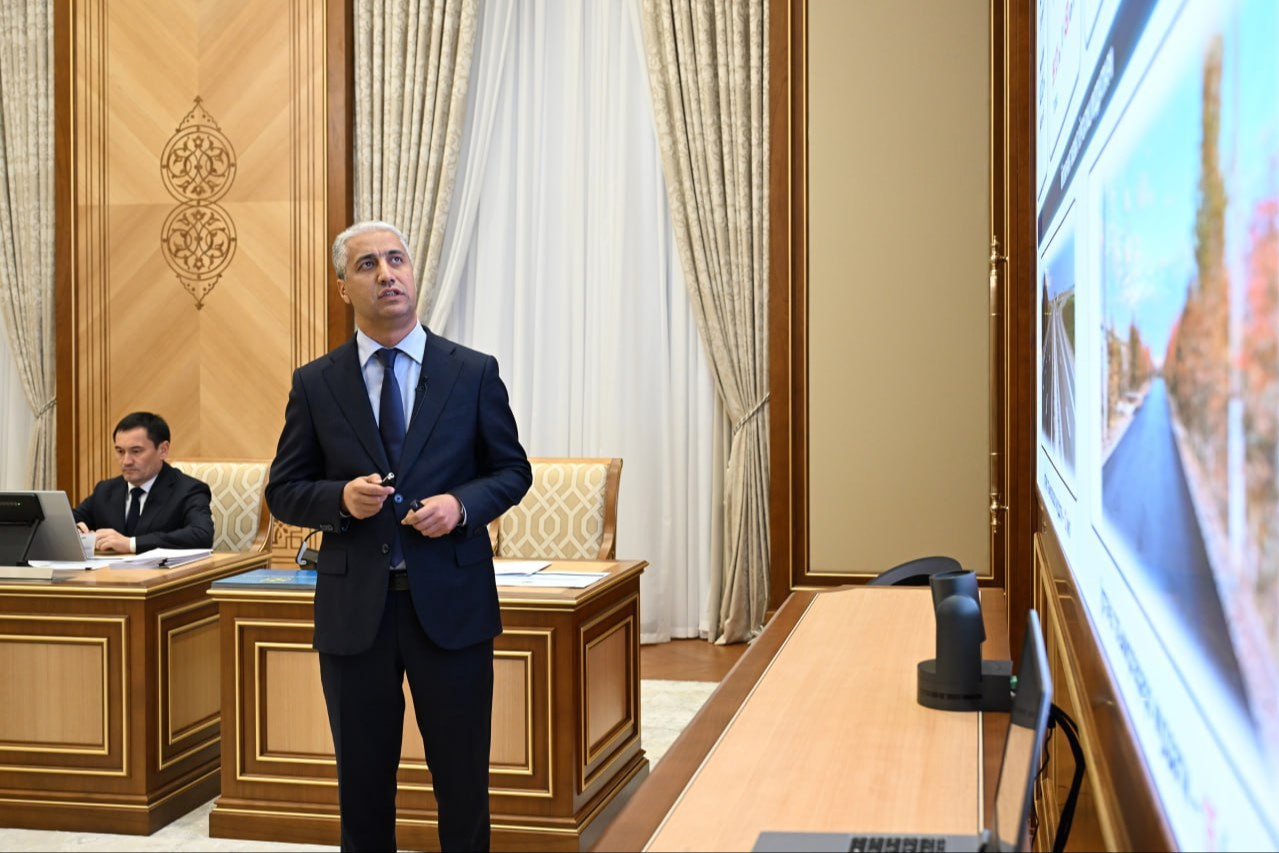
Information was presented on the work carried out over the past three years, the financing volume, and the practical results achieved.
During this period, around 40 trillion UZS were allocated to the road sector, and 63,000 kilometers of roads were constructed and repaired. The volume of foreign funds attracted has tripled, reaching $1.2 billion in 2025. Instead of standard templates, a practice of designing roads based on the geological and environmental characteristics of each region has been introduced. Modern pavement types have been developed, increasing road service life by 1.5 times.
The presentation also outlined proposals and plans to address existing issues in the sector. It was noted that advanced international experience and proven global technologies are still underutilized in the repair and construction of public roads, internal routes, and bridges.
In the coming years, plans include constructing and repairing 21,000 kilometers of roads, covering 14,000 kilometers of dirt roads with gravel, and repairing 325 bridges.
It was noted that 1,800 kilometers of roads have deteriorated due to heavy trucks exceeding permissible weight limits.
To ensure proper weight control of freight transport, the network of control points equipped with measuring systems will be expanded. Currently, 9 weighing stations are installed, and 8 more are being installed. A task has been assigned to establish an additional 35 mobile and stationary control and measurement points.
Responsible officials have been instructed to implement an interagency electronic information system that covers all processes related to weight and dimensional control. In addition, a procedure will be developed to impose seasonal restrictions on heavy vehicle movement based on weather conditions.
At present, 61 percent of newly built roads and 92 percent of internal roads under the Participatory Budgeting program are being constructed by the private sector. Entrepreneurs are gradually becoming involved in road maintenance as well, an area that for many years remained under state monopoly.
Plans call for expanding this practice and engaging entrepreneurs to maintain 3,000 kilometers of roads next year and 6.3 thousand kilometers by 2030. It was also noted that roads to be built in 86 districts, with Asian Development Bank participation, must be fully transferred to local contractors for implementation.
Attention was drawn to the low level of digitalization in the sector: of the 59 existing services, only 20 have been digitized. Next year, an additional 28 services are expected to transition online, along with the introduction of an intelligent transportation system and the development of 7 new electronic platforms.
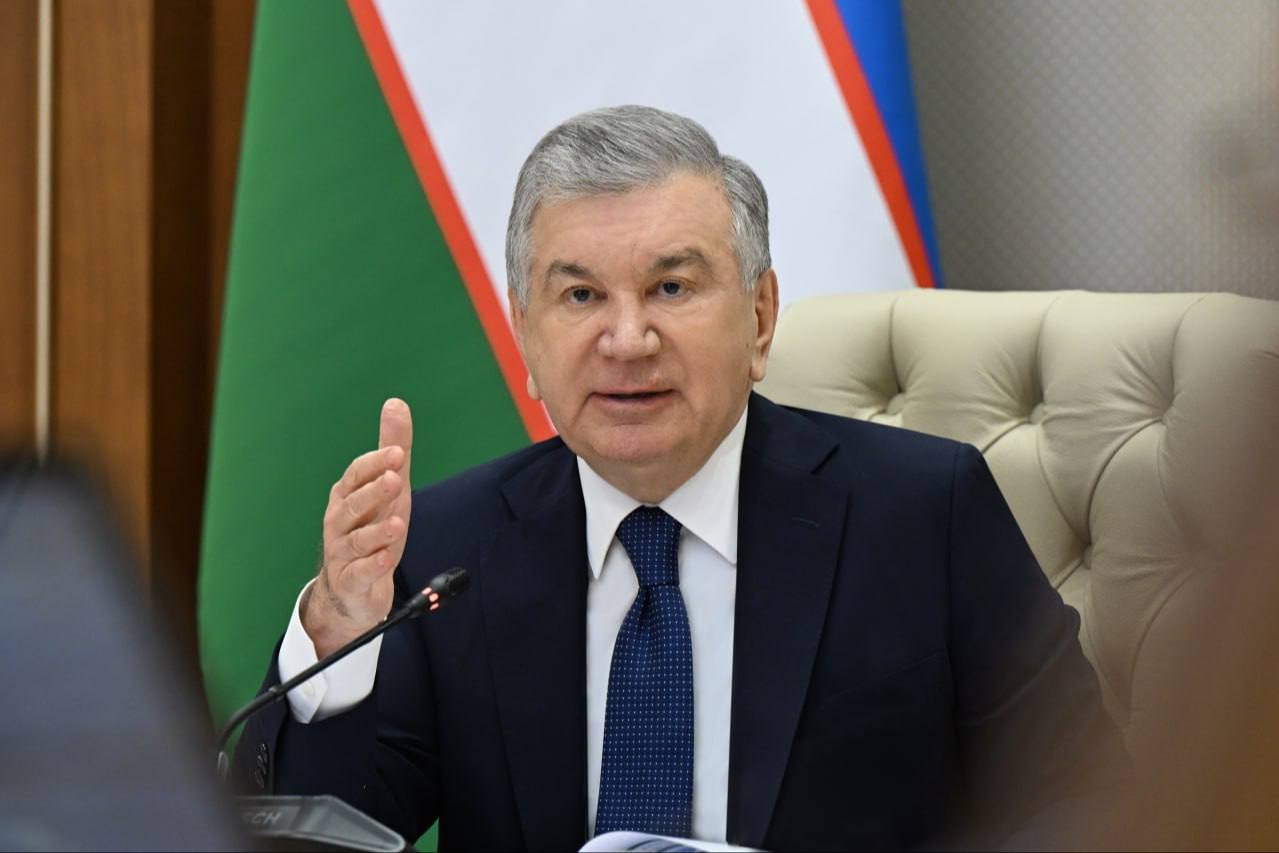
Following the presentation, instructions were issued to develop the Uzbekistan Road Development Strategy 2035 in line with the outlined objectives.