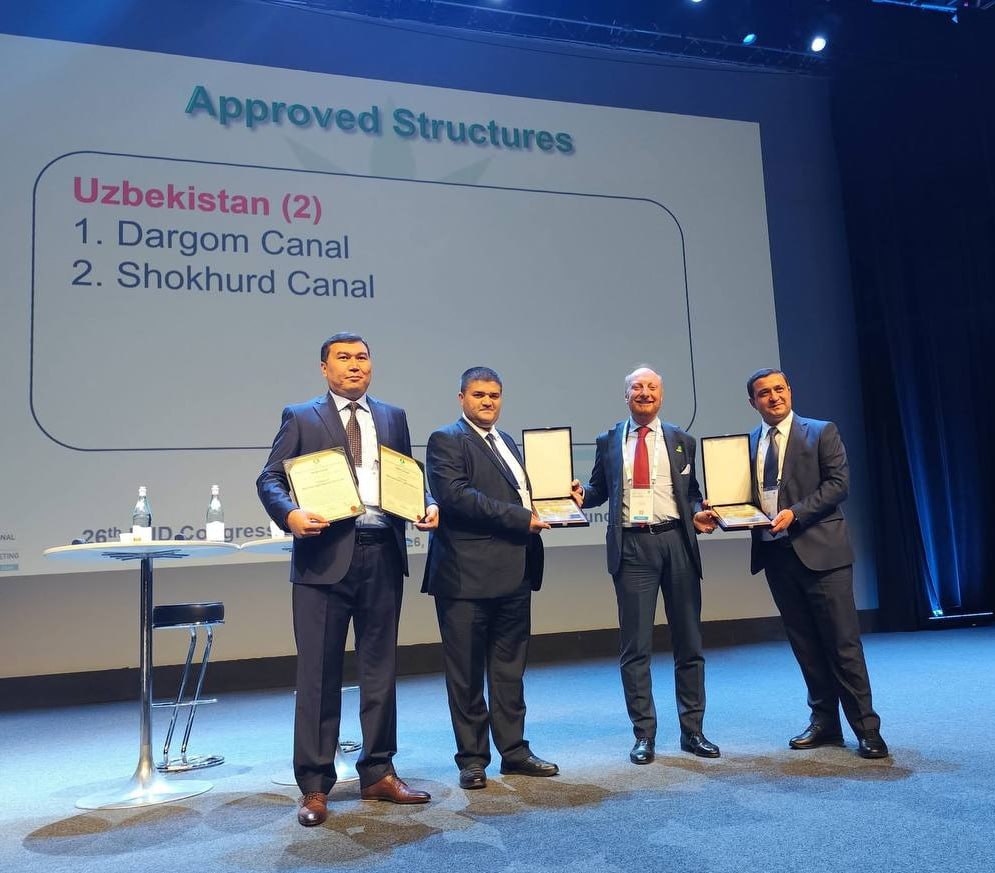

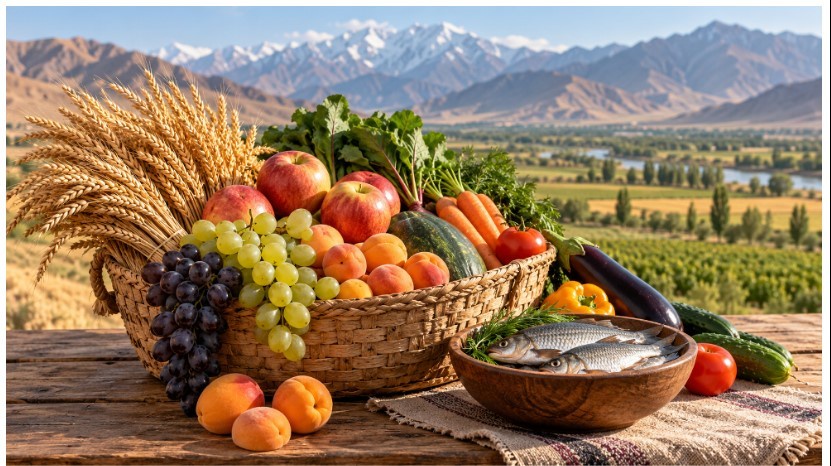
ROME — A proposal presented by Uzbekistan at the Food and Agriculture Organization’s 2026 World Food Forum aims to connect Central Asia’s agricultural strengths into a coordinated food system, turning the region’s landlocked geography into an advantage through stronger overland links.
In an article published by Yuz.uz, Ibrokhim Abdurakhmonov, Uzbekistan’s Minister of Agriculture and an academician, describes the proposal as a shared “food basket” built around regional cooperation. The vision brings production, scientific research, nutrition, investment, processing, storage and transport into a connected chain from farms to consumers.
Its proposed framework is organized around seven principles, summarized as the 7Ds: Data, Diversification, Design, Doable, Discipline, Durable and Dignity. Together, they call for decisions grounded in reliable information, diverse and resilient production, practical solutions tested in local conditions, coordinated implementation and benefits that endure for farmers and communities.
The article highlights how the countries’ different strengths could complement one another. Kazakhstan contributes extensive grain production and transit capacity; Kyrgyzstan and Tajikistan bring mountain agriculture, water resources and fruit production; Turkmenistan offers experience in arid farming; and Uzbekistan combines intensive agriculture, horticulture, research, processing and a large domestic market. The proposal presents these as potential building blocks for cooperation, rather than as a finalized regional agreement.
Among the ideas are a regional Food Basket Observatory to bring together comparable information on production, water, nutrition, trade and logistics; 7D Living Labs where researchers and farmers could test innovations; and financing that helps move promising solutions from research into real-world use. The article also identifies four proposed areas for joint work: farming informed by epigenetics, Blue Nutrition and aquatic foods, land transport corridors, and circular carbon farming.
The approach emphasizes that regional cooperation would complement national decision-making. Each country would retain control over its own data and priorities, while partners could agree on shared standards, cross-border tasks and ways to assess results. Measures could include farm income, food affordability, diet quality, water use and post-harvest losses, alongside production and exports.
The proposal also considers how the 7D approach might be adapted by other landlocked countries and regions of the Global South. Its central premise is that cooperation should be shaped around local needs: improving storage where crops are lost, strengthening cold chains for perishable food, or coordinating water use where resources are scarce.