
The first
session of the conference set the general political and strategic tone for the
entire agenda. The main focus was on the implementation of the updated
nationally determined contributions (NDEs) from the countries of the region.
The heads of relevant government agencies and representatives of international
organizations discussed the priorities of climate policy, existing funding
needs, as well as opportunities to strengthen the implementation of ONUV 3.0.
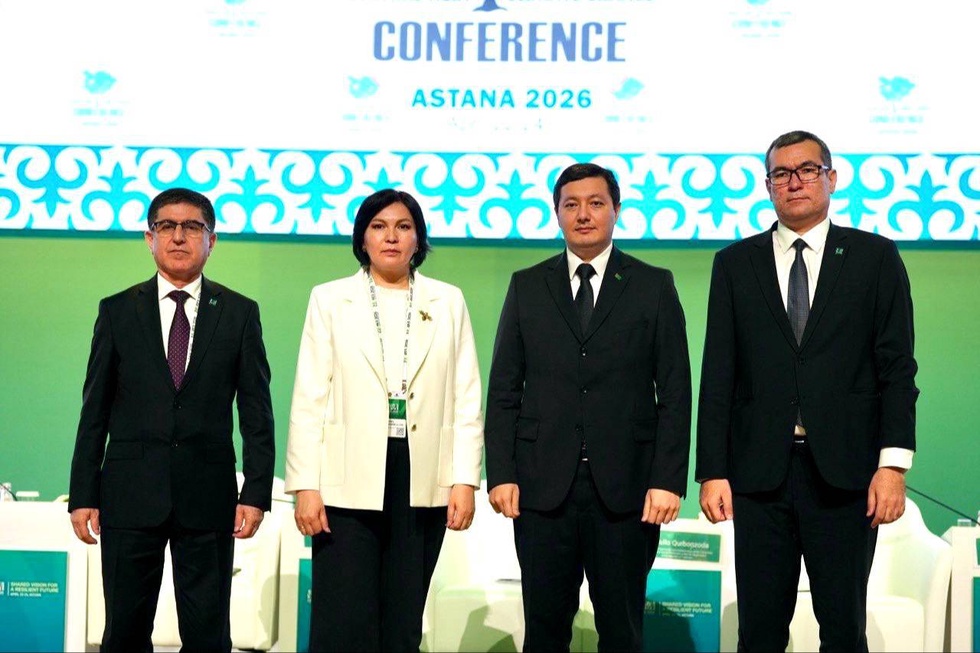
The
conference was attended by representatives of government agencies and leading
international organizations, including the Regional Environmental Center for
Central Asia (CAREC), the NDC Partnership, the World Bank and the German
Society for International Cooperation (GIZ). The participants stressed the
importance of consolidating efforts, sharing experiences, and expanding access
to climate finance to achieve their goals.
Farrukh
Sattarov, Director of the National Center for Climate Change at the National
Committee of the Republic of Uzbekistan on Ecology and Climate Change, spoke on
behalf of Uzbekistan at the session. He noted the key changes in the national
climate policy management system and the implementation of ONUV 3.0.
In
particular, it was emphasized that Uzbekistan is actively developing a system
of "green" financing. Work is underway to create a favorable
investment environment and expand cooperation with international financial
institutions. Special attention is paid to the introduction of
"green" technologies. Projects on the development of renewable energy
sources, energy efficiency improvement and sustainable water resources
management are being implemented in the country.
In
addition, the climate agenda is consistently integrated into key sectors of the
economy - agriculture, energy, transport and industry. This intersectoral
approach makes it possible to achieve comprehensive solutions and enhance the
synergetic effect of the measures being implemented.
Improving
the monitoring and reporting system remains an important area. Uzbekistan is
strengthening mechanisms for accounting for greenhouse gas emissions and
evaluating the implementation of climate projects. This ensures more accurate
tracking of progress and allows timely adjustments to government policy.