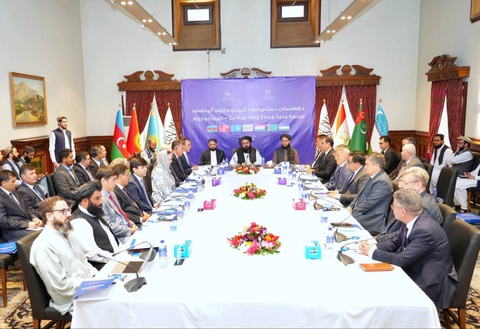

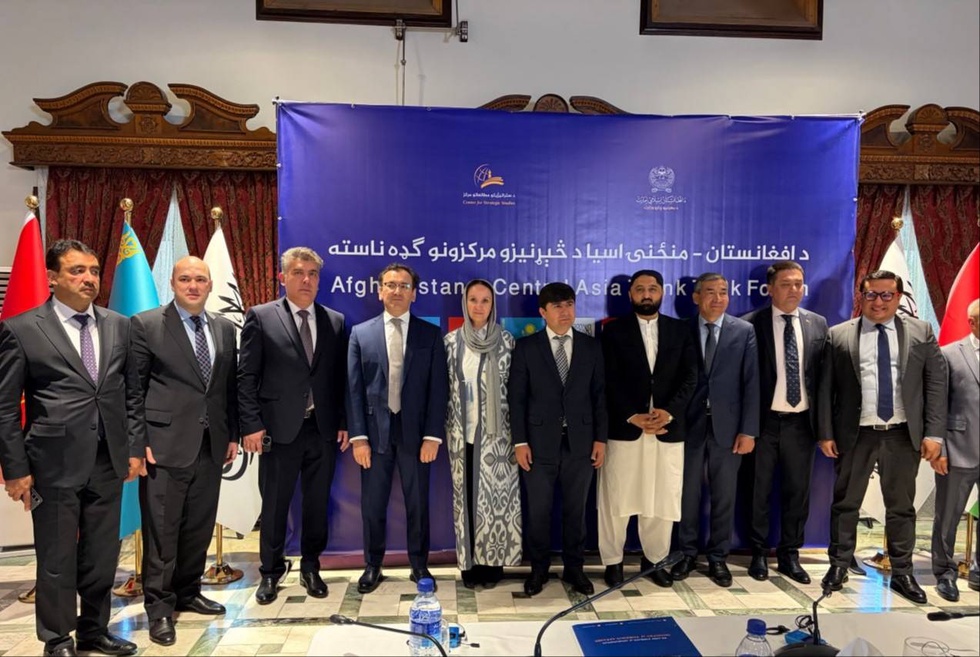
The forum
became a logical continuation of the ministerial consultative dialogue
"Central Asia + Afghanistan", which was held on April 5 this year in
Kabul at the level of foreign ministries. Earlier, on the sidelines of the
Termez Dialogue on Interconnectedness between Central and South Asia, an expert
meeting of the Central Asia + Afghanistan format was held, during which
approaches to holding and substantive content of the Kabul forum were
discussed.
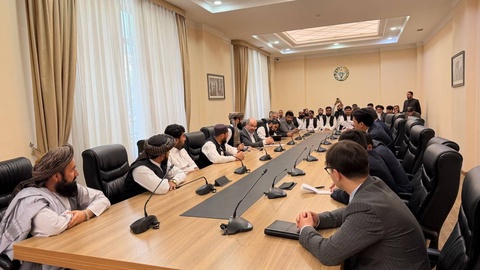
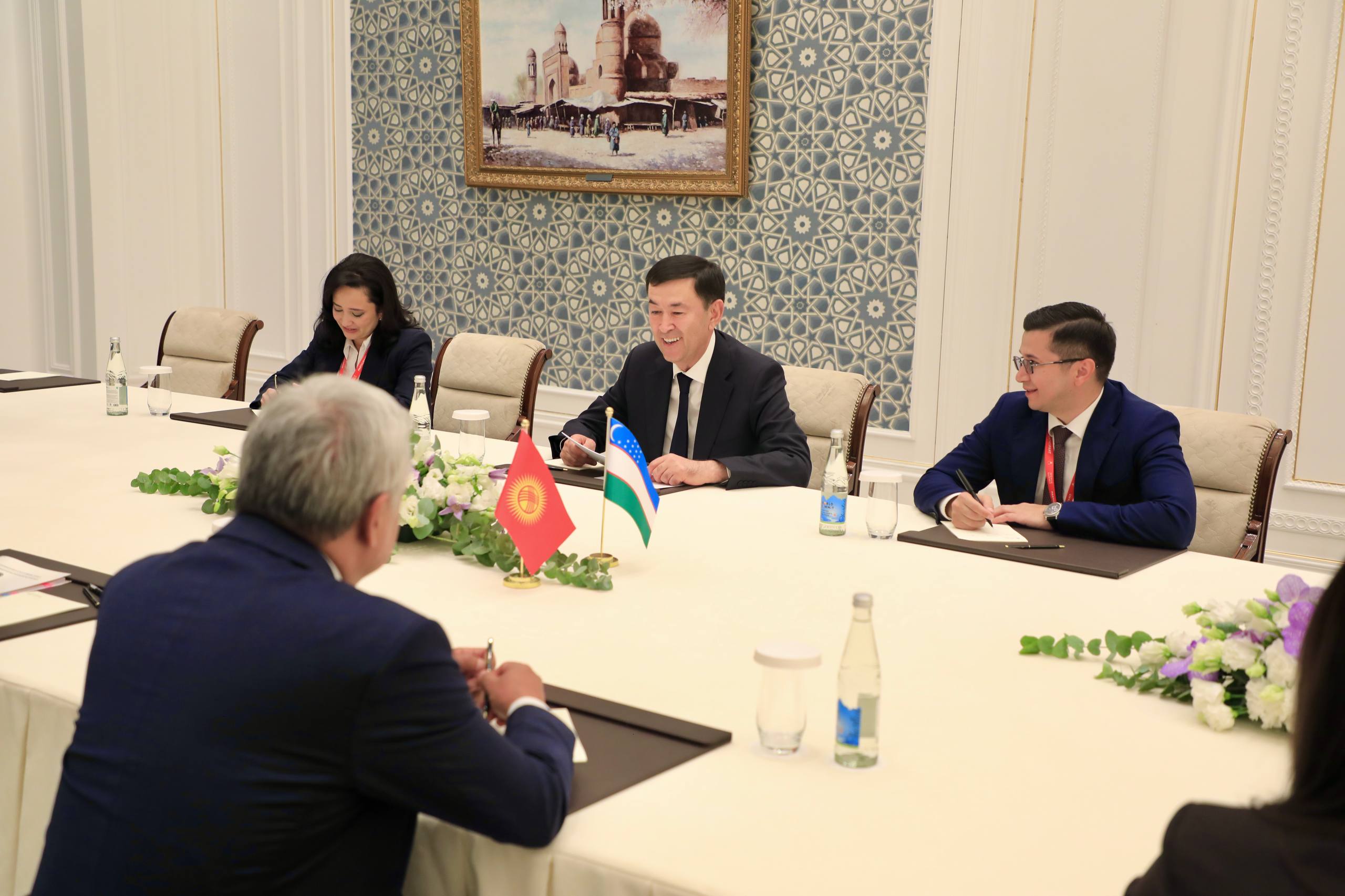
Representatives
of the National Institutes for Strategic Studies under the heads of State and
foreign ministries of Central Asia and Afghanistan, the academic and expert
community, research centers, as well as the diplomatic corps of the countries
of the region gathered to participate in the event in Kabul.
The agenda
was complex. The discussion covered issues of political dialogue and regional
stability, security, economic cooperation, development of transport and energy
interconnectedness. Special attention was paid to the expansion of cultural and
humanitarian ties and climate issues.
Addressing
the participants of the expert dialogue, Afghan Foreign Minister Mawlawi Amir
Khan Muttaki welcomed the holding of the first Central Asia-Afghanistan Think
Tank Forum, calling it an important step towards institutionalizing regional
dialogue. He noted that Central Asia and Afghanistan are united by a common
destiny, interests and responsibility for the future of the region, and
therefore today it is time to independently determine the guidelines for the
development of the common space and to act as authors of their own regional
agenda. According to the head of Afghan diplomacy, the key areas should be the
development of collective responses to climate challenges and the promotion of
regional connectivity projects, including CASA-1000, TAPI and trans-Afghan
transport routes. Muttaki expressed confidence that the Central
Asia-Afghanistan expert platform will become an important mechanism for
strengthening cooperation, increasing mutual trust and forming a common vision
for the future of the region.
In turn,
Abdul Hai Kanit, Director of the Center for Strategic Studies at the Ministry
of Foreign Affairs of Afghanistan, stressed that an important paradigm shift in
approaches to Afghanistan is taking place in the region - from viewing the
country primarily through the prism of security threats to considering it as an
integral participant in the processes of regional development and
interconnectedness. He noted that Uzbekistan plays a significant role in
promoting this approach, consistently advocating the constructive involvement
of Afghanistan in regional processes. According to the expert, today a
consensus is emerging among the countries of Central Asia and Afghanistan in
favor of pragmatic cooperation based on dialogue, engagement and the search for
common development opportunities.
Speaking at
the forum, Akramjon Nematov, First Deputy Director of the Institute for
Strategic and Interregional Studies under the President of the Republic of
Uzbekistan, stated that modern approaches to Afghanistan are becoming more
pragmatic and focused on finding practical solutions. The expert argued that
the international experience of recent years has shown the failure of the
policy of isolating Afghanistan while waiting for its internal stabilization.
In this regard, he pointed out the need to move towards a systematic and
constructive partnership.
It was
emphasized that today the question is not whether to interact with Afghanistan
or not, but what kind of interaction should be situational or systemic, focused
on the formation of a long-term security and development architecture. In this
context, it was emphasized that Uzbekistan's policy proceeds from the need to
constructively involve Afghanistan in regional processes and form a sustainable
model of cooperation based on mutual responsibility and common interests.
A.Nematov
stated that Uzbekistan's approach to Afghanistan has changed significantly in
recent years: from perceiving it primarily through the prism of risks to
considering it as an important participant in the emerging space of Central and
South Asia and an integral element of the regional security and development system.
It was
emphasized separately that "the emphasis on the economic component is not
only for the sake of commercial gain. We are talking about forming a kind of
peacemaking development dividend." According to the representative of the
ISMI, "the more joint projects, energy networks, transport corridors and
trade links there are, the greater the interest of all participants in
maintaining peace and stability."
In this
regard, the speaker urged not to limit oneself exclusively to bilateral
cooperation, but to proceed to the formation of a full-fledged regional
cooperation architecture.
"Our
region is able to go beyond the role imposed on it as a transit territory,
periphery and buffer between centers of power and form a model of interaction
capable of changing the place of our common space in the global economy and
global politics," the expert said.
According
to him, "we are talking about the transition to a model in which Central
and South Asia become not an object of external processes, but an independent
center of development - an important production and logistics hub of Eurasia
and an integral link in global value chains."
It was
particularly noted that the second meeting of the Termez Dialogue on
Interconnectedness between Central and South Asia, held in early June, with the
participation of a representative delegation from Afghanistan, was devoted to
this task.
A.Nematov
emphasized that modern Central Asia today is a consolidated region with its own
development strategy based on the principles of good neighborliness, mutual
trust, economic cooperation and strengthening regional subjectivity.
"Central
Asia has proven from its own experience that even the most difficult issues can
be resolved through dialogue, compromise and consideration of mutual interests,"
he said.
The expert
expressed his conviction that for the first time in many decades, conditions
are emerging for the formation of a single cooperation space between Central
and South Asia. In this regard, he urged not to miss this historic opportunity
and use the current positive dynamics to launch long-term processes that will
determine the development of the region for many years to come.
A. Nematov
stressed that Uzbekistan considers Afghanistan as one of the key partners in
the formation of a new model of regional cooperation and is open to its
constructive involvement in regional processes. Accordingly, Afghanistan should
also take into account the interests of neighboring States and contribute to
the formation of a stable, predictable and favorable regional environment.
"Only
on this basis is it possible to build a common architecture of security,
development and prosperity that meets the interests of all the peoples of
Central and South Asia," it was stated during the speech.
In general,
the forum participants confirmed that the Central Asia-Afghanistan format is
becoming an important element of the emerging regional architecture of
cooperation, complementing the political dialogue with an expert dimension.
At the end
of the meeting, the parties formulated specific proposals on priority areas and
the implementation of joint projects aimed at ensuring long-term stability,
sustainable development and interconnectedness in Central and South Asia.
It was also
stressed that the Kabul Forum will become a regular platform for developing
practical recommendations on regional security, connectivity and sustainable
development.
The parties
expressed their readiness to further deepen expert cooperation and coordinate
efforts aimed at building trust, developing interconnectedness and shaping a
long-term architecture of stability and development in the region.