
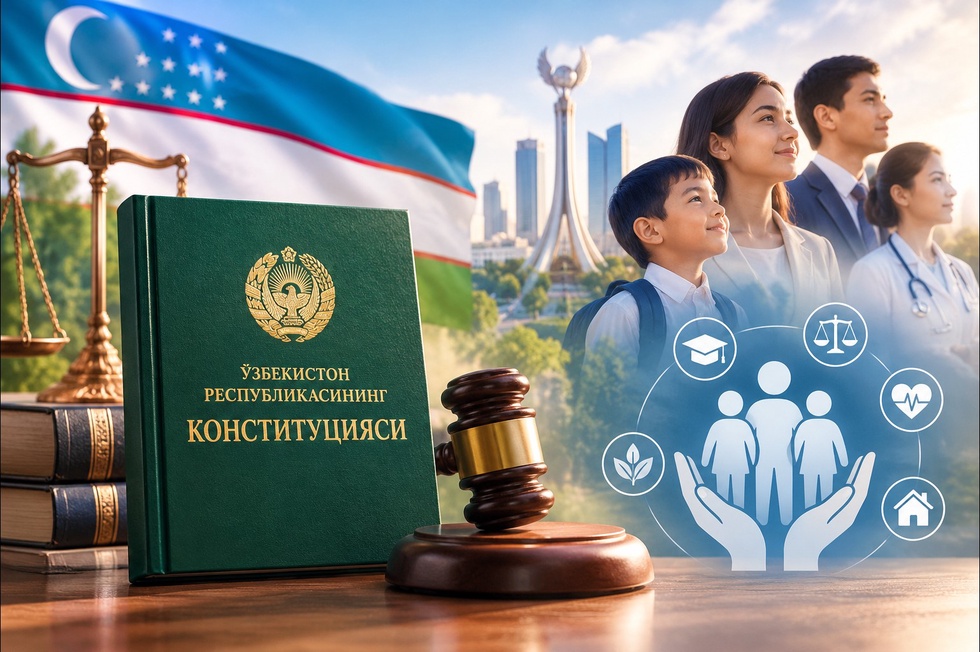
It holds significant methodological importance in determining the substance of human rights and freedoms, defining the limits of state power, and legally regulating relations between the individual and the state. This concept is not determined solely by an individual’s social status, material well-being, professional activity, or position in public and state affairs. Rather, human dignity constitutes a fundamental value intrinsically linked to every person’s humanity and forms an inseparable basis of their legal status and personal inviolability. From this perspective, ensuring human dignity refers to a system of measures aimed at recognizing individuals as independent subjects of law, respecting their rights and freedoms, protecting them against unlawful interference, and creating the necessary legal and institutional conditions for the free exercise of their rights. From a constitutional and legal perspective, human dignity should not be interpreted merely as a moral or philosophical concept.
Above all, it is a principle of normative significance that determines the fundamental directions of the organization and exercise of state power, serves as a benchmark for legislative activities, and requires the consideration of human interests in law enforcement practices. In this sense, recognizing human dignity as a constitutional value links the substance of state activities to the legal status of the individual. Legislative and regulatory acts, administrative decisions, and other legal measures adopted by the state must be assessed in terms of their conformity with human rights and freedoms. This approach signifies that state power is not an end in itself; rather, its activities must serve the interests of individuals and society. The modern legal concept of human dignity has been further strengthened through the development of the international human rights system. In particular, the Preamble to the Universal Declaration of Human Rights, adopted on December 10, 1948, recognizes the inherent dignity and equal and inalienable rights of all members of the human family as the foundation of freedom, justice, and peace in the world. Article 1 of the Declaration further establishes that all human beings are born free and equal in dignity and rights. These provisions demonstrate that human dignity is not a privilege granted by a particular state, but rather a fundamental status inherent in every individual. At the same time, it should be noted that the Declaration is not an international treaty, but an international instrument adopted by the United Nations General Assembly. In providing a scholarly explanation of the constitutional meaning of human dignity, it is important to distinguish between human dignity as a constitutional value and human dignity as a concept associated with specific legal guarantees. Israeli legal scholar Aharon Barak analyzes the relationship between the status of human dignity as a constitutional value and the substance of the right to human dignity, treating them as interrelated but not identical concepts. According to this approach, human dignity serves, on the one hand, as a general principle that guides the interpretation and application of other constitutional rights; on the other hand, it manifests itself through legal guarantees that protect individuals against humiliation, discrimination, and inhuman treatment. This distinction makes it possible to analyze human dignity not merely as a general slogan, but as a constitutional standard that produces specific legal consequences in particular legal relationships. In the Republic of Uzbekistan, the constitutional and legal essence of human dignity is expressed primarily in the Preamble to the Constitution. Alongside its commitment to human rights and freedoms, democratic principles, and the pursuit of liberty, equality, and social justice, the Preamble establishes the objective of building a humane democratic state in which human life, liberty, honor, and dignity are regarded as supreme values. These provisions of the Preamble express the Constitution’s overall purpose and fundamental ideological orientation, playing an important role in understanding the substance of its articles and interpreting them systematically. However, the practical legal significance of the principles set forth in the Preamble becomes fully apparent only when they are interpreted in conjunction with the specific rights and guarantees enshrined in the relevant articles of the Constitution. In particular, Article 13 of the Constitution of the Republic of Uzbekistan establishes that democracy is based on universal human principles and that the individual, their life, liberty, honor, dignity, and other inalienable rights constitute supreme values. This constitutional provision elevates human dignity to the status of a central criterion governing the life of the state and society. Its significance lies in recognizing human interests not as a secondary or supplementary objective of state policy, but as a fundamental value that determines the very substance of state activities. Accordingly, ensuring human dignity serves as one of the principal constitutional criteria for assessing the legality of the activities of state bodies, improving legislation, and developing mechanisms for the protection of human rights. The constitutional and legal significance of this provision can be examined from several perspectives. First, it establishes the fundamental basis for the recognition and protection of human rights and freedoms by the state. Fundamental human rights are not privileges dependent on the discretion of state authorities; rather, they are legal entitlements recognized by the Constitution and laws. Second, this provision establishes substantive limits on the exercise of state power: in exercising its authority, the state must take into account the legal status and dignity of the individual. Third, this principle requires an approach to the interpretation of constitutional provisions that is directed toward respect for human rights and the protection of liberty and justice. Fourth, the recognition of the individual as a supreme value also serves as a benchmark for overseeing the activities of state bodies and public officials. The constitutional meaning of human dignity is also closely connected with the fundamental principles governing state activities, as established in Article 14 of the Constitution. According to this article, the state conducts its activities on the basis of the principles of legality, social justice, and solidarity, with the aim of ensuring human well-being and the sustainable development of society. This provision demonstrates that ensuring human dignity is not limited to preventing unlawful treatment of individuals; it also encompasses the implementation of state policies that promote human well-being. In this context, legality requires state bodies to exercise their powers on a lawful basis, social justice entails fair treatment of individuals with regard to their rights and interests, and solidarity involves fostering mutual responsibility and cooperation among different groups within society. At the same time, a comprehensive understanding of the constitutional essence of human dignity requires clarifying its relationship with the obligations of the state. In legal theory, state obligations concerning the realization of human rights are generally analyzed in terms of three dimensions: the obligations to respect, protect, and fulfill human rights. The obligation to respect requires the state to refrain from unlawful interference with individual freedoms. The obligation to protect requires the state to prevent violations committed by third parties and to take effective legal measures against such violations.
The obligation to fulfill human rights involves creating the necessary legislative, institutional, and organizational conditions for their effective realization. This classification is a widely used analytical approach in international human rights law and can also be applied to develop a systematic understanding of the relevant provisions of the Constitution of Uzbekistan. The inherent nature of human dignity means that an individual’s worth as a human being is not determined by their contribution to society, material resources, social status, or the opinions of others. Consequently, the obligation to respect human dignity may apply not only to state authorities but also to other participants in legal relationships. For example, humiliating an employee in the workplace, discriminating against an individual in an educational institution, or unlawfully infringing upon a person’s honor and reputation through the mass media must be assessed in accordance with the requirements of the applicable legislation. In such cases, the protection of human dignity is ensured in conjunction with personal rights, equality, the inviolability of private life, and other guarantees provided by law. This approach can also be observed in scholarly literature on contemporary constitutional law. In particular, Neomi Rao emphasizes that interpretations of human dignity in constitutional adjudication may vary, making it important to define the substance of this concept precisely when using it in legal reasoning. The scholar’s analysis demonstrates the need to justify the relationship between human dignity and the relevant constitutional rights, legitimate objectives, and legal principles, rather than treating human dignity as an abstract concept that produces identical outcomes in every situation. This scholarly approach is also significant in the context of Uzbekistan: the general constitutional principle of human dignity must be reasonably connected to the legal provisions applied in resolving a particular case and to the relevant factual circumstances. Thus, the constitutional and legal essence of human dignity manifests itself in three closely interconnected dimensions. The first is the recognition of the individual as an independent subject of law and a supreme value. The second is the prevention of unlawful interference by the state and other individuals with a person’s honor, dignity, liberty, and fundamental rights. The third is the establishment of legal guarantees that provide remedies for violations and ensure the effective exercise of human rights. The provisions enshrined in the Preamble and Articles 13 and 14 of the Constitution of the Republic of Uzbekistan constitute the general constitutional foundations of this approach. Their interpretation in conjunction with other constitutional provisions serves to clarify the substance and practical limits of ensuring human dignity.
The Main Constitutional Guarantees for Ensuring Human Dignity One of the most important prerequisites for the legal protection of human dignity is the inviolability of a person’s honor and dignity. Article 26 of the Constitution establishes that human honor and dignity are inviolable and that nothing may serve as a basis for their derogation. It also prohibits torture, violence, and cruel, inhuman, or degrading treatment or punishment.
This provision demonstrates the dimension of human dignity protection associated with negative obligations. In other words, state bodies and public officials must refrain from actions that violate human dignity. However, the scope of this guarantee is not limited to prohibitions. The state must also establish mechanisms to prevent such conduct, impartially examine complaints concerning alleged violations, and take lawful measures when violations are identified. Another constitutional foundation for ensuring human dignity is the principle of equality before the law. According to Article 19 of the Constitution, human rights and freedoms in the Republic of Uzbekistan are recognized and guaranteed in accordance with the universally recognized norms of international law and the Constitution. All citizens are equal before the law, regardless of sex, race, nationality, language, religion, beliefs, social origin, or social status. The principle of equality has a dual significance in ensuring human dignity. On the one hand, it requires state bodies to refrain from unjustifiably differentiating between individuals. On the other hand, it highlights the need to take lawful measures aimed at removing barriers that prevent individuals from effectively exercising their rights. In this regard, it would be incorrect to automatically classify every distinction as discrimination. The legally relevant questions are whether the distinction pursues a legitimate aim, is objectively justified, and is proportionate. For example, creating the necessary conditions for persons with disabilities to access education, employment, and public services helps give practical effect to the principle of equality. Thus, ensuring human dignity requires not only the recognition of the equal legal status of all individuals but also consideration of their opportunities to exercise their rights effectively. Article 20 of the Constitution establishes the direct applicability of human rights and freedoms. According to this article, the rights and freedoms of individuals enshrined in the Constitution and laws are inviolable, and no one has the right to deprive individuals of these rights or restrict them without a court decision. It further provides that human rights and freedoms determine the substance and content of the activities of state bodies, and that legal measures applied by the state must be based on the principle of proportionality. This provision connects constitutional rights with practical governance. In other words, ensuring human rights is not limited to the mere existence of relevant provisions in legislation. State bodies must take these rights into account and act in accordance with them when exercising their powers. The principle of proportionality is also an important instrument for ensuring human dignity. Any restriction imposed by the state must pursue a legitimate aim, be necessary to achieve that aim, and avoid causing excessive harm to individual rights. Therefore, when assessing a decision made by a state body, it is important to consider not only its formal legality but also the necessity and proportionality of the measure applied. Ensuring human dignity is intrinsically linked to the protection of individual liberty and personal inviolability. Article 27 of the Constitution recognizes everyone’s right to liberty and personal inviolability. No person may be arrested, detained, or otherwise deprived of liberty without a lawful basis.
The same article establishes that arrest and detention are permissible only pursuant to a court decision and that no person may be detained for more than 48 hours without a court decision. These guarantees subject the state’s coercive powers to legal limits. Decisions restricting an individual’s liberty must not depend solely on the discretion of an authorized body; rather, they must be governed by lawful grounds and appropriate procedural safeguards. Furthermore, Article 28 of the Constitution enshrines the presumption of innocence. A person accused of committing a criminal offense is presumed innocent until their guilt has been proved in accordance with the procedure established by law and established by a court judgment that has entered into legal force.
The Principle of the Social State and the Material Foundations of Human Dignity The constitutional and legal protection of human dignity is not limited to the recognition and protection of an individual’s personal and political rights. It also encompasses the creation of the socioeconomic conditions necessary for individuals to lead a dignified life, freely develop their potential, and participate fully in the life of society. This is because the formal recognition of human rights, where individuals lack the practical ability to exercise them, is insufficient to ensure their full realization. Accordingly, contemporary constitutional law theory examines the material foundations of human dignity within the framework of the interrelationship between social rights, the positive obligations of the state, and the principle of social justice. The theoretical foundations of the concept of the social state have also been extensively examined in comparative constitutional law literature. In particular, British constitutional law scholar Jeff King analyzes the principle of Sozialstaat (the social state) in German law, emphasizing that this principle is associated with the state’s assumption of active responsibility for addressing social problems within society. In his approach, the principle of the social state is not limited to the provision of social assistance; it also plays an important role in the interpretation of fundamental rights and the determination of the state’s social obligations. This theoretical perspective provides an important methodological foundation for interpreting the principle of the social state enshrined in the Constitution of Uzbekistan. According to Article 14 of the Constitution of the Republic of Uzbekistan, the state conducts its activities on the basis of the principles of legality, social justice, and solidarity, with the aim of ensuring human well-being and the sustainable development of society. This provision clarifies the goal-oriented substance of the principle of the social state. In particular, while ensuring human well-being is established as an important objective of state activities, social justice and solidarity constitute constitutional standards that must be observed in pursuing this objective. Accordingly, the implementation of social policy requires the state to consider not only improvements in economic indicators but also the impact of such policies on different social groups, particularly vulnerable individuals in need of social protection. The significance of the social state in ensuring human dignity is manifested primarily in the practical realization of social rights. The rights to education, access to healthcare services, work, social security, and housing are associated with the essential conditions necessary for individuals to lead a dignified life.
These rights expand opportunities for personal development and active participation in society. For example, limited access to education may adversely affect an individual’s future professional opportunities and economic independence. Similarly, inadequate access to healthcare services can affect a person’s health and quality of life. Therefore, the realization of social rights is an important factor in establishing the material foundations of human dignity. This issue is also reflected in international legal instruments. In particular, Article 2 of the International Covenant on Economic, Social and Cultural Rights, adopted on December 16, 1966, establishes the obligation of States Parties to take steps toward the progressive realization of the rights recognized in the Covenant. This international legal approach highlights the importance of state policy, legislation, and the use of available resources in realizing social rights. At the same time, the requirement of progressive realization cannot serve as a justification for disregarding a state’s international obligations or indefinitely postponing the fulfillment of social rights. States must discharge their obligations in good faith, refrain from discrimination, and take consistent measures to advance the realization of these rights. In foreign constitutional law scholarship, the relationship between the realization of social rights and human dignity is examined as a distinct subject of academic inquiry. Comparative studies of the constitutional systems of Germany, Italy, and Portugal identify a close connection between the principle of the social state and the protection of human dignity. In particular, German constitutional law recognizes the combined interpretation of human dignity and the principle of the social state as significant in the legal protection of the minimum conditions necessary for a dignified existence. This experience demonstrates that the protection of human dignity should not be limited solely to safeguarding individuals against unlawful state interference; rather, the question of the minimum conditions necessary for individuals to lead a humane and dignified life must also be examined within the framework of constitutional analysis. At the same time, creating the conditions necessary for individuals to lead a dignified life does not mean that the state is required to resolve all social problems immediately or through unlimited financial resources. The realization of social rights is linked to the state’s constitutional and international obligations, lawful procedures, and existing institutional and economic capacities. In this regard, the central issue is not the limited nature of state resources as such, but rather their reasonable and equitable allocation, the provision of guarantees established by law, and the avoidance of unjustified restrictions on the rights of individuals in need of social assistance. The quality of social services and the accessibility of such services are also of significant importance in ensuring the material foundations of human dignity. In particular, the availability of educational and healthcare services across different regions, the transparency of procedures for providing social assistance, the support of individuals in need in accordance with legally established criteria, and the removal of unnecessary barriers to accessing public services determine the practical outcomes of the social state principle. The effectiveness of social protection mechanisms should be assessed not only by the amount of funding allocated, but also by whether assistance actually reaches those in need, its impact on their living conditions, and the extent to which their legal rights are upheld. Accordingly, the principle of the social state constitutes an important principle that integrates the constitutional and material foundations of ensuring human dignity. The provisions enshrined in Articles 1 and 14 of the Constitution of the Republic of Uzbekistan link state activities to human well-being, social justice, and the sustainable development of society. The practical effectiveness of these provisions is demonstrated through the realization of social rights, the reasonable use of state resources, the transparency of social protection mechanisms, and the consistent establishment of conditions necessary for individuals to lead a dignified life.
The Right to Judicial Protection and the Effectiveness of Constitutional Guarantees The right to judicial protection occupies a distinct place within the constitutional and legal framework for ensuring human dignity. This is because the enshrinement of human rights and freedoms in the Constitution and laws does not, in itself, guarantee that they will not be violated in practice. The availability of mechanisms to identify violations, remedy their consequences, and restore infringed rights is one of the essential characteristics of a state governed by the rule of law. In this regard, the administration of justice and effective legal protection serve not only as procedural safeguards but also as substantive guarantees of human dignity. Article 55 of the Constitution of the Republic of Uzbekistan establishes that everyone has the right to protect their rights and freedoms by all means not prohibited by law, to seek judicial protection, and to file a complaint with a court against unlawful decisions, actions, or omissions of state bodies and other organizations. This provision affords individuals a constitutionally guaranteed means of protecting their rights. At the same time, it constitutes one of the legal foundations for judicial review of the legality of the activities of state bodies and organizations. The constitutional substance of the right to judicial protection cannot be confined solely to the opportunity to apply to a court. Effective protection is intrinsically linked to an individual’s genuine and practical ability to access the courts, have their case heard by an independent and impartial tribunal, enjoy the procedural rights to which they are entitled, and secure the enforcement of the resulting judicial decision. If an individual has the right to apply to a court but is unable to obtain an effective remedy in practice because of a lack of access to legal assistance, excessive costs, procedural obstacles, or the non- enforcement of a judicial decision, the effectiveness of legal protection remains in doubt. In international legal scholarship, access to justice is regarded as one of the fundamental prerequisites for the protection of human rights. In Access to Justice as a Human Right, edited by Francesco Francioni, the availability of effective judicial remedies in cases involving violations of rights or the infliction of harm is examined as a necessary condition for the respect for and protection of human rights. According to this scholarly approach, access to justice is an integral component of the rule of law and serves to ensure that an individual’s legal protection is not dependent on the discretion of state authorities. This perspective makes it possible to gain a deeper understanding of the right to judicial protection enshrined in Article 55 of the Constitution of the Republic of Uzbekistan. The right to apply to a court enables individuals to challenge unlawful decisions or actions of state bodies, seek judicial review of alleged violations, and obtain the restoration of infringed rights where legal grounds exist. In this regard, the practical effectiveness of judicial protection is determined not only by the existence of relevant procedural rules, but also by the independence and impartiality of the judicial system, the resolution of cases within a reasonable time, and the enforcement of judicial decisions. Research by international legal scholars Ludovic Hennebel and Hélène Tigroudja on the judicial protection of human rights is also significant in explaining the concept of effective judicial protection. Their international legal analyses of human rights protection highlight the close relationship between effective remedies and a fair trial. Accordingly, a legal remedy must not merely exist in legislation; it must also be appropriate to the nature of the violation and capable of restoring an individual’s rights in practice. From this perspective, several criteria must be considered when assessing the effectiveness of judicial protection. First, an individual’s ability to access the courts must be ensured both legally and in practice. Second, equality of arms between the parties must be maintained throughout the proceedings, including the opportunity to present evidence and articulate their respective positions. Third, a judicial decision must be based on the established facts of the case and the applicable legal rules. Fourth, the timely and full enforcement of a final and binding judicial decision constitutes a necessary condition for the restoration of infringed rights. Alongside the right to judicial protection, Article 54 of the Constitution also establishes the general constitutional foundation for ensuring human dignity. Under this provision, ensuring human rights and freedoms is the supreme objective of the state. This rule establishes the protection of human rights as a central responsibility of state activity. Accordingly, the performance of state bodies should not be assessed solely in terms of the exercise of their powers or the discharge of administrative functions. Due consideration must also be given to respect for human rights, the protection of individuals’ legitimate interests, and the effective operation of remedial mechanisms when violations occur.
Conclusion In conclusion, under the Constitution of the Republic of Uzbekistan, ensuring human dignity is recognized as a priority direction of state and societal activity and as a constitutional standard for recognizing, respecting, and effectively protecting human rights and freedoms. The constitutional and legal essence of human dignity lies in recognizing the individual not as an instrument serving the interests of the state, but as an independent bearer of rights and freedoms and as the highest value guiding the activities of society and the state. From this perspective, ensuring human dignity is not limited to establishing its inviolability in legal norms; it also requires the creation of the legal, institutional, economic, and social conditions necessary for those norms to be realized in practice. The revised Constitution of the Republic of Uzbekistan systematically consolidates provisions concerning human dignity and rights. In particular, Article 13 recognizes the individual, human life, liberty, honor, dignity, and other inalienable rights as supreme values. While Article 14 directs state activities toward ensuring human well-being and the sustainable development of society, Article 20 establishes the direct applicability of human rights and freedoms, their role in determining the substance of the activities of state bodies, and the principle that contradictions and ambiguities in legislation arising in relations between individuals and state bodies must be interpreted in favor of the individual. Article 26 guarantees the inviolability of human honor and dignity, while Article 54 establishes the protection of human rights and freedoms as the supreme objective of the state. These provisions further strengthen the normative and legal foundations of this principle. The findings of this study demonstrate that the effectiveness of measures to ensure human dignity depends primarily on the practical implementation of constitutional provisions, the legality and accountability of the activities of state bodies, and the availability of mechanisms for restoring individuals’ rights when violations occur. In this regard, the right to judicial protection constitutes an important institutional mechanism for safeguarding human dignity. The right to judicial protection enshrined in Article 55 of the Constitution, including the opportunity to challenge unlawful decisions, actions, or omissions of state bodies and other organizations, serves to ensure the legal protection of individuals. However, the actual effectiveness of this guarantee is closely linked to equal access to justice, the resolution of cases within a reasonable time, the timely enforcement of judicial decisions, and access to legal assistance. The principle of the social state is also of particular importance in ensuring human dignity. Human honor and dignity are protected not only through the recognition of personal and political rights, but also through the creation of the social conditions necessary for a dignified standard of living. The effective realization of the rights to education, access to healthcare services, social security, decent working conditions, and social protection constitutes an essential prerequisite for individuals’ free development and meaningful participation in society. Accordingly, the reasonable use of state resources, support for vulnerable segments of the population, and the provision of equal opportunities to access social services are among the key responsibilities involved in realizing social rights. International legal standards likewise demonstrate that ensuring human dignity is an integral component of the national constitutional system. The Universal Declaration of Human Rights, the International Covenant on Civil and Political Rights, and the International Covenant on Economic, Social and Cultural Rights establish important international foundations for respecting human dignity, guaranteeing rights without discrimination, and providing effective remedies for human rights violations. Consistent consideration of these standards in national legislation and law enforcement practice can contribute to the further improvement of human rights protection mechanisms in Uzbekistan. In light of the foregoing analysis, several priority areas merit attention in order to improve the mechanisms for ensuring human dignity in the Republic of Uzbekistan.
First, it is necessary to ensure the direct applicability of constitutional provisions and to develop a consistent legal approach among state bodies to their interpretation and application. Second, access to judicial protection should be expanded, the effectiveness of free or subsidized legal assistance enhanced, and the timely enforcement of judicial decisions ensured. Third, strict compliance with the requirements of proportionality, legality, and non- discrimination must be maintained when adopting state decisions that affect human rights. Fourth, it is important to strengthen legal awareness of human rights, develop legal education, and enhance public oversight of the activities of state bodies. Fifth, creating equal and practical opportunities for different segments of the population, particularly individuals in need of social protection, to exercise their social rights must remain one of the priorities of state policy. Overall, ensuring human dignity is not merely a legal provision enshrined in the Constitution or a declarative objective of state policy. Rather, it is a comprehensive constitutional and legal principle that must be consistently implemented across all areas of lawmaking, public administration, the administration of justice, and social policy. Its practical realization is reflected in the ability of every individual to exercise their rights and freedoms freely, feel protected in their interactions with state bodies, remain free from discrimination and unlawful interference, and enjoy the conditions necessary for a dignified life. Therefore, the consistent improvement of the constitutional and legal foundations for ensuring human dignity in Uzbekistan is an essential condition for strengthening the principles of the rule-of-law state and the social state, upholding the supremacy of law, and fostering a culture of respect for human rights.
Sharifov Samandar.
Constitutional law department.