
Amid global geopolitical tensions, the competition to attract investment is growing stronger. Uzbekistan’s rich natural resources, economic potential, and ongoing reforms give us a clear edge in this area.
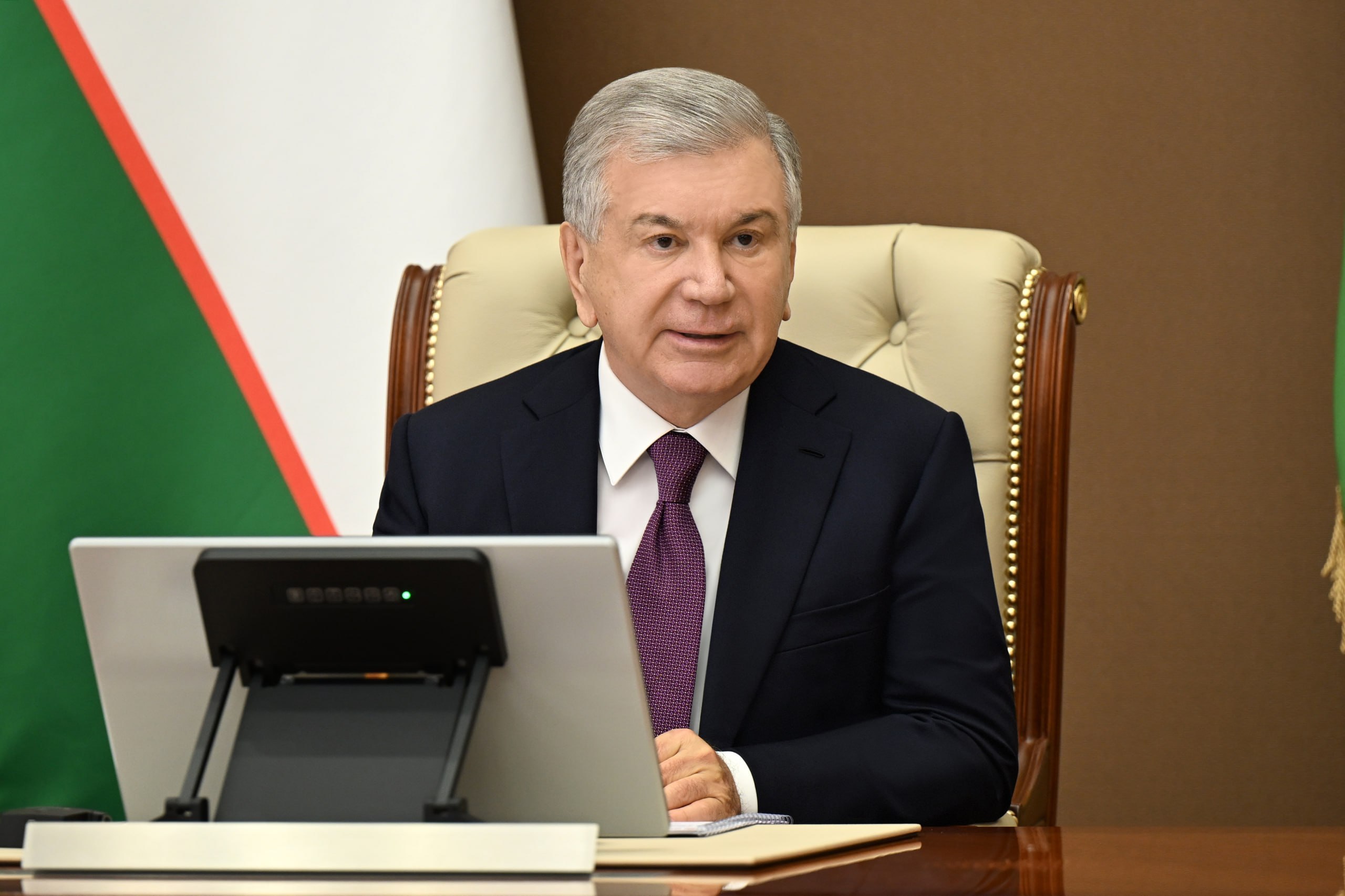
“Many international companies, having assessed regional risks, have already started exploring new markets. For us, this is a historic opportunity. In such a situation, we must not miss this moment and are obliged to attract international financial companies as quickly as possible”, the President noted.
To reach the goal of attracting over $50 billion in investment this year, it is essential to make it easier for investors to enter the Uzbek market by providing modern infrastructure, a legal system aligned with international standards, additional incentives, and, most importantly, a trustworthy and transparent business environment.
In this context, three priority areas were discussed at the presentation to boost the country’s investment appeal: establishing international financial and digital technology centers and introducing Islamic finance services.
During the discussion of the Tashkent International Financial Center, it was noted that the center will serve as an effective tool for attracting new types of investment and promoting sustainable economic growth. Estimates suggest that by 2030, the financial center will attract an additional $20-25 billion into the economy, contribute up to 1 percent to annual GDP growth, create up to 15,000 new highly skilled jobs, and help improve the qualifications of 10,000 specialists.
A special legal framework for the center’s operations is planned. Specifically, the principles of the common law of England and Wales will be applied where they do not conflict with the center’s laws. The center’s governing bodies will have the authority to adopt their own regulatory legal acts, and the activities of the Tashkent International Commercial Court and the International Arbitration Center, which focus on dispute resolution, will be organized.
For the center’s residents, broad opportunities will be provided, including free movement and repatriation of capital, the conduct of unrestricted foreign exchange operations, the use of modern payment instruments, including digital assets, as well as a preferential tax regime and simplified visa procedures.
The main areas of the center’s activities will include financial, investment, and banking operations, insurance, transactions involving digital assets and securities, payment systems and services, as well as services related to financial technologies.
The second focus is on creating and growing the International Digital Technology Center under the “Enterprise Uzbekistan” brand.
During the presentation, it was announced that a special legal regime is planned for this center until 2100. Under the center’s “regulatory sandbox”, it will be possible to test new solutions, pay salaries in foreign currency, adopt international labor standards, and process personal data according to international standards and cloud technologies. Favorable conditions will be established to protect intellectual property, investments, startups, and exports, and to provide customs and tax benefits.
Artificial intelligence technologies, digital transformation, research and development, certification, startups, and data centers are the center’s main focus areas.
By 2030, the plan is to attract up to 1,000 companies through this center, create more than 300,000 jobs, and reach an export potential of $5 billion. It was noted that several major international technology companies have already expressed interest in this initiative.
As a third point, the issue of introducing Islamic banking in the country was discussed.
It is planned to introduce instruments such as Murabaha – financing through the sale of goods on installment terms, mudaraba – financing based on profit-sharing or the attraction of funds, wakala – the provision or attraction of funds through an agency agreement, salam – financing through advance payments for goods, musharaka – financing through joint ventures, Islamic leasing, and other Islamic finance instruments that do not conflict with legislation.
At the same time, it is provided that value-added tax will not be applied to the margin on goods, income from investment deposits will be exempt from taxation, and Islamic leasing agreements will be considered equivalent to financial leasing and leasing operations.
To ensure systemic management in this area, a Council on Islamic Finance will be established under the Central Bank. Separate councils will also be created within banks providing Islamic finance services. These councils will be responsible for developing standards, assisting in drafting regulatory legal acts, clarifying disputed issues, reviewing contracts and internal documents, and ensuring compliance.
This year, the plan is to launch an Islamic “window” at least one commercial bank, and between 2026 and 2030, to establish two banks that fully operate according to Islamic banking principles. Overall, these initiatives are expected to attract approximately $1 billion in additional investments and deposits from 2026 to 2030.
The Head of State, emphasizing that these three areas will contribute to the formation of a modern financial and technological ecosystem in the country, instructed the acceleration of their practical implementation.