
A full value-added chain has been established within the cluster – from cotton cultivation to its deep processing and the production of finished goods. In particular, projects worth $25 million have been implemented, covering cotton and seed cultivation, oil production, fiber and yarn processing, and the manufacture of finished garments. Such an approach, based on the integration of agriculture and industry, makes it possible to create high added value.
As a result of the work carried out, the enterprise has acquired the capacity to produce 5,500 tons of yarn and 1 million finished knitwear products per year. These indicators ensure an export potential of $10 million, laying the foundation for strengthening the cluster’s position in both domestic and foreign markets.
Another important aspect of the enterprise’s activities is its contribution to employment. Currently, 1,000 permanent jobs have been created, and during the season, an additional 3,000 people are employed.
The enterprise in the “Marokand Sifat” cluster, specializing in producing yarn from recycled textile waste, is considered one of the most advanced and efficient initiatives.
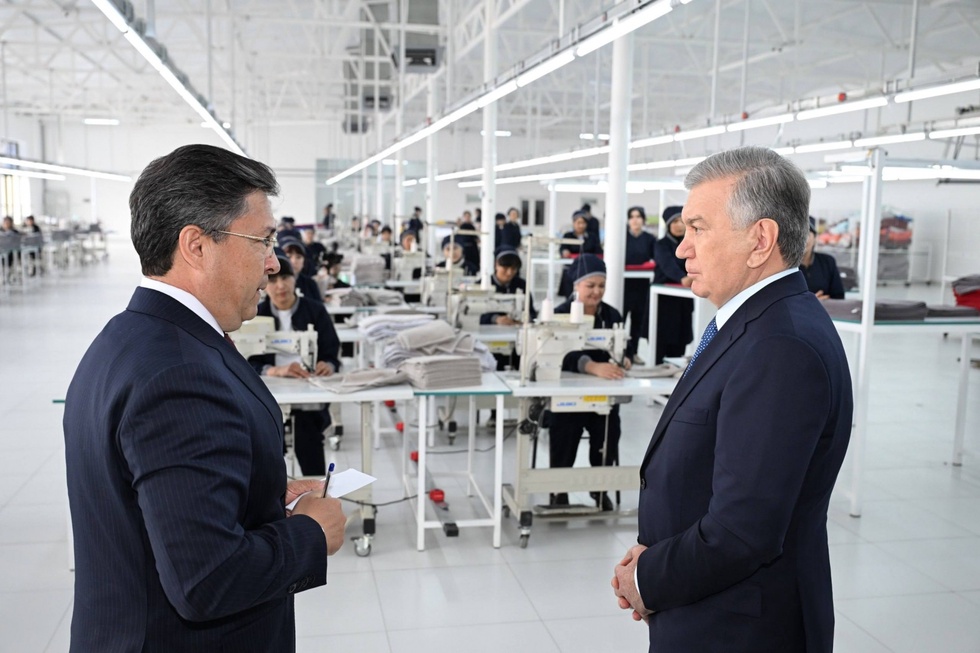
As part of the project, a biolaboratory and sewing workshops are in operation. Particular attention is paid to the processing of waste generated during production.
In particular, leftover fabrics from the sewing workshops are not discarded. They are processed using modern high-speed equipment and converted back into yarn. The annual production capacity for fiber in this area amounts to 5,000 tons. This is of significant importance for efficient resource utilization and environmental sustainability.
The total cost of this project is $7 million, and it covers an area of 3.3 hectares. The enterprise provides permanent employment for 500 people. In addition, the use of energy-saving technologies in production further enhances its economic efficiency.
Currently, solar panels have been installed on the enterprise’s premises, enabling the efficient use of renewable energy sources in the production process. This, along with reducing the enterprise’s energy costs, contributes to the implementation of green economy principles.
President Shavkat Mirziyoyev reviewed the production process and held a warm conversation with workers of the sewing workshop.
“I am pleased to meet with you. The conditions created here and the jobs established play an important role in ensuring employment. Each implemented project is part of the large-scale transformations taking place in our country. Undoubtedly, the demand for jobs is growing. Therefore, we continue to work actively and strive to create new opportunities in every region”, the Head of State noted.
A presentation was also delivered here to the President on the work carried out and plans to improve the efficiency of water resource use in Narpay district, as well as on the transfer of pumping station management through a public-private partnership.
In Narpay district, 8 pumping stations have been transferred to the private sector under PPP arrangements. Over the past period, 21 pumping units have been upgraded with investments totaling 12.3 billion UZS, reducing annual electricity consumption from 68.1 million kilowatt-hours to 34.1 million kilowatt-hours.
In general, new scientific approaches are being introduced into the water management sector of Samarkand region. For this purpose, to ensure interaction between science and practice, a scientific advisor will be assigned to the regional hokim. In addition, dual education is being introduced in the sector: a six-month continuous internship will be organized for 72 students in the fields of water management, agricultural mechanization, hydrotechnics and hydropower, cadastre, and ecology.
The Head of State instructed responsible officials to ensure the consistent, systematic continuation of this work.