

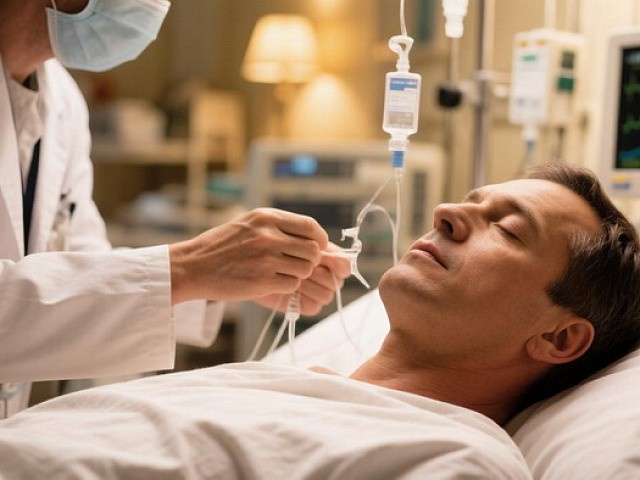
Under
general anesthesia, we do not feel anything and are not aware of what is
happening to us at all. But this does not mean that the brain stops receiving
signals from the outside. It is known that the brain regions that process sound
information first continue to respond to sounds even in a drugged state. Or, to
put it another way, in response to sound, specific activity occurs in their
neurons, which can be seen using neurobiological methods.
Recently,
an article appeared in Nature stating that brain regions involved in memory and
speech analysis are also active under general anesthesia. The experiment was
conducted with seven volunteers who were to be operated on for epilepsy: in
some cases, it is treated surgically, ridding the brain of a cluster of damaged
neurons that began to generate epileptic rhythms. At the same time, such
patients – of course, with their consent – can participate in neurobiological
research: the operation allows you to look into a living human brain.
The
operated patients were immersed in general anesthesia using propofol. Three of
them were given a repeating series of sounds in which the sounds of one tone
were interspersed with the sounds of another tone. The researchers were
interested in how the hippocampus, one of the main memory centers, would react
to sounds. Within ten minutes, the hippocampus began to react differently to
different sounds. Since he is not dealing with the actual sounds, but with
memory, it looked as if the hippocampus had learned this sound sequence. The
other four volunteers were given a ten-minute podcast while they were under
anesthesia. They monitored the work of neurons in the areas of the brain that
work with speech. It turned out that these neurons remained able to distinguish
nouns from other words, and tried to guess which word would sound next
(obviously based on the most likely context).
Narcotic
substances disrupt the coordinated exchange of information between different
brain centers, and as soon as this unified information network disintegrates,
consciousness shuts down. However, individual zones continue to operate, and
even maintain contact with external signal providers. Propofol is not the only
remedy for general anesthesia, and perhaps a similar experiment should be
conducted with other narcotic substances. Perhaps, with the new results, it
will be possible to better understand what happens under general anesthesia
(because to this day there remains a lot of uncertainty), and whether it is
possible to restore consciousness to those who do not come out of their coma.
nkj.ru .