
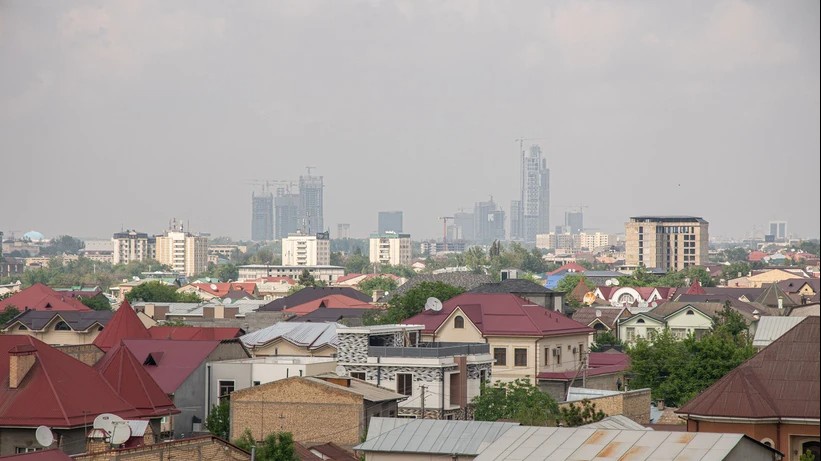
In recent days, there has been a decrease in air quality in our country due to adverse meteorological conditions associated with a temperature inversion. Iskandar Kutbiddinov, Deputy Chairman of the National Committee on Ecology and Climate Change, provided information on the situation.
In some cases, the sharp difference between daytime and evening air temperatures of up to 14 degrees, fog, and a decrease in wind speed make it difficult for pollutants to spread in the atmospheric air.
It is noted that the Special Commission has not ceased its activities. Along with regularly informing the public about the environmental situation, he coordinates the activities of relevant organizations.
Currently, the Special Commission's attention is focused on environmental raids and control measures at industrial and business facilities.
In order to reduce anthropogenic (i.e. human activity) pressure on atmospheric air in adverse weather conditions, the capacities of enterprises are limited and the activities of some of them are suspended.
From January 1 to January 7, inspections were carried out and effective measures were taken at 12 production enterprises of the city of Tashkent and 22 production enterprises of the Tashkent region. Administrative measures have been applied to dozens of vehicles polluting the atmosphere.
At the same time, preventive measures are being carried out: monitoring of emission sources has been strengthened, and an operational assessment of atmospheric air quality is being carried out.
According to the analysis of experts, unfavorable meteorological conditions will persist until January 16-17. As a result of the onset of anticyclones, normalization of atmospheric air quality is expected with an increase in precipitation and wind speed.
Temperature inversion is a short-term and predictable meteorological phenomenon during which government organizations operate in an enhanced mode and carry out proven pollution mitigation measures.
Environmental raids and monitoring activities will be continued by a special commission after the inversion is completed. All measures taken are aimed at minimizing the risks that have arisen and ensuring the environmental safety of the population.
All activities are carried out in strict accordance with scientifically sound recommendations.