

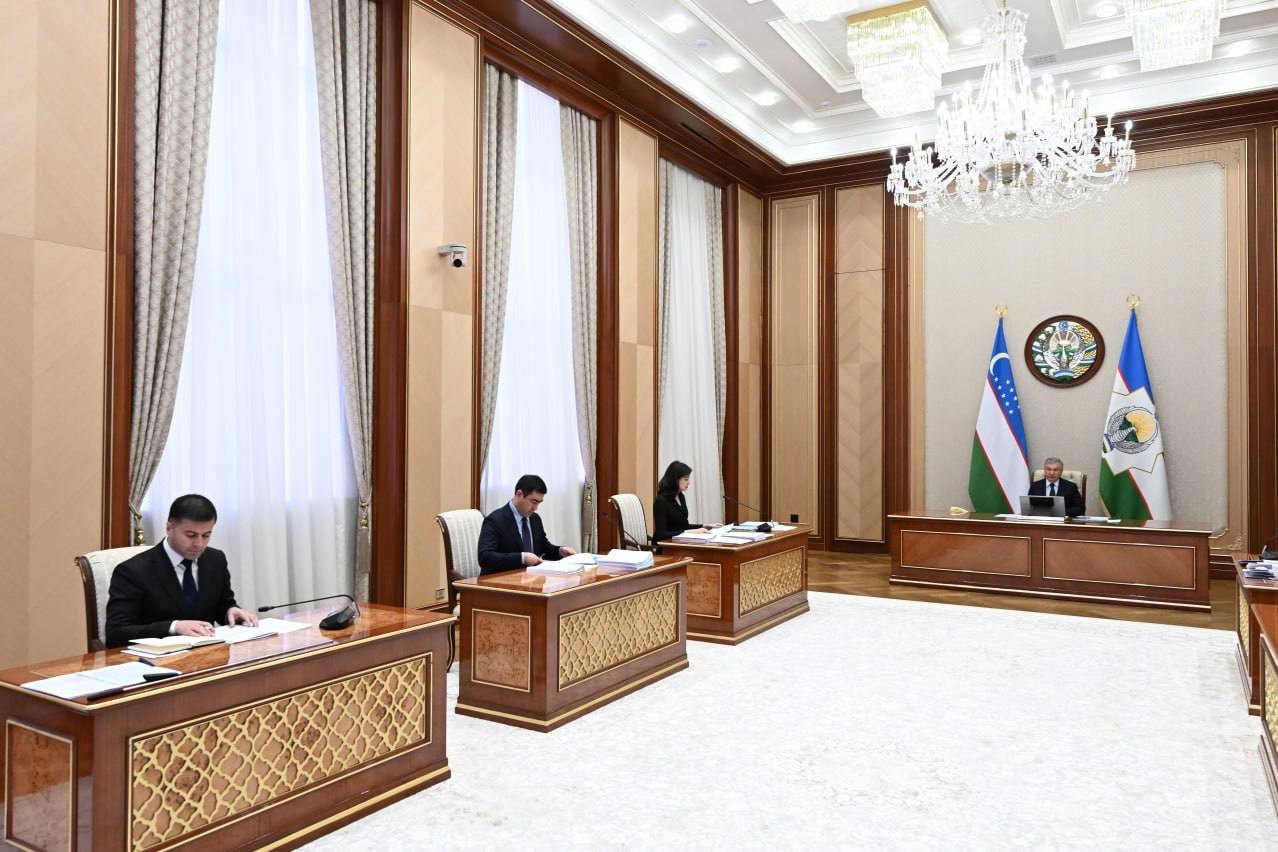

The measures developed to improve the prevention and treatment of acute cardiovascular and cerebrovascular diseases were discussed at the presentation.
According to the plan, starting from May 1, 2026, the national program “Fight against heart attack and stroke”, developed based on the international programs “Stent for Life” and “Action Plan for Stroke”, will be implemented in Samarkand region and the city of Tashkent. From October 1, the program will be extended to Andijan, Namangan, and Fergana regions, and from 2027 to other regions.
As part of the national program, annual surveys are planned among the population aged 30 and over, and, based on the results, targeted medical examinations will be conducted within the identified risk groups. The introduction of algorithms for the provision of emergency medical care and clinical pathways is also envisaged.
In addition, in accordance with international standards, a time regulation based on the “golden hour” principle will be introduced for the provision of emergency medical care for these diseases.
The presentation also outlined measures to expand the emergency medical service’s material, technical, and digital capacities. In particular, ambulance teams will be equipped with telemetric electrocardiographs and defibrillators with monitors. Opportunities will be created for AI-based analysis and transmission of ECG results through the information system, as well as for real-time data exchange between ambulance teams and hospitals.
In inpatient facilities, AI-based stroke diagnostics will be introduced, and patient pathways will be digitalized. Hospitals will also be supplied with thrombolytic drugs and the necessary consumables for performing emergency surgical operations.
Non-governmental medical organizations will provide emergency inpatient medical care, while medical services for acute cardiovascular and cerebrovascular diseases will be financed through the State Medical Insurance Fund.
Within the framework of the national program, an electronic registry of patients and populations at risk will be maintained in the “Electronic Healthcare” information system.
Special attention is also being given to preventive and awareness-raising activities among the population. Plans include the dissemination of social video clips, infographics, animations, and short videos in the media and on social networks, the installation of billboards and banners near markets and shopping centers, and the organization of seminars and training sessions in educational institutions, enterprises, and mahallas to promote early detection of the signs of heart attack and stroke.
In addition, within the international “FAST Heroes” program under the “Angels Initiative”, special classes will be organized for schoolchildren. Each year, on September 29 in connection with World Heart Day, and on October 29, World Stroke Day, large-scale free events are planned to measure blood pressure, blood sugar, and cholesterol levels, as well as to improve public awareness of emergency care.
It was noted that 239 billion UZS will be allocated to finance the program in 2026, and 280 billion UZS annually starting from 2027.
The proposals for further improving blood services in 2026-2030 were also reviewed during the presentation.
Given the growing demand for blood products, targeted measures have been developed to expand blood services’ capacity and fully meet healthcare institutions’ needs for blood and its components.
In particular, based on the recommendations of the World Health Organization, it is planned to increase the number of blood donations from 10 to 30 per thousand people, expand blood reserves from 150,000 liters to 450,000 liters by increasing the total number of donations to 1 million, and raise the number of voluntary blood donors from 300,000 to 900,000.
Based on advanced international experience, standard operating procedures, safety protocols, and modern screening methods will be introduced to ensure the safety of blood and its components. At the same time, measures are envisaged to enhance the professional knowledge and skills of blood service personnel, strengthen the service’s material and technical base, and support the development of voluntary blood donation.
To fundamentally improve the blood management system, a process management system covering the cycle “demand – processing – delivery” will be introduced.
Within the digital platform, the information system “Electronic accounting of blood products” will be introduced, ensuring control over the movement of blood and its components and enabling integrated order placement in coordination with emergency medical care.
It was noted that 308 billion UZS is allocated to financing blood services in 2026, while a total of 1.75 trillion UZS is allocated to the sector’s development in 2026-2030.
During the presentation, information was also provided on the results of a review of specialized research and practice centers and clinics across the country.
In September-December 2025, working groups conducted a comprehensive assessment of the operations of 37 national-level medical centers and clinics and identified several organizational and management shortcomings. To address them, a 27-point action plan has been developed, covering areas such as improving the quality of medical services, systematizing work with the regions, enhancing management systems, human resources and research activities, financial discipline, and the efficient use of resources.
The issue of engaging foreign experts in reforming the healthcare system was also considered.
Technical terms of reference have been developed for reforming the public health system, healthcare planning, and the national laboratory system. To implement these measures, it has been proposed to engage 25 international and 19 local experts.
A project to modernize the Republican Oncology Center and its regional branches was also presented.
In 2021, in cooperation with the Islamic Development Bank, under the project “Modernization of Oncology Institutions of the Republic of Uzbekistan (Phase II)”, 119 types of medical equipment, valued at $61 million, were procured for the new complex of the Center and its 13 branches. It is also planned to purchase an additional 5 types of equipment, valued at $5.6 million.
It was proposed to procure 1,027 units of medical equipment, comprising 80 types, for the Center through the allocation of $10 million in additional funding, as well as a cyclotron and a radiosynthesis laboratory for the production of radiopharmaceuticals.
The Head of State was also briefed on the ongoing efforts to develop the pharmaceutical industry and ensure the population’s access to affordable and high-quality medicines.
It was noted that the pharmaceutical industry is currently one of the most dynamically developing sectors. At present, 156 projects totaling $2.3 billion are being implemented in the sector. In 2025, $362 million in foreign investment was absorbed, and more than 2,400 new jobs were created.
Enterprises in the sector produced goods worth 7.3 trillion UZS, while exports of medicines and pharmaceutical products to 55 countries amounted to $220 million.
As a result of recent reforms aimed at ensuring the quality of medicines and reducing bureaucratic procedures, entrepreneurs have for the first time launched efforts to organize the production in Uzbekistan of 130 types of imported medicines through technology transfer.
In addition, following a revision of reference prices for 2,000 types of imported medicines, wholesale prices were reduced by 40-60 percent.
During the presentation, the need was emphasized to improve the quality and affordability of domestically produced import-substituting medicines, to create the necessary conditions for investors, to expand production and laboratory capacities, and to establish a transparent quality control system.
Having approved the proposals, the President signed the relevant decisions. Responsible officials were instructed to ensure the timely and high-quality implementation of the planned measures and the achievement of concrete results in the areas under review.