
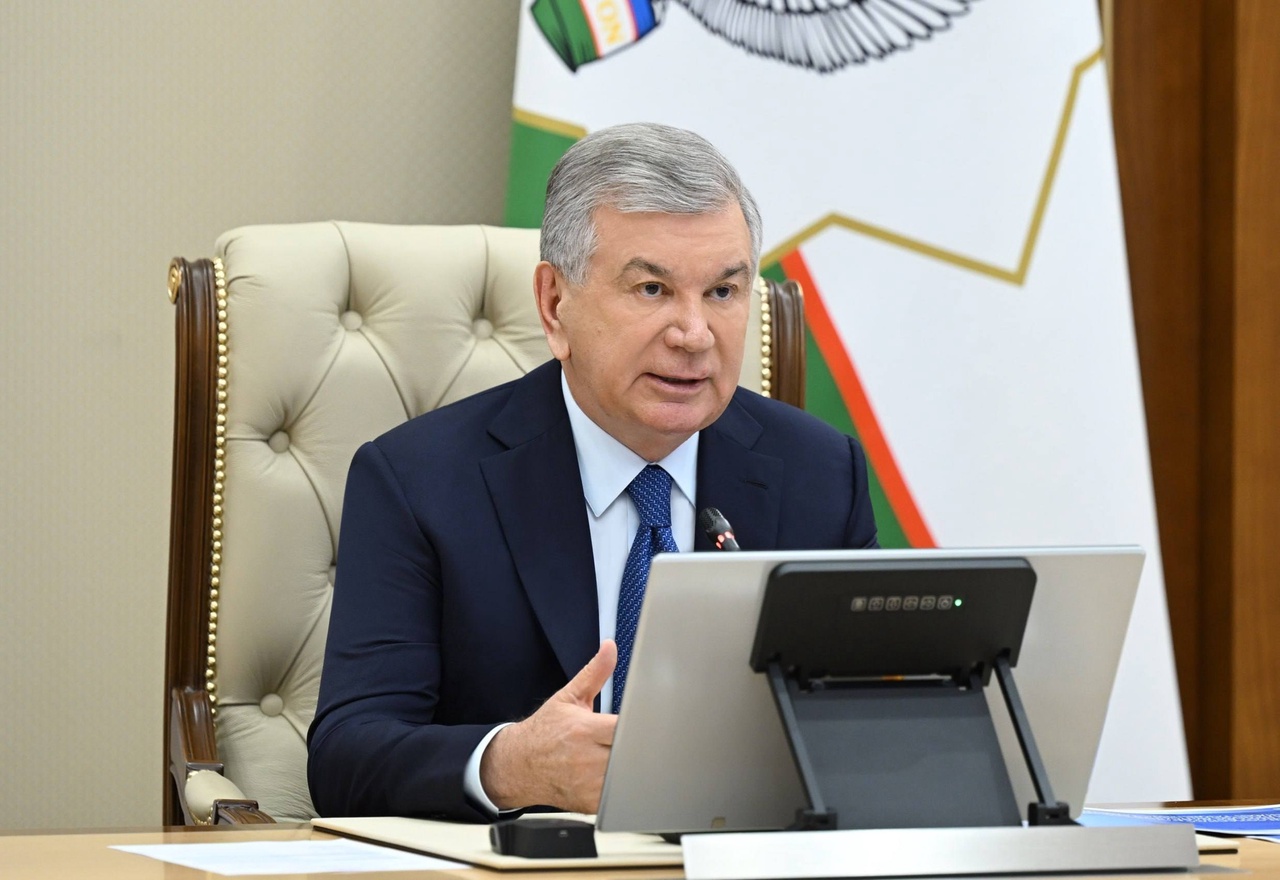
The large-scale work in the construction industry contributes to the creation of modern housing, social facilities, and convenient infrastructure. At the same time, the structures being built must be safe, high-quality, and fully compliant with environmental and urban planning requirements.
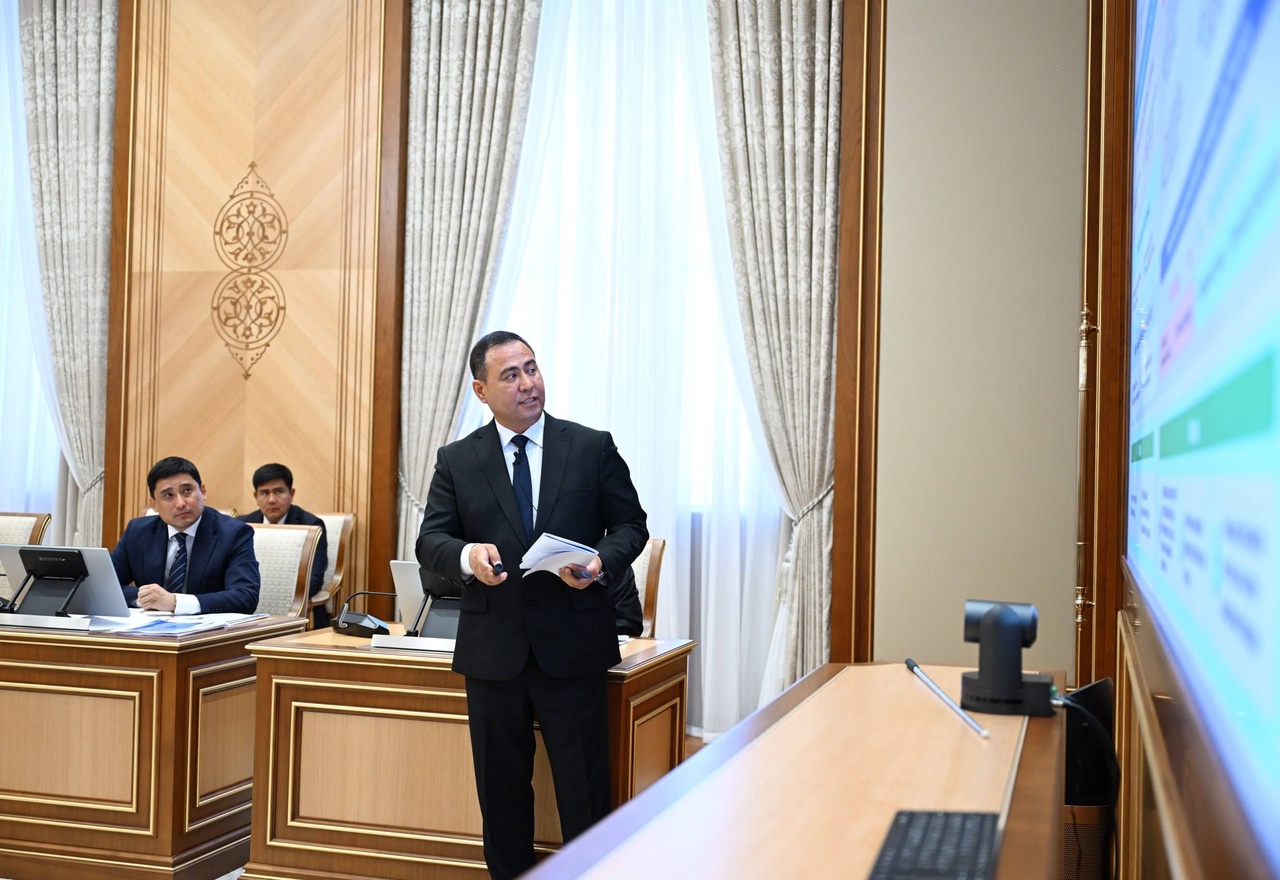
During the presentation, proposals were reviewed to simplify public services in the sector, reduce bureaucracy in permitting procedures, digitize construction-site oversight, and minimize the human factor.
Today, obtaining a permit to begin construction requires eight documents. In some cases, this process takes three to twelve months. In this regard, it was proposed to eliminate the requirement for two documents, while two additional documents will be generated automatically through digital integration. As a result, the time required to submit and review an application will be reduced sevenfold, and unnecessary bureaucratic procedures for developers will be minimized.
Under the new procedure, the processes for issuing a design permit and an architectural planning assignment will be combined into a single document. This process is planned to be carried out automatically through the ShaffofAI system, eliminating human intervention. As a result, the procedure, which previously took up to 30 working days, will be fully automated.
A new procedure will also be introduced for licensing design and survey, construction contracting, and expert organizations. Currently, applicants must attach between 3 and 30 documents when submitting an application, and the decision-making process takes up to 14 working days. Under the proposed system, data will be verified automatically through electronic databases, and the requirement to attach documents will be eliminated. The time required to obtain a license will be reduced from 14 working days to 5 minutes, and the decision-making process will accelerate by 97 percent.
Plans are also in place to simplify the process for commissioning construction facilities. Last year, more than 20,000 applications in this area were rejected for various reasons. Developers are forced to spend one to three months correcting deficiencies.
From now on, the number of documents required to commission state facilities will be reduced from three to one. Technical and architectural supervision reports, declarations of compliance, and other data will be generated through digital systems. As a result, the commissioning period for facilities will be reduced from two months to 15 days.
At the same time, the practice of refusing to commission a facility because of architectural or planning changes that do not affect the building’s structural integrity or fire safety will be revised. In such cases, it will be possible to commission the facility while making targeted adjustments.
During the presentation, special attention was given to issues related to the online monitoring of construction sites.
Currently, there is no requirement mandating the installation of surveillance cameras at construction sites. In this regard, at the initial stage, it was proposed to install cameras at social infrastructure facilities under construction, apartment buildings, large commercial and industrial facilities, and hotel and tourism complexes valued at more than 3 billion UZS.
This will make it possible to identify unauthorized deviations from project designs in advance, maintain accurate records of workers at construction sites, prevent the payment of “envelope wages”, reduce the shadow economy, and ensure occupational safety.
The issue of improving the effectiveness of technical and architectural supervision in construction was also reviewed. In 2025, technical and architectural supervision specialists identified 42,000 deficiencies at construction sites, while inspectors later uncovered more than 250,000 additional violations. This indicates that in some cases, supervisory personnel’s activities are not organized effectively.
In this regard, it is proposed to introduce a registry and rating system for technical and architectural supervision organizations on the “Shaffof Qurilish” platform. Their activities will be monitored remotely, and all as-built documentation will be converted to electronic format. Supervisory specialists with low ratings will be sent for retraining, while those demonstrating high performance will have their certificates extended.
Effective mechanisms will also be introduced in construction material quality control. Every construction material delivered to a site will be registered in the electronic system nazorat.mc.uz, and documents confirming quality will be uploaded to the system. It was proposed to establish administrative liability for contractors using substandard materials.
New approaches will also be introduced in laboratory testing. To conduct timely testing at construction sites in remote areas, it was proposed to create mobile construction testing laboratories. This will make it possible to double facility coverage, obtain test results promptly, and ensure compliance with established standards.
During the presentation, the issue of preventing illegal construction was also examined in detail. As of April 1, a total of 3,791 illegal construction sites had been identified across the country. Of these, 1,933 are located within industrial zones. At some sites, the absence of land rights, design permits, and approvals from urban planning councils or expert reviews was identified.
To prevent such cases, it was proposed to send electronic notifications to citizens and legal entities regarding legislative requirements in the field of construction from the moment land rights arise, integrate the “Online Mahalla” and “Shaffof Qurilish” systems, and strengthen liability measures prescribed by legislation for the construction of facilities without permitting documents.
The issue of strengthening oversight of the management of the multi-apartment housing stock was also reviewed.
Current legislation lacks sufficient mechanisms to promptly apply administrative measures against individuals who arbitrarily dismantle load-bearing structures in apartment buildings. While 563 such cases were recorded in 2023, the number reached 2,484 in 2025.
Unauthorized reconstruction in buildings that have been in use for more than 50 years poses a particular danger. There are 15,270 such apartment buildings in the country. Therefore, it was proposed to restrict changes to their classification and reconstruction work, and to grant the inspection authority direct authority to impose fines for the demolition of load-bearing structures.
The issue of strengthening human resource capacity was also a focus.
Tasks were set to organize educational programs at universities in Tashkent, Namangan, and Qarshi in collaboration with the University of Vienna and Sapienza University of Rome, send promising specialists for internships in developed countries, and create a system to introduce new knowledge and skills into practice.
The President emphasized that all proposed innovations in the sector must be closely tied to practical application. After hearing the views of entrepreneurs in the field who joined from regional studios, the Head of State supported the proposals and issued relevant instructions to the responsible officials.