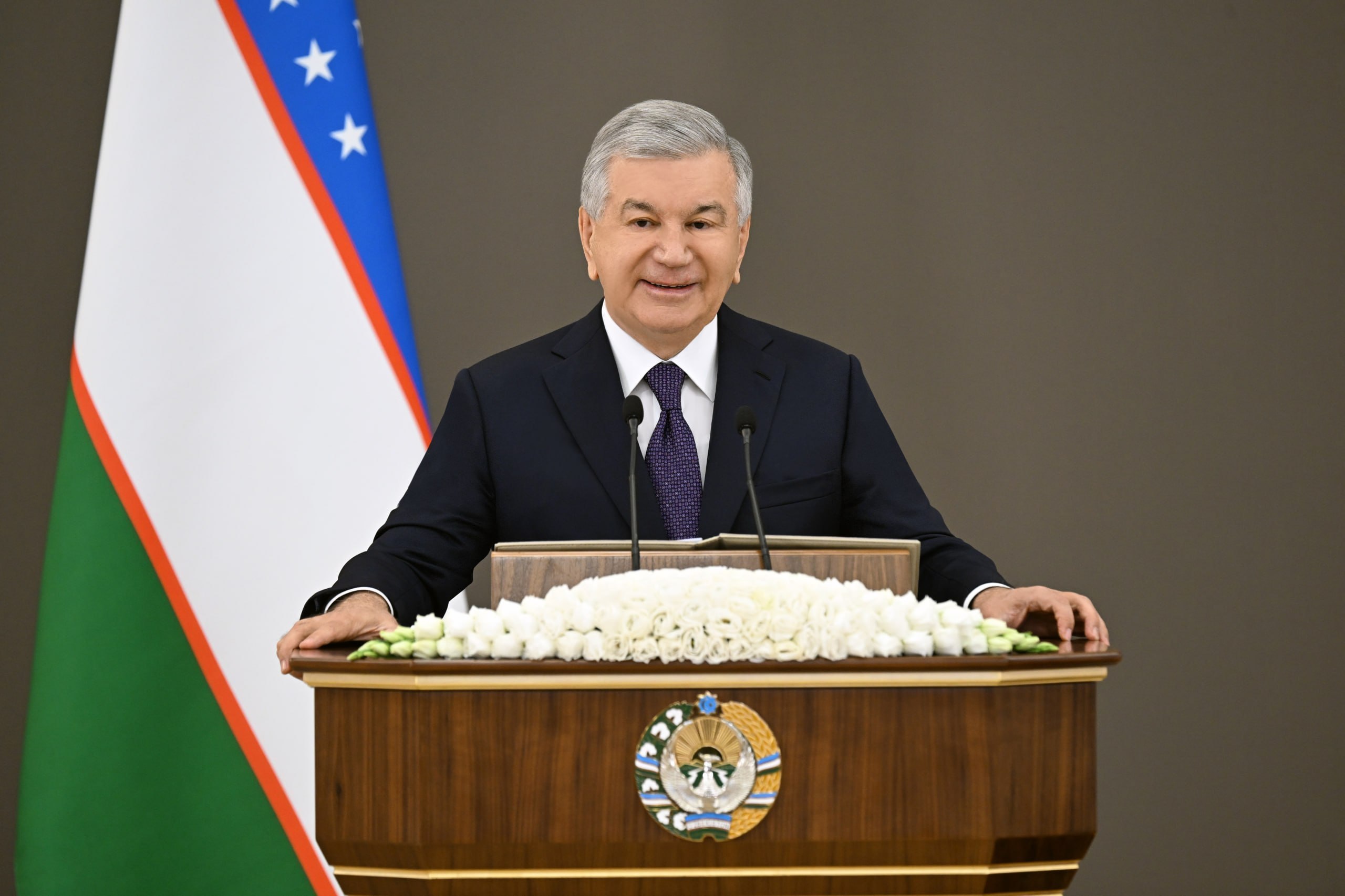

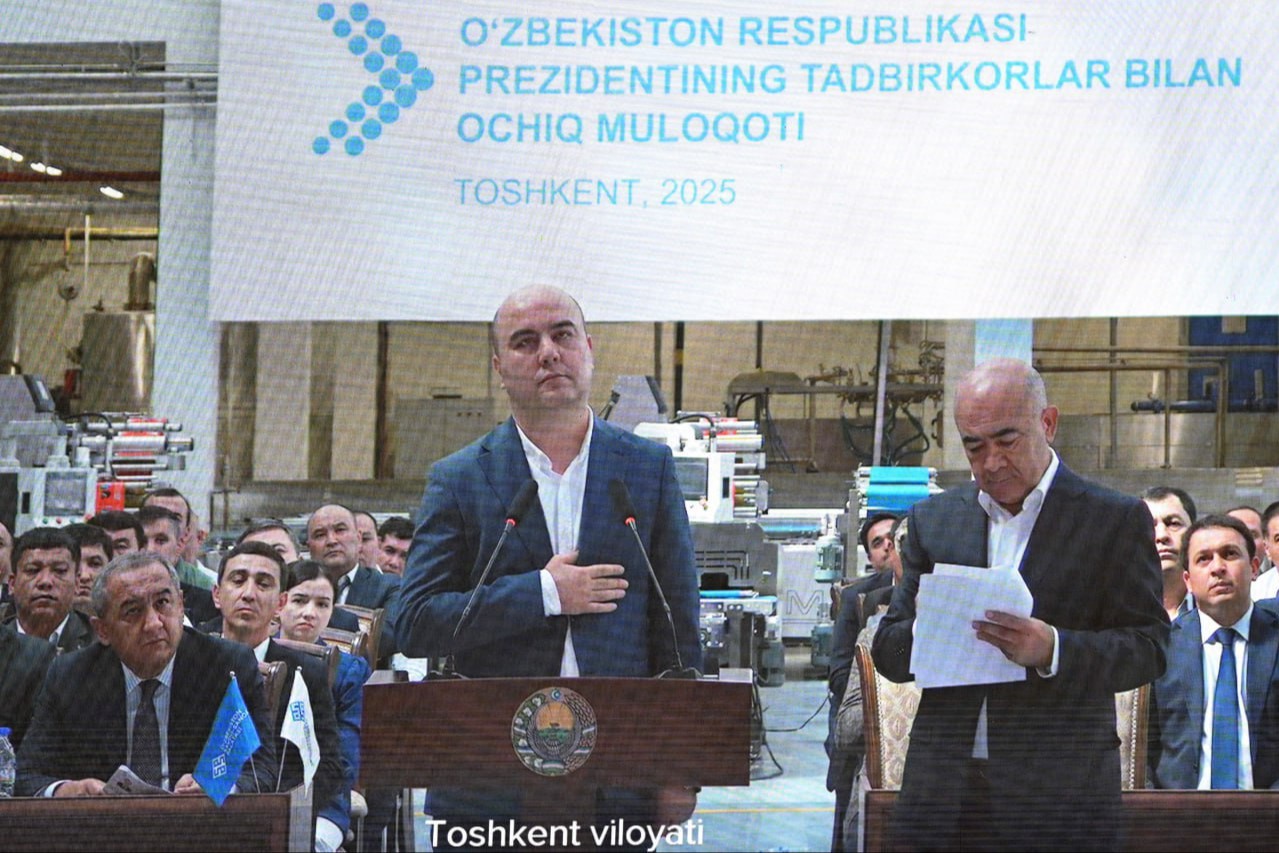
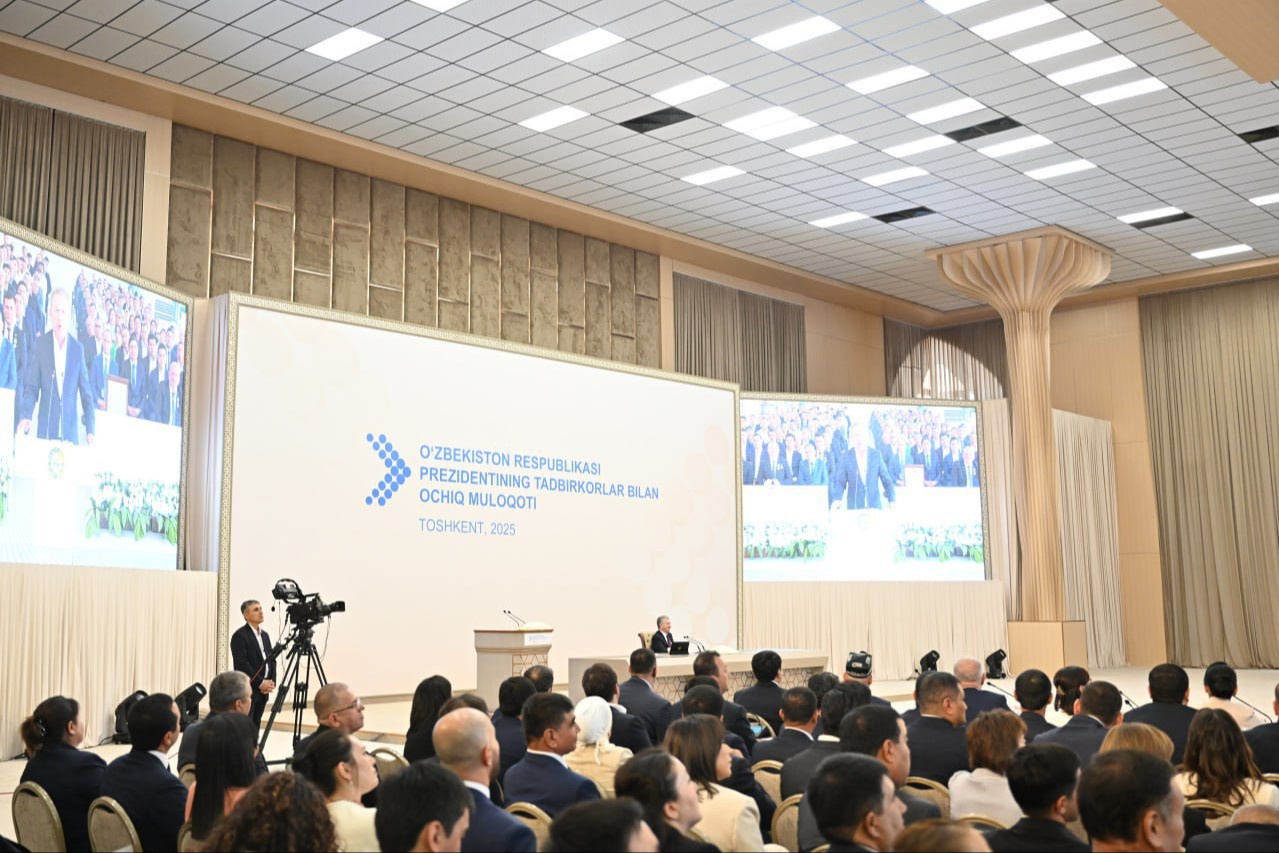
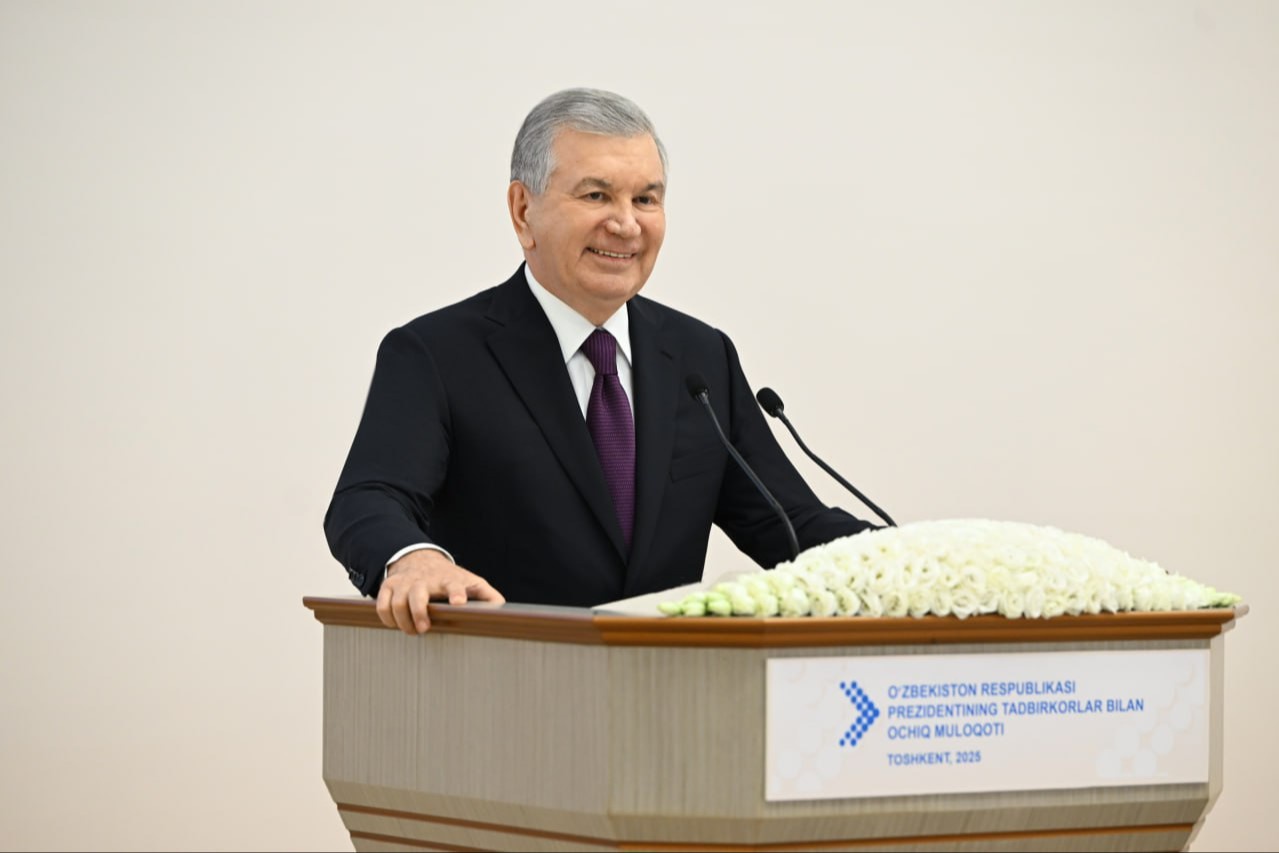
The Head of State congratulated the businesspeople on the professional holiday and the 34th anniversary of independence. He emphasized their significant contribution to transformations in each sector, each region, and each mahalla.
Over the past eight years, many sectors of the economy have been re-shaped. During this period, $230 billion of investments have been attracted, of which more than $120 billion are foreign. In the first half of this year, the country’s economy grew by 7.2 percent.
Owing to the creation of favorable conditions for doing business, the number of entrepreneurs and the scale of their activities have increased. For example, 1,600 micro-enterprises increased their turnover to more than 10 billion UZS during the year and immediately moved to the category of medium-sized enterprises, 143 exceeded the turnover of 100 billion UZS and became large companies. Another 122 small enterprises became large companies.
As a result of measures to bring businesses out of the shadow, 139 thousand companies were established, leading to an increase of 811 thousand jobs. In 273 thousand companies, the labor remuneration fund rose by 22 percent. Last year, the average salary in the private sector was 4 million UZS. Today, it is close to 5 million UZS.
It was noted that since the first open dialogue, almost a thousand initiatives of entrepreneurs have been enshrined in the legislation. The current meeting has become the fifth in a row. In the course of preparation for it, meetings were held with almost 7,000 representatives of 26 industries, and more than 13,000 appeals and proposals were received through the “call center”.
In recent weeks, the key sectors of the economy – fruit and vegetables, textiles, and individual entrepreneurship – have been discussed, and support measures have been identified.
At today’s dialogue, the Head of State put forward new initiatives in other areas of entrepreneurship as well.
First of all, the service sector will be actively developed as the most effective area for creating short-term and quick-paying jobs. A new program for the development of tourism is being launched. In the next three years, 5 thousand hectares of land will be auctioned for the organization of hotels and tourist facilities. At the same time, entrepreneurs wishing to build a hotel will not be charged for the land – the state will enter the project as a co-founder for the cost of the land plot.
Entrepreneurs will be able to buy out this share within ten years at any time. If payment is made at once, a 20 percent discount will be provided. Seven-year loans with a two-year grace period will be available for hotel construction.
Many entrepreneurs are already acquiring public and private properties and converting them into hotels. Now the subsidies envisaged for the construction of new hotels will be provided to them as well. In addition, hotels located outside Tashkent, regional centers, and major tourist zones are exempt from paying tourist tax.
If earlier family guest houses could receive no more than 10 tourists per day, now this limit is doubled.
The President suggested holding a contest among domestic hotels and family guesthouses. The prize fund of the contest will amount to $1 million, and the best facilities that have received the most significant number of positive reviews on reputable international platforms will be rewarded annually.
Due to infrastructure development, the number of major tourist zones will increase. Thus, large year-round resort zones will be created in Chartak, Fergana, Baysun, and Nurabad districts.
This year, more than 1 trillion UZS have been allocated for the accelerated development of 16 districts. In the future, similar projects will be implemented in 30 more districts for $500 million. This will create significant opportunities for entrepreneurs in industry, services, and construction, as well as tens of thousands of jobs.
Businesses also need additional space. In this regard, from next year, state assets will be leased for five years.
It was noted that the Law “On Lease”, adopted in 1991, was mainly aimed at protecting the interests of state bodies. In this regard, a new version of the law will be developed, which will equally protect the rights of the lessor and the lessee.
New opportunities in education and medicine were also identified at the meeting.
In particular, in 80 districts with low enrollment in pre-school education, entrepreneurs will be granted privileges. They will be allowed to build kindergartens on vacant land of pre-school institutions and schools on the terms of a public-private partnership. At the same time, no land rent will be charged for 30 years. The state will subsidize half of the costs for each child envisaged in public kindergartens. Also, favorable loans will be granted to enterprising entrepreneurs, and the social tax rate for them will be only 1 percent.
For entrepreneurs creating medical clusters, loans will be provided for 7 years with a three-year grace period at an annual interest rate of 17 percent.
The President emphasized that the most essential tool to support business is financial services. In this regard, an investment platform will be created to simplify the attraction of funds for projects. With its help, entrepreneurs will be able to attract up to $1 billion a year.
Today, more than 600 startups are operating in Uzbekistan. In the first seven months of this year alone, they attracted a record volume of $264 million in foreign investment.
This work will continue, with plans to commercialize a thousand startup ideas from young people, bringing 200 of them to the international market. Based on advanced technologies, 100 local startups will turn into attractive world-class businesses. For this purpose, $100 million will be allocated.
The “Young Entrepreneurs” championship will start this year. The 100 best ideas will be selected, and up to 1 billion UZS will be invested in each startup.
To expand digital financial services, a five-year strategy will be adopted to introduce a new ecosystem – “open banking”.
Next year, banks will raise $1 billion to provide targeted support to SMEs on favorable terms. An alternative scoring model will be introduced, which will ease the conditions for obtaining loans.
The meeting also addressed the issues of tax administration.
Currently, enterprises with annual turnover over 10 billion UZS have to pay advance payments of income tax, which creates difficulties with working capital. This procedure will now be applied only to turnovers above 20 billion UZS. As a result, 14,000 entrepreneurs will have an additional 1 trillion UZS of working capital.
Enterprises switching from turnover tax to VAT are exempted from paying income tax for one year. Even in the case of errors in reporting, fines will not be applied. In addition, a part of accountants’ salaries up to 5 million UZS for six months will be deducted from taxes paid by such enterprises.
Two years ago, tax officials introduced an accounting system for “simplified” taxpayers. From next year, entrepreneurs will be exempt from the obligation to prepare reports on land, property, social, and income tax – they will be compiled free of charge by the tax authorities. Businesses will be able to make corrections to reporting within 5 days.
As is known, business develops where the rule of law is in force. In recent years, modern investment instruments have been introduced into the economy: venture capital, bonds, crowdfunding, and startups. Dozens of documents currently regulate these relations.
The President proposed to unite all these regulations into a single document of direct action – to adopt the Investment Code. It will consolidate all rules, guarantees, and procedures in the investment sphere, thereby stimulating investment.
The Head of State also announced another vital news: from 2026, the principle of “Start a business in 15 minutes” will be introduced. Upon registration, an entrepreneur will be immediately provided with an electronic digital signature, a bank account, and a notification to the state authorities.
The list of goods subject to mandatory certification has been reduced to 459 items and will be reduced by another 288.
For 32 categories of goods – such as seedlings, mineral fertilizers, footwear, livestock feed under sanitary, veterinary, and quarantine control – certificates of conformity will be abolished.
In general, the national infrastructure for ensuring product safety and quality, as well as their evaluation, will be fundamentally reformed to align with international standards. First of all, the practice of declaration of conformity will be widely introduced instead of certification.
The system of technical regulation will be completely transformed: the object of control will not be the entrepreneur, but the product itself.
It has been noted that all of the opportunities mentioned above are already taking effect today.
The President emphasized that the tasks set are ambitious, but achievable due to the current entrepreneurial spirit in the country.
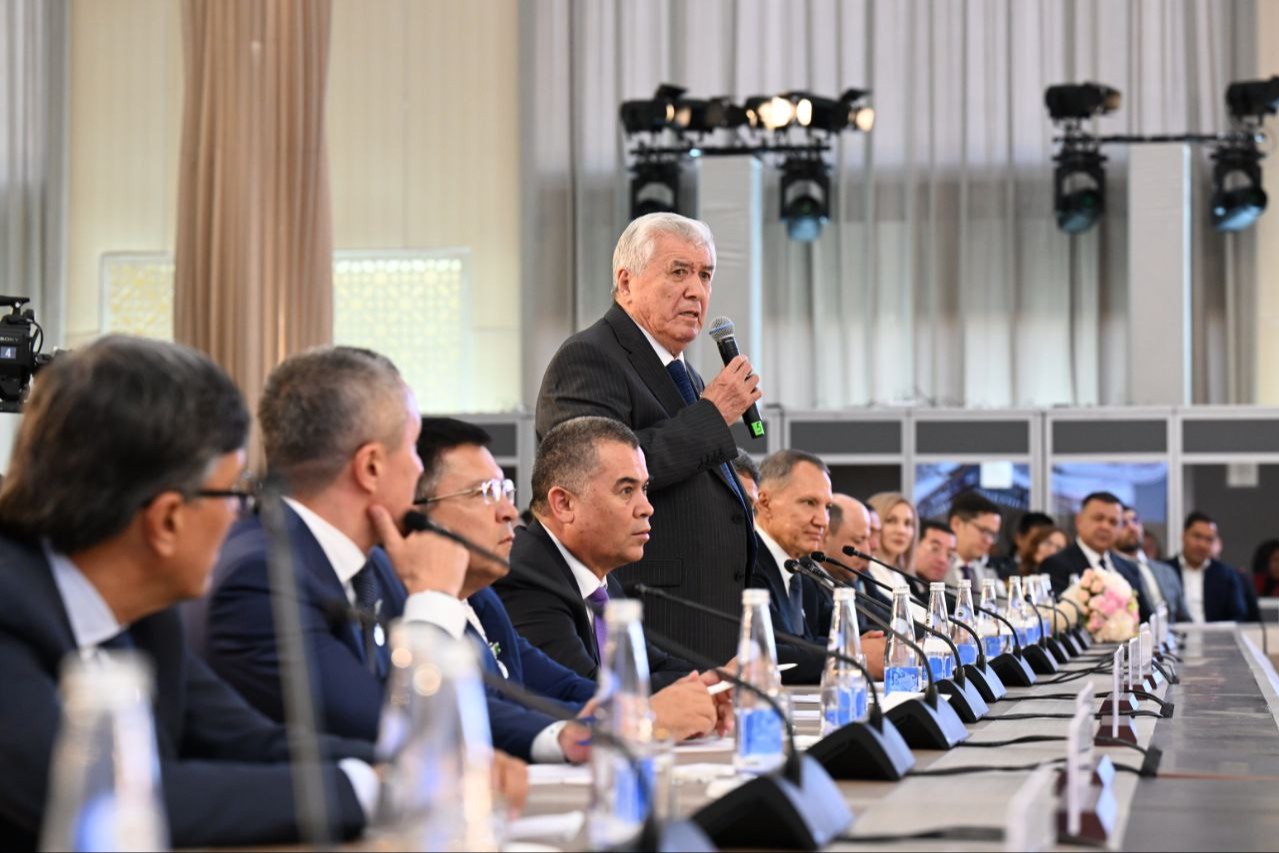
The meeting continued in the format of an open dialogue. Entrepreneurs participating from central and regional studios voiced their suggestions and comments. Problematic issues were discussed, and the responsible persons were given appropriate instructions.