

Diplomatic relations between the Republic of Uzbekistan and the Hashemite Kingdom of Jordan were established in February 1993. Over the past decades, they have gone from formal contacts to comprehensive cooperation covering politics, economics, and cultural and humanitarian fields.
In June 1994, the Embassy of Jordan began its activities in Tashkent. Currently, the Ambassador of Uzbekistan with residence in Riyadh is accredited in Amman concurrently.
In addition, since August 2007, the Institute of the Honorary Consul of Uzbekistan in Jordan has been operating, which is a citizen of the kingdom, Luai Abu Gazzal.
Since the establishment of diplomatic relations between Uzbekistan and Jordan, the political dialogue at the highest level has been conducted mainly in the format of meetings on international platforms, telephone conversations, messages and individual exchanges of high-level visits.
In recent years, bilateral relations have gained new momentum. The parties demonstrate their desire to expand and deepen cooperation, relying on significant potential for mutual benefit.
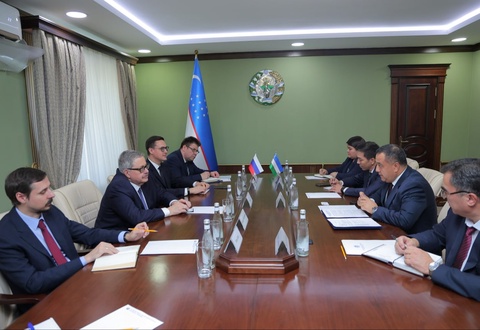
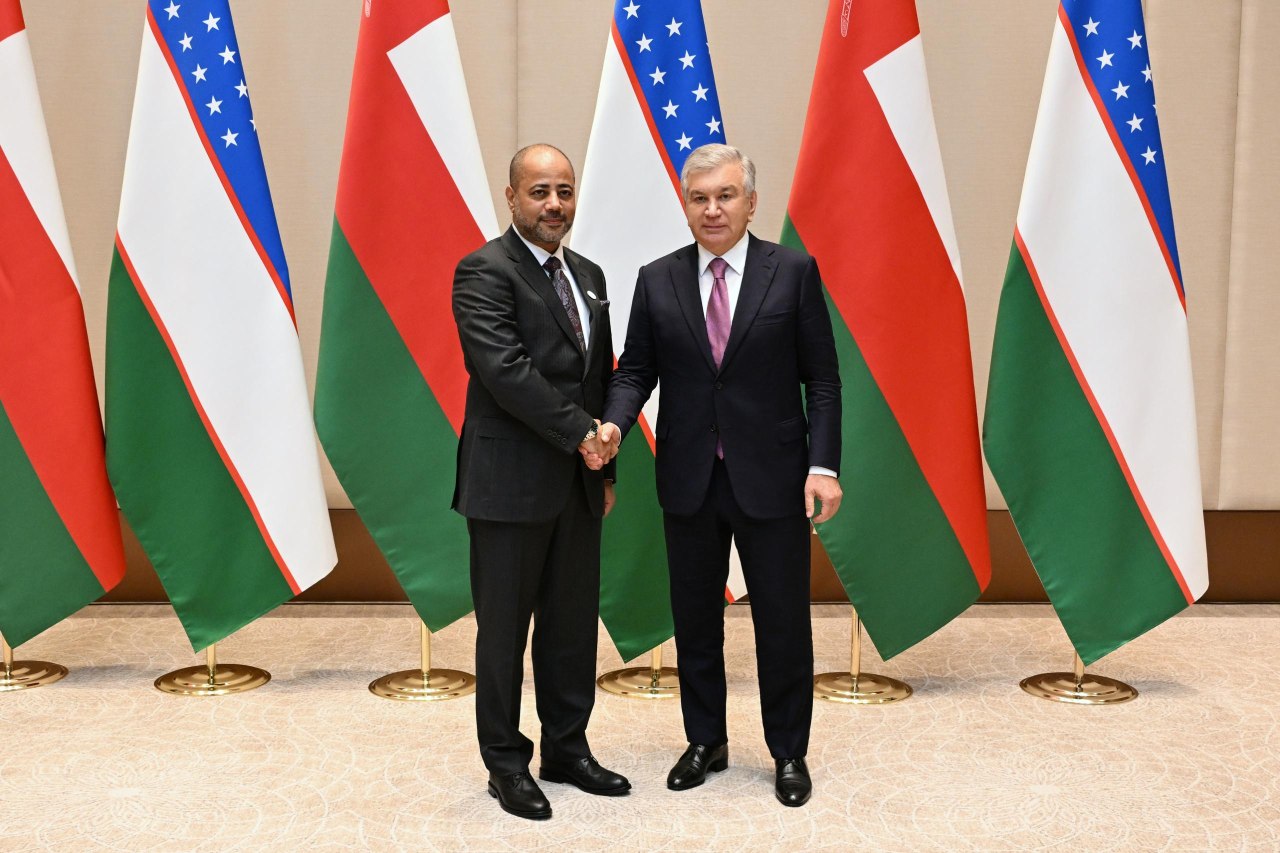
In 2025, a representative delegation of Uzbekistan headed by Foreign Minister Bakhtiyor Saidov visited Amman, during which welcoming words and a personal message from President Shavkat Mirziyoyev to King Abdullah II ibn al-Hussein were conveyed. The delegation was received by King Abdullah II bin Al-Hussein of Jordan, and held talks with Deputy Prime Minister and Foreign Minister Ayman al-Safadi, as well as meetings with representatives of the Ministries of Investment, Higher Education, waqfs, Islamic Affairs and Holy sites, and representatives of large companies.
One of the significant results was the signing of an agreement on the abolition of the visa regime for holders of diplomatic passports, as well as a joint program of cooperation between the Ministries of Foreign Affairs for 2025-2027. These steps indicate a mutual desire to give relations a systematic character and bring them to a new level.
Uzbekistan as a whole demonstrates a policy of openness and multi-vector approach in foreign policy. In recent years, Tashkent has been actively developing cooperation with Middle Eastern countries, which is reflected, in particular, in an almost fivefold increase in trade with the states of the Gulf Cooperation Council in 2020-2023. Uzbekistan's participation in multilateral formats such as the Organization of Islamic Cooperation, the Organization for Economic Cooperation and other international organizations creates an additional platform for deepening Uzbek-Jordanian cooperation.
Economic cooperation between Uzbekistan and Jordan remains at a relatively modest level, but the parties have already outlined a strategy to enhance it. In 2024, the mutual trade turnover amounted to about $4.6 million. Jordan supplies pharmaceutical products, chemicals, equipment and machinery to Uzbekistan, while Uzbekistan exports copper, dried fruits, nuts and textiles.
Negotiations between the ministers of Investment, Industry and Trade of the two countries in 2025 confirmed their readiness to expand the partnership. Among the key areas is the signing of a preferential trade agreement that will simplify the access of goods to the markets of both countries, the development of cooperation in the mining industry, including the extraction and processing of phosphates, copper and other minerals, strengthening ties in agriculture and the food industry, the implementation of joint projects in pharmaceuticals, textiles, light industry and the digital economy.
Of particular importance is the intention to create an Uzbek-Jordanian Business Council, which will allow establishing direct contacts between entrepreneurs, organizing industry exhibitions, business forums and trade missions. Jordan also offers to use its advantageous geographical location as a hub for Uzbek goods to enter the markets of the Middle East and North Africa.
The ties between Uzbekistan and Jordan have a deep spiritual foundation. Both countries are united by Islamic culture, a common historical heritage and centuries-old traditions of religious and cultural exchange. This creates a special atmosphere of trust and mutual understanding, which is especially important for the humanitarian dimension of bilateral relations.
Promising areas of cultural and humanitarian cooperation include the expansion of academic exchanges, joint educational programs and scholarships for students, cultural festivals, exhibitions and conferences dedicated to the common historical and cultural heritage, cooperation in the field of Islamic studies, theology, history and archeology, the exchange of experience in the field of healthcare, including joint medical programs, training and telemedicine.
The proximity of spiritual values creates a solid foundation for a long-term partnership, where cultural exchange becomes an integral part of the overall development.
In recent years, representatives of Jordan have been actively participating in cultural events held in Uzbekistan, including the "International Makoma Art Festival" (September 2018, Shakhrisabz) and the "International Festival of Excellence" (September 2019, Kokand).
Of course, Uzbekistan and Jordan are able to build a mutually beneficial partnership based on trust, common cultural values and mutually reinforcing economic potential. The implementation of the planned initiatives will not only deepen cooperation, but also turn it into a significant factor of stability and development in the Middle East and Central Asia.
In this context, the upcoming visit of the head of Jordan to Uzbekistan will open up new horizons for enhancing bilateral cooperation. The political will of the parties, supported by concrete agreements, will create conditions for the growth of trade, the implementation of investment projects and the strengthening of humanitarian ties.
News agency "Dunyo".