
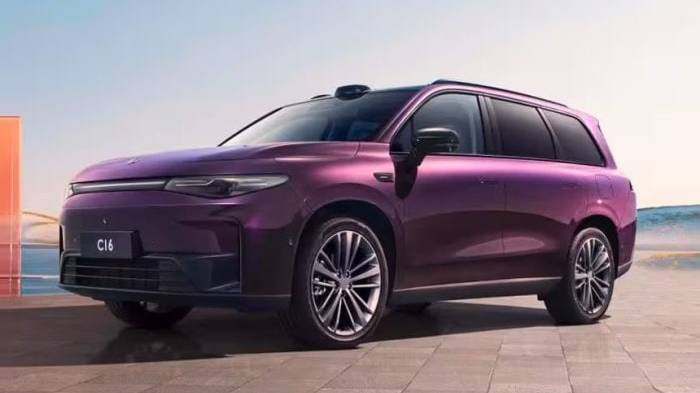
It is reported that the C16 car was recently tested in the laboratory by the Chinese company Leapmotor. According to the test results, it was revealed that this car does not comply with international standards, in particular, the safety requirements established by the United Nations (exceeding the permissible standards by 16 times).
According to test report No. SB-0309-388/25, conducted on March 10, 2025 at the State Scientific and Testing Center for Quality Control (O'ZAK.SL.0309), the car does not comply with the UzTR.237-016:2017 standard, Appendix No. 3, paragraph 44, which regulates resistance to external electromagnetic radiation and broadband electromagnetic noise.
Electromagnetic compatibility (EMS) is an important test performed to minimize the effects of electromagnetic fields on electronic devices and systems. Such tests are also necessary for vehicles, as electromagnetic fields can significantly affect the operation of vehicle electronic systems, which poses a serious safety threat.
In addition, the impact of electromagnetic radiation on human health is also an important issue. According to research, high levels of electromagnetic fields can negatively affect the body, causing disorders of the nervous and cardiovascular systems, as well as increasing the risk of cancer.
"In this regard, we strongly recommend choosing cars that meet international requirements and standards, as well as purchasing them from authorized dealers, observing all safety measures," the press service of the Technical Regulation Inspectorate said.
For reference: In Uzbekistan, electromagnetic compatibility (EMS) tests are conducted in a specialized laboratory located in the Piskent district. This laboratory is accredited in accordance with the international standard O'z DSt ISO/IEC 17025:2019.