
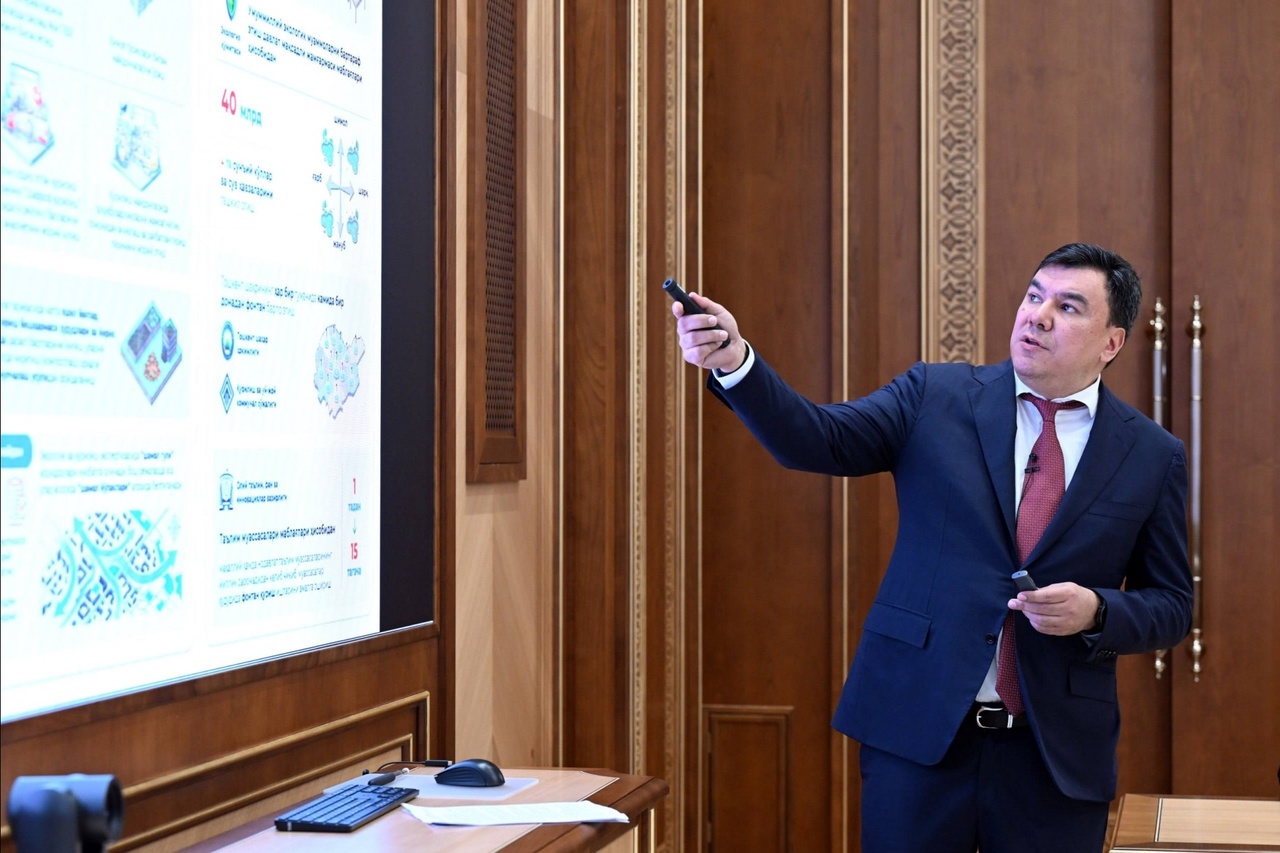

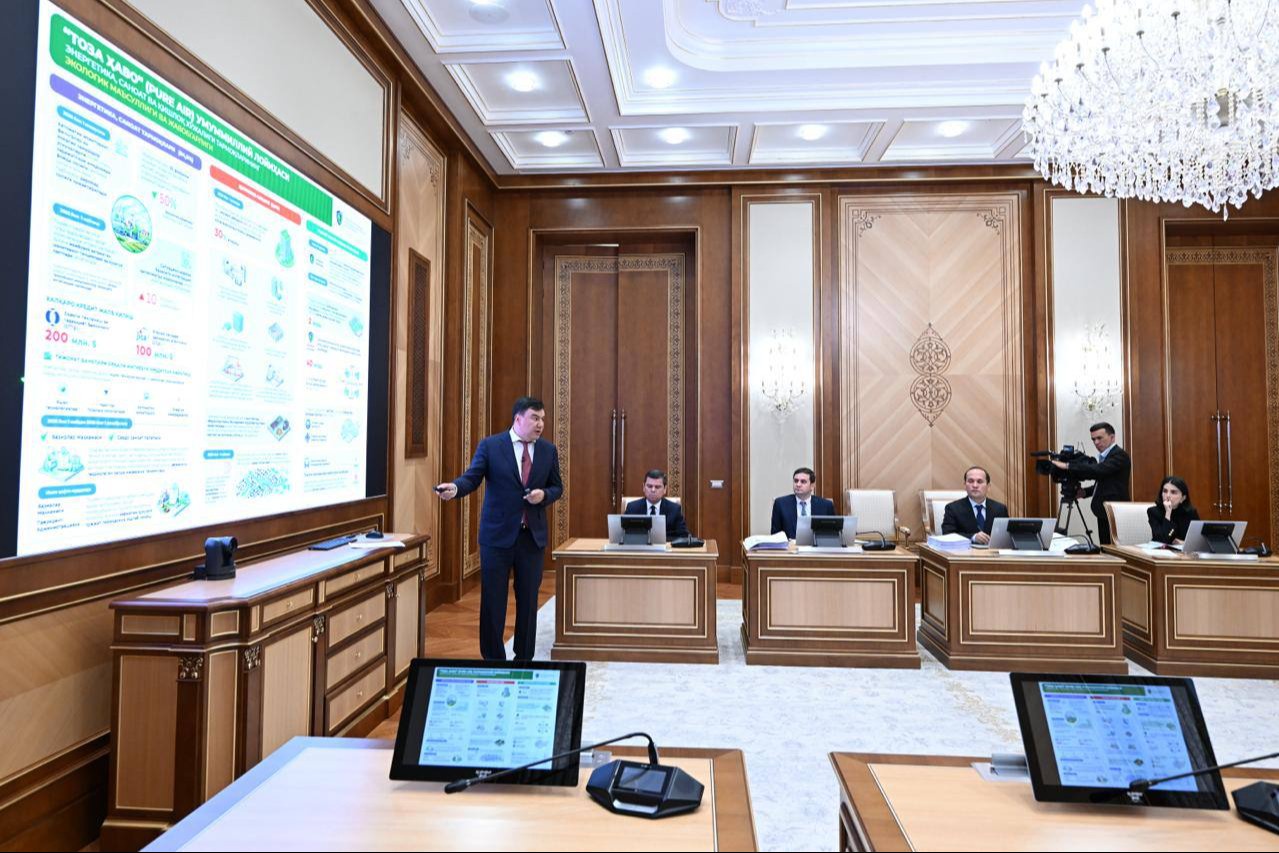
Initiatives to improve ambient air quality, expand green spaces in cities and regions, boost environmental education and culture, and strengthen the scientific and practical basis for fighting desertification were considered.
First, information was shared about the planned measures within the nationwide “Clean Air” project.
It was noted that cases of exceeding established air pollution standards are currently being recorded in Tashkent. A similar situation is also observed in Navoi, Fergana, Chirchik, and Termez. The main factors contributing to pollution were identified as industrial growth, the widespread use of carbon-based fuels, an increase in the number of vehicles, natural factors, and insufficient control.
In this regard, key targets through 2030 have been set: reducing pollutant emissions into the atmosphere, increasing the share of captured emissions at industrial facilities, lowering harmful emissions from transportation, and reducing the number of days when PM2.5 levels exceed the established standard.
It was noted that, as a result of prompt measures, air quality in Tashkent has improved to some extent. In particular, in January-February this year, the concentration of PM2.5 decreased noticeably compared to the same period last year. In the future, regional programs will be implemented in stages in this area, and each region will establish analysis and diagnostics, a unified air-monitoring system, and an inventory of pollution sources.
Within the framework of the “Clean Air” project, special attention is given to the energy and industrial sectors. Tax incentives and financial stimulus measures are planned for companies that produce part of their output using alternative energy sources, as well as for the widespread adoption of automatic monitoring stations, filters, dust- and gas-cleaning systems, and energy-efficient equipment. Mandatory automatic monitoring stations will be installed at industrial enterprises in Tashkent and surrounding areas, with data integrated into a unified geographic information system. Compensation payments for entities that do not comply with these requirements will be significantly increased.
Environmental requirements in the construction sector are also becoming stricter. For new large-scale projects, provisions include increasing green spaces during design, storing construction materials in enclosed areas, disposing of waste via specialized pipes and containers, fencing sites with protective barriers, and installing online surveillance cameras.
Additionally, it has been proposed to preserve “wind corridors”, mandatorily consider environmental impact assessment conclusions during construction, and develop a master plan for managing the city’s environmental and water resources.
Specific measures to reduce the impact of natural dust have also been identified. These include the creation of a green belt around Tashkent, the establishment of green barriers in Surkhandarya and Syrdarya regions to prevent dust storms, the creation of artificial lakes and reservoirs, an increase in the number of fountains in districts of the capital, as well as organizing leaf processing into compost and mulch. All of this is expected to help reduce airborne dust concentrations and improve the urban environment.
Separate areas have also been established in the transportation sector. These include gradually tightening motor fuel standards, environmentally classifying vehicles with “red”, “yellow”, and “green” stickers, linking technical inspections to environmental standards, implementing programs to upgrade outdated vehicle fleets, and increasing public transportation use. This will help reduce pollution from road traffic, especially in the centers of major cities.
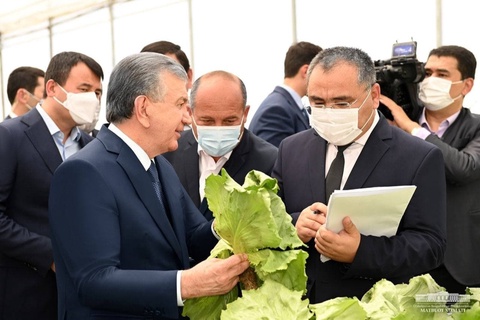
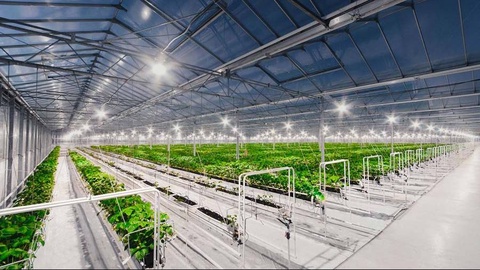
As a key part of the “Clean Air” project, the issue of greenhouse enterprises was also addressed.
It was noted that many greenhouse enterprises are based in Tashkent and Tashkent region, with a high proportion of greenhouses relying on coal, fuel oil, and other non-standard fuels for heating. This results in emissions of hazardous substances like NO₂, SO₂, and PM2.5, which significantly harm air quality. Additionally, because the Tashkent region receives less solar insolation compared to other areas, the cost of growing greenhouse crops there is much higher. For example, while the average air temperature in Tashkent in January is +6 °C, in Termez it is +10.8 °C. Producing 1 ton of greenhouse products costs 11.9 million UZS in Tashkent region, compared to 4.9 million UZS in Surkhandarya.
Growing products in areas with higher solar insolation benefits both the financial sustainability of greenhouse businesses and price stability in the local market.
In this regard, it has been suggested to gradually move greenhouse businesses from Tashkent and nearby areas to regions with better natural and climate conditions and higher energy efficiency. Specifically, a plan is underway to create an agro-park covering at least 940 hectares in Sherabad district of Surkhandarya region. This area features high solar radiation, milder winters, and notably lower heating costs, enabling a significant reduction in production expenses.
Starting from October 1, 2026, it is planned to restrict the establishment of new greenhouses in Tashkent and adjacent areas, while enterprises subject to relocation will be provided with benefits in infrastructure, financing, and logistics.
The presentation also included information on botanical gardens and dendrological parks within the framework of the “Yashil Makon” program. As noted, botanical gardens serve the study, conservation, propagation, and display of local and foreign plant species, whereas dendrological parks specialize in the introduction, acclimatization, and scientifically grounded care of tree and shrub species. According to the concept, botanical gardens will feature various floristic exhibitions, greenhouses, nurseries, lakes, internal pathways, gazebos, and flower zones.
At present, 3 botanical gardens operate in the country, and under the project, it is planned to establish an additional 12 botanical gardens and 16 dendrological parks. At the same time, the most suitable tree and shrub species will be selected for each region, taking into account soil and climatic conditions.
By 2028, it is planned to create botanical gardens and dendrological parks with an area of at least 100 hectares in Karakalpakstan, all regions, and the city of Tashkent. As a result, it is expected that by 2030 the overall level of greening in the country will increase from 14.2 to 30 percent, the concentration of PM2.5 and PM10 will decrease by 20-25 percent, and the average air temperature in climatically challenging areas will decline by 1.5-2 degrees.
At the same time, a concept for establishing a National Dendrological Park in the capital was presented. The total area of this large green space will amount to 108 hectares. The project envisages the planting of 50,000 tree saplings and 100,000 shrubs. The park will contribute to the preservation of biodiversity, improvement of air quality, increased carbon absorption, the development of scientific research and breeding work, as well as the enhancement of the urban microclimate. It is expected to reduce air temperature by 2-4 degrees and increase humidity by 10-15 percent.
The National Dendrological Park is being developed not only as a green area, but also as a scientific, educational, and public space. It is planned to establish a “Trees of the World” zone, collections of plants from six climatic zones, arrays of fruit-bearing and local tree species, a medicinal plant garden, a greenhouse, flower beds, recreation areas, pedestrian and bicycle paths, a parking area, and a visitor reception zone.
In the central part of the park, the construction of a 1-hectare artificial lake and a cherry blossom garden around it are planned. Modern, environmentally friendly technologies will be applied in the infrastructure, including solar panels, benches, and gazebos made from recycled materials, and an automated drip irrigation system. This park will become a natural laboratory for the Central Asian University of Environmental and Climate Change Studies (Green University), and for the population, a center of biotourism and environmental education.
Within the framework of the nationwide project “Ecoculture”, a new system integrating environmental education, science, and awareness-raising activities is planned.
It was noted that there is a shortage of specialists in this field who meet international standards, the level of environmental awareness and sustainable habits among the population remains insufficient, and there is also a lack of personnel capable of implementing innovations and climate technologies in practice. In this regard, starting in the 2026/2027 academic year, “green technical schools” will be established in 14 regions and, through academic cooperation, integrated into the Green University system.
According to the project, the number of students will increase annually and will reach 10,000 by the 2028/2029 academic year. New undergraduate and graduate programs will be introduced in areas related to the environment and sustainable management, the green economy, environmental engineering, climate change, combating desertification, sustainable urban development, and sustainable energy exchange. A dual education system will be implemented in the educational process, ensuring a combination of theoretical knowledge and practical training. Significant funding is also envisaged for the development of the university education system, scientific and innovative projects, and outreach activities.
To enhance environmental culture among the population, it is planned to revive the “10,000 Steps” initiative, launch the “Healthy Lifestyle” platform, and hold the GEF-8 Assembly and the international exhibition Eco Expo Central Asia 2026 in Samarkand.
A draft strategy for combating desertification was also considered separately at the presentation.
As noted, 70 percent of Uzbekistan’s territory is arid, and more than 70 percent of the land is subject to degradation. The deterioration of land resources causes annual economic damage of $830 million. As a result of the drying up of the Aral Sea, 3 million hectares of land have become unsuitable, and 56 percent of the territory has been affected by wind erosion.
In this regard, it has been proposed to establish a regional joint research center under Green University. It is expected to become the first scientific hub in Central Asia for managing desertification processes. The center’s structure will include 15 specialized laboratories, digital monitoring of land conditions based on satellite data, GIS, and remote sensing technologies will be introduced, a genetic bank of drought-resistant plants will be created, and the system of chemical and physical soil analysis will be improved.
This will enable the development of a national system for forecasting and mapping desertification processes, expand green cover in the Aral Sea region and arid zones, promote sustainable pasture use, and introduce desert economy models.
The Head of State, recognizing the importance of the presented projects in promoting environmental sustainability, safeguarding public health, enhancing the comfort of urban and rural areas, and advancing the adoption of science and modern technologies in this field, approved the proposed initiatives.