
It is no secret that for many years, when we spoke about science, the first things that came to mind were laboratories, experimental stations, dissertations, articles, patents or reports. These are, of course, important parts of science. But today a different question is being asked: has this science entered people’s lives? Has it reached the farmer’s field? Has it become income for a household? Has it worked in the market as a product or service? Has it helped reduce poverty, strengthen food security and support regional development?
If science remains only on paper, it may be a good idea, but it is not yet a force to be reckoned with. To become a real force, science must see the soil, feel the water, pass through the farmer's hands, and connect with household income and market needs. Put simply, science is born in the laboratory, but it begins to live when it enters people’s lives.
This is not only Uzbekistan’s problem!
Today, the same question is urgent worldwide. Developed and developing countries spend large amounts of money on science; universities and research centers produce thousands of articles, patents and prototypes. Yet not all of them turn into technology, jobs, income or visible benefits for society. That is why the question “how can science be brought into real life faster and more reliably?” is becoming a major policy and scientific issue for many countries.
International analyses also point to one important conclusion: commercializing research results does not mean only patents, licenses or startups. Collaborative research, contract research, economic contracts, academic consultancy, proof-of-concept funding – that is, funding to prove that an idea works in practice – mobility between scientists and industry, shared use of research infrastructure and open innovation are also important. A patent alone is not enough; it needs an environment that trusts it, uses it and carries it to the market.
The experience of many countries shows similar problems: if the intellectual property system is weak, if there is not enough proof-of-concept funding, if technology transfer offices are weak, if scientists are evaluated only by publications, and if the private sector and real users are not involved from the beginning, an invention cannot move from the laboratory to the market. Therefore, in this article, we are not only discussing our own problem but also a solution that the whole world is seeking.
What is the root of the problem?
In practice, the path of science often looks like this: an idea appears in a scientist’s mind or in a laboratory; a small experiment is conducted; it is then tested at an experimental station; a report is written; an article is published; and a patent is obtained. Only after that does the question arise of how to deliver the result to the farmer, the enterprise or the market.
But in many cases, this is exactly where the major problem appears. By the time a technology is ready, the market may have changed, the climate may have changed, and the needs of the main user – the farmer – may have changed. Sometimes the new scientific product proposed by the scientist is more expensive than similar, often foreign, alternatives. The hardest part is that there may be no specialist in the sector, other than the scientist, who understands the new product and can use it effectively. The farmer naturally asks: “Will this work on my land? Are my water, soil and labor conditions suitable for it? If I take the risk, will I benefit?”
Often, there is no clear answer to these questions. This is because the technology has been tested not in a real farmer’s field but in limited experimental conditions. As a result, even good developments remain on the shelf: there is a patent but no buyer; there is an article, but the farmer does not trust it; there is a report, but it does not reach the market. The most important lesson I have learned from leadership experience across several sectors is this: if the final destination of science is not defined from the very beginning, then, over time, it becomes increasingly difficult to bring it into real life. This means that the solution requires a non-standard approach – a model turned inside out, a path that starts from the other end.
What path is being proposed?
For many years, the traditional approach has worked along the following chain:
idea → scientific grant → laboratory research → analysis of results → articles and reports → patent or prototype → small-scale trial production → commercial offer to users or sectors → commercialization.
This path certainly has scientific value. But in practical agriculture, it often becomes long, slow and risky. This is because the real needs of the farmer, household, cluster, enterprise or market are taken into account not at the beginning of the process but, in most cases, at the end. As a result, some developments become good articles, reports or patents, but they never reach the farmer’s field, household income, marketable products or economic impact.
It is time to start the path of science from the other end. A scientist should begin not only with the question “what idea do I have?” but also with “which farmer, which household, which local administration, which cluster, which cooperative, which enterprise, or which mahalla problem can I solve?”
In the new model, the chain is built differently – from the bottom upward:
current real-life problem → selection of a farmer’s field or household platform as a scientific site → scientific diagnosis of conditions and available human capital → solution idea → mobilizing a grant → laboratory and field research conducted simultaneously → free or preferential technology package → testing under real conditions and training of local specialists → farmer and household income → expansion to neighboring households and farmers, that is, initial commercialization → scientific data → article, patent and demonstration of an implemented site → expansion through a cluster, cooperative, company, startup or spin-off → large-scale commercialization.
The difference is that in the existing system, the farmer, household and market often appear at the end of the chain; in the new model, they are part of the process from the very beginning. In the existing system, commercialization is seen as the final and most difficult stage; the scientist often tries to sell a finished development and naturally sets a high price for it. In the new system, however, the development reaches the user-participant at the very start of the scientific process, with support from a public grant, either free of charge or on preferential terms. Thus, the first real test, the first income, the first local specialist and the first trustworthy result emerge at the same time as the technology itself.
A scientific grant should now take root in real-life processes.
That is why agriculture today needs an unusual, “reversed” approach: a scientific grant should not be implemented solely in the laboratory; it should be implemented within real-life processes. When a scientist writes a project proposal, the first question should be: “whose problem, and which problem, will my technology solve?” In which household, which farmer’s field, which mahalla, and under which water and soil conditions will it be tested? The approach “I have a laboratory,” “I have an experimental station,” or “my topic is interesting” is no longer enough.
The scientist must go to the field, speak with the farmer, study the soil, water, labor, market and income opportunities of the mahalla, assess the surrounding human capital and only then write the project according to those real conditions. This is not lowering science. Not at all. On the contrary, it is turning science into a real force.
Because a farmer’s field is also a laboratory, and a household plot is also an experimental site. A livestock household, greenhouse, orchard, fish pond and seed-production plot – all of these can be high-technology and relatively low-cost scientific platforms within life itself. However bitter it may be, we must admit that in some cases these lower-level platforms have advanced beyond research institutes and teams in terms of technology, organization and closeness to the market. We scientists sometimes see this but pretend not to. So, is there an approach through which everyone can reach the goal together? Yes, of course. It is a new chain of scientific research linked to the field, shaped on the household plot and oriented toward the market.
The “household-based” grant: one investment, benefit for the whole chain
The greatest advantage of the emerging “household-based” – household-by-household – or farmer-linked scientific projects in agriculture is that a single public investment benefits the entire innovation chain: the scientist, the research institution, the farmer, the household, the mahalla, the market and the economy.
On the one hand, the scientist and research institution conduct research through a grant: salaries, laboratory costs, materials, monitoring and scientific observation are funded. A new variety, technology, agronomic practice, feed, vaccine, biopreparation or other development is tested not only at an institute station but, from the very beginning, under real-life conditions – in a farmer’s field, on a household plot, or in a livestock or fish-farming enterprise. In this way, an idea or development does not remain on paper; from the earliest stage, it is tested in real-life conditions, adapted and given the chance to expand.
On the other hand, the farmer or household does not bear the risk of a new technology alone. The public grant and the research institution take on the initial risk. No new technology has been proven widely enough for everyone to trust it yet. It is not right to tell the farmer, “Try it at your own risk.” Therefore, in this model, the farmer or household receives the innovation free of charge or on preferential terms: seed, seedlings, livestock, poultry, fish, biopreparations, vitamins, vaccines, feed additives, soil analysis, agronomic or veterinary advice, care protocols and continuous observation by scientists.
In some cases, one household member is involved in the project as a technical worker, receives a salary, and learns a new profession and skills. Most importantly, the harvest and profit remain with the household itself. For example, in potato seed production, the household consumes part of the harvest, keeps part as seed for the next year, and may sell seed products back under an agreed arrangement. Thus, the household receives not only a technology; it enters a chain of knowledge, income, profession, reliable buyer and ready market.
The scientist also wins. The experiment is conducted in real fields with different soils, water, climates and management conditions. This provides cheaper, more reliable and richer scientific data. Farmers and family members participate in daily labor, irrigation, fertilization and the care and maintenance of the field. Therefore, the scientist is relieved of much of the burden of daily care, material protection, and organizational and utility costs. The experiment continues in a real farm environment under constant attention. As a result, research becomes less expensive, materials are better protected, and the data become closer to real life.
The state also wins. With one allocation, it simultaneously supports a research institution, keeps scientists working, helps rural people earn income, creates new skills and professions within households, and brings technology into people's lives more quickly. This serves poverty reduction, food security, regional development and rural employment.
The economy also benefits. Small household or farmer trials can later become a reliable platform for a cluster, cooperative, seed company, startup or spin-off. The technology is no longer a raw idea on paper; it is a practical solution tested in various households and fields, with people who understand it, trained technical workers, an initial market and reliable results.
Most importantly, the scientist also wins morally. Every true scientist wants to see one thing in their lifetime: that their science benefits people. In this model, science begins to appear not on paper, but in household income, the farmer’s field, the life of the mahalla and the development of society. Society gradually begins to see science not as something incomprehensible coming from outside, but as a living environment connected with its own life, labor and income.
At this point, colleagues may naturally ask: “Can a scientist not earn a large income from a development created with so much effort? Is grant funding alone enough to satisfy a scientist with a big idea?” Not at all. The next stage of the new chain – large-scale commercialization – preserves the opportunity for substantial income for the scientist and the team. If a development benefits a major producer, the scientist will also have a share through royalties, licenses, contracts or partnerships. The interesting point is that the lower-level participant who worked with the scientist, the farmer or the household, helps the scientist reach a larger income faster. If the scientist recognizes them not as “experimental objects” but as partners in the process and full participants in the results chain, the chain benefits everyone from beginning to end.
What does early practice show?
This approach is already being implemented in practice in Uzbekistan. Initial projects have been implemented across regions to raise incomes through household-level crop cultivation. For example, in 2024, 13 scientific projects were carried out in 130 households, with a total value of about 5.8 billion soums. Research institutions were assigned responsibility for vegetable production, horticulture, rice cultivation, melon production, grain-legume crops, and mechanization.
A practical result in potato production in the Yangiqurgan district of the Namangan region served as a simple, understandable example. Household plot owners received local potato varieties “Uzbekiston qizili” and “Toshkent ertagisi.” The households planted them on their plots and cared for them with advice from scientists. As a result, more than two tons of potatoes were obtained per household on average, and part of the harvest was kept as seed for the next year.
Another example: if crop type, variety, planting time and harvest maturity are selected correctly on a 300-square-meter household plot, it is possible to produce two or three harvests in one season. When romaine lettuce, leafy lettuce, tomato, cucumber, sweet pepper and garlic are placed in sequence, even a small area can become a major source of income. The same logic applies to livestock, poultry, fish farming and intensive horticulture: providing a product alone is not enough; science, service, market and buy-back chains must be connected to it.
The farmer is no longer an object of experiment, but a co-author of science.
In the new model, the farmer or household – the first user – is not merely a “recipient.” They become a co-author of science. The scientist provides the method, protocol and analysis. The farmer provides land, labor, daily observation and local experience. A household member implements the technology by hand. The scientist measures the result. The farmer sees the income. The mahalla becomes an example for other households. The company begins to trust the technology and, ultimately, may purchase it, expand it or bring the development to market. Then the scientist, the first user and the next business chain all benefit.
A technology without trust does not sell. A patent without trust is not licensed. A recommendation without trust does not reach the farmer. But if a farmer sees the result on a neighbor’s household plot, sees that yields increased with scientific advice, and sees that the household earned income, trust emerges. The commercial power of science begins precisely from that trust.
How does technology reach the market?
The most difficult period for any new technology is the initial stage. At that time, it was still small, risky and not fully proven. Companies are afraid to invest immediately; clusters and cooperatives wonder whether it will work at scale; and farmers think, “Will I suffer a loss?” That is why a public grant should serve as a bridge at this risky stage.
The grant tests the technology in a small but real setting – a household or a farmer’s field. If the result is positive, a company comes in, a cluster becomes interested, a cooperative buys, a seed enterprise multiplies, and a startup or spin-off takes the technology to market. At that stage, the technology is no longer a “recommendation on paper,” but a practical solution that has passed through people’s hands, generated income and earned trust.
The scientific article does not disappear; on the contrary, it becomes stronger.
Someone may ask: if scientists go to fields, households and farmers more often, what happens to scientific articles, patents and fundamental research? On the contrary, they become stronger. Household-by-household or farmer-linked research provides scientists with real data: it shows how a technology works under different soils, water conditions, climates and management systems. Based on such data, the article becomes stronger, and the patent is not detached from real life. Behind it stand a real household, real income, real soil and real farmer experience.
A new task for professors and scientists: starting the path of science from the other end
The scientific community, professors, academicians, laboratory heads and institute directors must recognize one important truth today: practical agricultural science should not be limited to starting in the laboratory and only later moving into life. Especially in studies related to the needs of farmers, households, local administrations, clusters, cooperatives, enterprises or regions, the path of science should be linked to real-life problems from the outset.
The new logic of science is this: first the real-life problem, then the scientific solution; first the farmer’s field, the household’s need and market demand, then the laboratory, grant, technology, article and patent. In such an approach, articles, patents and recommendations do not disappear. On the contrary, they become not theoretical results on paper, but scientific products tested under real conditions, confirmed by farmers and household income, and closer to the market.
This gives a new task to every professor, academician, laboratory head and institute director. Scientists should no longer wait for grants. If an institute has a strong laboratory, experienced scientists, young researchers, master’s students, doctoral students and access to global literature, this is a great asset. But this asset should serve not only internal reports, dissertations or articles; it should also work for regions, sectors, farmers, households and the economy.
Scientists can go to local administrations and say: “We can analyze the water, soil, crops, logistics, livestock or processing problems in your district and propose a package of solutions.” They can go to a cluster and say: “We can diagnose problems of yield, fiber quality, water use, disease, seed production or agronomic technology, develop a scientifically grounded map and train your staff.” They can go to a cooperative, a farmer, or a mahalla and say: “Let us calculate together which technology works under your conditions, which costs pay back, and which product can enter the market.”
Thus, “starting the path of science from the other end” changes not only the grant-making procedure but also the scientist’s way of thinking. Previously, the question was “where can I test my idea?” Now it should be “which real-life problem can I solve with science?” Then science will move faster from paper into life, from the laboratory into the economy, from articles into human benefit, from patents into products, and from grants into practical results.
Academic consultancy: a direction whose time has come
This approach is also the natural starting point for academic consultancy. When people hear the word consulting, many imagine private firms. But academic consultancy is becoming an important trend worldwide as well. Scientists from universities and research institutes direct their knowledge toward solving the problems of the state, business and society.
The advantage of this direction is that it can begin faster than a startup and can be simpler than patent licensing. A local administration makes a better decision, a company avoids a wrong expenditure, a farmer receives a scientific solution, and an institute earns additional income for its laboratory and young scientists.
But academic consultancy should not remain accidental or informal. It needs a legal basis, model contracts, rapid approval procedures, service pricing, fair distribution of income between the institute and scientists, and systems of responsibility and quality control. Let the scientist work through their institute, let the institute protect its scientists, and let regions and businesses receive reliable scientific services.
This is especially important in agriculture. In this sector, soil, water, genetics, veterinary science, economics, logistics, processing, export, digitalization, machinery, ecology and food security are all interconnected. Such problems require not ordinary advice, but comprehensive, scientifically grounded solutions.
What should the new Academy of Agricultural Sciences be like?
The idea of re-establishing the Academy of Agricultural Sciences is directly linked to the needs of this new era. It should not be understood merely as the restoration of an old academy. The new Academy should not be an institution that prepares only articles and reports; it should be a national center of intellect that carries science to the farmer’s field, household income, local administrations' decisions, cluster technologies, market products and the people’s table.
Its mission can be seen in five directions: from science to the household, from science to the farmer, from science to the market, from science to policy, and from science to society. This means that new varieties, seedlings, livestock, poultry, fish, biopreparations and agronomic practices are tested at the household and farmer level; products or technologies that pass testing are scaled through companies, clusters, cooperatives, startups or spin-offs; and local administrations and ministries make decisions based on scientific analysis.
The criteria for evaluating scientific grants must also change
If we want to bring science closer to real life, the criteria for evaluating grants must also change. It is no longer enough for a project proposal to contain only “goal,” “tasks,” “scientific novelty,” and “expected publication.”
It must also provide clear answers to the following questions: in which household or farmer’s field will the work be carried out? Which region, soil and water conditions have been selected? What will the household receive – seed, seedlings, biopreparations, vaccines, consultation, analysis or training? Will a family member be involved as a technical worker? Is there a mechanism for buy-back or market entry? Which company, cluster or cooperative can scale it up later? How will the result be evaluated through yield, income, water saving, employment, product quality and farmer trust? Such questions take a scientific project from paper into real life.
An approach applicable to every sector
This model is not only for potatoes, vegetables or cotton. In seed systems, new varieties are tested in farmer fields and local seed chains are formed. In livestock, pedigree cattle, sheep, poultry and rabbits are multiplied in households on a scientific basis. In veterinary science, vaccines, diagnostic and prevention packages are tested in mahallas. In fish farming, intensive fish production models are developed in small ponds. In vegetable production, schemes for two or three harvests per season are introduced. In horticulture, intensive orchards, drip irrigation, and inter-row crops serve as sources of income.
The new point is that we propose to begin commercializing science not only through patents or startups, but also through households, mahallas and farmers' fields. In this model, the grant simultaneously supports the scientist, the household, technology testing, poverty reduction and the next step toward the market. This may be a practical experience for Uzbekistan and a model worth studying for other countries.
Conclusion: the new path of science starts from below and rises upward
For many years, we became accustomed to bringing science down from the top: from the institute to the station, from the station to the farmer, from the farmer to the market. Now the problem should begin from the household, the farmer, the mahalla and the region; the scientist should solve that problem; the result should enter the market; and then it should become policy and a national program.
When science enters the household, it becomes not a report, but income. When science enters the farmer’s field, it becomes not theory, but trust. When science enters the market, it becomes a product and a service. When science enters the decision-making of a local administration, it becomes sound policy. When science enters society, it becomes progress.
Today, Uzbekistan’s agriculture is stepping onto this new path. The reforms being carried out under the leadership of the President of the Republic of Uzbekistan, Shavkat Mirziyoyev – supporting science, giving freedom to farmers and dehkans, introducing water-saving technologies, developing seed systems, increasing processing and export potential, forming an innovation ecosystem and, most importantly, placing human interests at the center – are creating a strong foundation for this direction.
The initiative to re-establish the Academy of Agricultural Sciences is also in line with the spirit of these reforms. The head of our state has emphasized the need to see scientific communities, new academicians and sectoral research institutes within this new chain and for every academician and scientific team to have a practical model in a household, mahalla, district and region. In other words, in the new era, the Academy should turn research institutes not into institutions that merely wait for grants or submit reports, but into practical intellectual centers that advise regions, deliver technology to farmers, increase household incomes, bring products to market and serve national food security.
Now, scientists, professors, institutes and grant-giving organizations must change their questions. The question should not only be “how many articles will be published?” but “whose life will this science make easier?” It should not only be “how many patents will be obtained?” but “which farmer will this technology bring income to?” It should not only be “where will the project be implemented?” but “in which household, in which field, in which mahalla will it enter real life?”
Then a scientific grant becomes not an expense, but an investment. The Academy becomes not a reporting center, but a national center of intellect. The scientist becomes an adviser, creator and partner in development. The farmer becomes not only a consumer, but a co-author of science. Most importantly, people will see the results of science not on paper but in their own field, in their own household income, and on their own table.
Ibrokhim Abdurakhmonov,
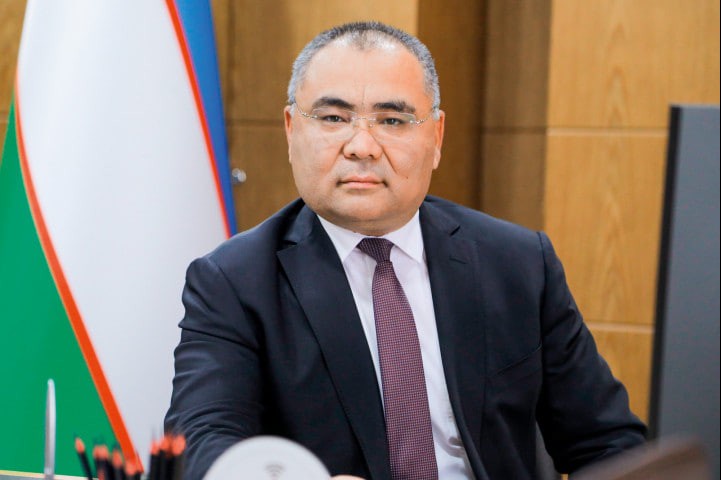
Minister of Agriculture of the Republic of Uzbekistan, Academician