
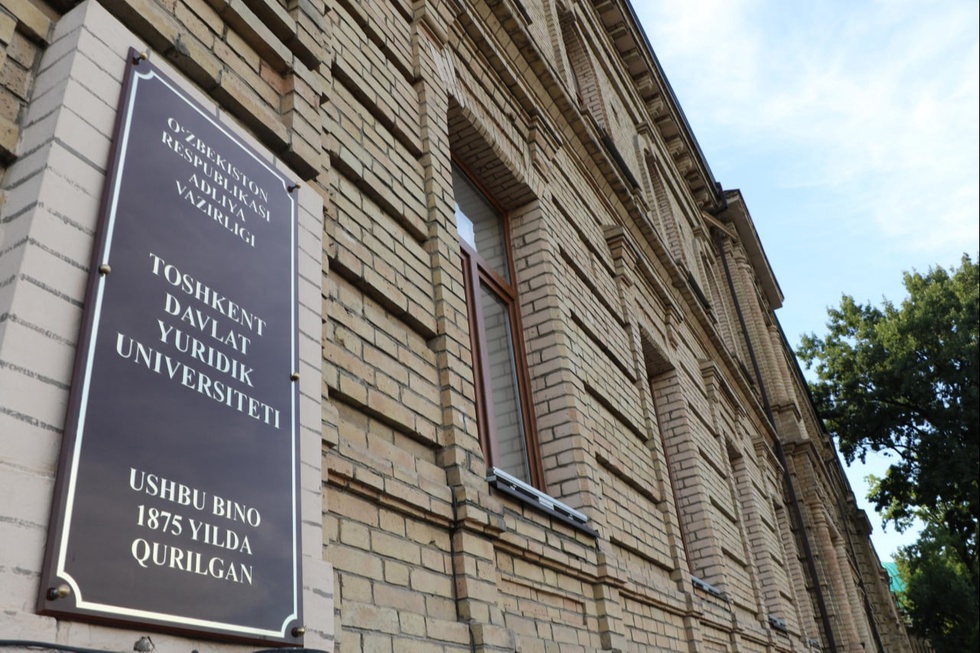
The university has aligned its curriculum with international standards and introduced innovative, student-centered techniques to prepare future lawyers for a globalized world. From moot court competitions to digital learning platforms, TSUL exemplifies how a law school can blend global best practices with local educational reforms .
TSUL today operates according to international standards in both curriculum and pedagogy. It adopted a credit-modular system along with the European Credit Transfer System (ECTS), giving students flexibility in course selection and aligning with global higher education norms . Classes are offered in multiple languages – Uzbek, Russian, and English – reflecting the institution’s cosmopolitan approach and accommodating its diverse student body of over four thousand law students . Faculty members regularly travel abroad for training, and the school maintains active partnerships with leading universities worldwide. Innovative learning formats, from interactive seminars to high-tech moot court simulations, have replaced rote memorization. Meanwhile, new technological tools support a blended learning environment. These developments all point to one goal: producing well-rounded lawyers who can thrive in an international, information-driven era.
International Standards and Global Partnerships
Operating to international benchmarks is a core principle at TSUL. The university has forged cooperation agreements with more than 50 universities around the world , and it is a full member of global academic networks such as the International Association of Law Schools and the European Law Faculties Association . Through joint educational programs, TSUL students can earn dual degrees in partnership with foreign institutions. For example, an agreement with Tajik State University of Law created a joint faculty in Dushanbe, and partnerships with universities in Belarus, Kazakhstan, China, and Europe enable TSUL undergraduates to study subjects like international law and economics under a shared curriculum . A new joint faculty in European Law established with Roma Tre University in Italy will even bring Italian professors to teach at TSUL, ensuring courses meet European Union standards . Such international collaborations enrich the curriculum and guarantee that TSUL’s academic quality is measured against leading law programs worldwide.
Faculty Development and Global Expertise
TSUL’s commitment to global standards extends to its educators. The university actively encourages faculty to broaden their expertise through international trainings and exchanges. In recent years, TSUL staff have participated in professional development programs at top universities abroad – for instance, the head of the Quality Control department underwent training at Durham University in the United Kingdom . In 2023, a cohort of TSUL professors traveled to Bahçeşehir University in Istanbul for a scientific-practical internship, where they studied advanced teaching methods and even led joint seminars with their Turkish counterparts . During that visit, the two institutions discussed plans for regular faculty internships and mutual teaching exchanges to continue sharing best practices . TSUL also frequently invites foreign scholars to campus for guest lectures and master classes. Through these measures, the faculty continuously update their pedagogy and research with global perspectives. Students, in turn, benefit from instructors who are in tune with the latest developments in legal education and practice around the world.
Interactive Learning: Moot Courts and Case Studies
Inside TSUL classrooms, the learning experience is now highly interactive. Modern pedagogical techniques have taken center stage, replacing the one-way lectures of the past. Some of the innovative teaching methods now commonplace at TSUL include:
- Case-based learning and teamwork: Students dissect real-world inspired legal scenarios in small groups and discuss their analyses in class. Tackling case studies and hypothetical lawsuits cultivates sharp analytical thinking and collaboration skills .
- Moot court simulations: The university has built courtroom facilities where students simulate trial and appellate proceedings. In these moot courts, aspiring lawyers practice making arguments before a “judge” panel, mirroring real legal processes. TSUL teams also take part in prestigious international competitions like the Willem C. Vis International Commercial Arbitration Moot and the Philip C. Jessup Moot Court, honing their skills against peers worldwide .
- Interactive seminars and workshops: Many classes are run as discussions or hands-on workshops rather than formal lectures. Professors use Socratic questioning and role-play exercises to engage students in debating legal problems. Students give presentations, argue different sides of a case, and receive immediate feedback, creating a dynamic classroom atmosphere. A decade ago such student-centered methods were rare in Uzbekistan, but recent educational reforms – with TSUL at the forefront – have made active learning the new norm .
These approaches ensure that TSUL graduates don’t just memorize laws, but learn how to apply them in practice. By actively grappling with legal questions in class, students build critical thinking, public speaking, and argumentation skills that are essential for modern legal professionals.
Blended Learning and Technology in the Classroom
Another pillar of TSUL’s modernization is the integration of technology into the learning process. In 2020, the university launched an ambitious “E-University” digital platform to digitize academic life . This system manages everything from course registration and schedules to online exams, grade books, and student feedback. Students – and even their parents – can log in to track progress, view materials, and engage with instructors, which ensures transparency and active participation in all educational processes . The digital platform also paved the way for blended learning models. Lecture notes, reading materials, and quizzes are accessible online, allowing students to learn at their own pace outside the classroom. For example, a law student might attend an in-person seminar on constitutional law, then complete an interactive case-study module or simulation exercise on the e-learning portal afterwards. This mix of face-to-face and online education offers flexibility and caters to various learning styles. TSUL’s e-library likewise provides round-the-clock access to hundreds of thousands of legal resources, from textbooks to international case law databases. Embracing these technological tools has not only modernized the educational experience but also prepared students for a tech-savvy legal world. Digital literacy – managing online research, virtual collaboration, and even understanding legal tech innovations – is now woven into the fabric of learning at TSUL.
Real-World Training: Clinics and Internships
TSUL’s focus on practical skills is evident in its strong emphasis on learning by doing. A prime example is the Legal Clinic operated by the university, where law students must provide free legal advice to real citizens as part of their training . Under the guidance of faculty-supervisors, students meet clients, draft legal documents, and help solve actual cases. This not only gives students hands-on experience with the law in action but also instills a sense of social responsibility. (Notably, TSUL’s clinic even offers an “Online Reception” for the public, reflecting how technology and outreach go hand-in-hand .) Beyond the clinic, the university leverages its partnerships with major employers to secure internship opportunities. The university collaborates with leading international law firms – including White & Case, Dentons, Sidley Austin, and others – which provides students with mentorship and internship placements in professional legal settings . There are even programs where top students can intern at institutions like courts, government agencies, or foreign embassies to broaden their exposure. According to TSUL’s records, graduates of its professional training courses have been sent for internships at world-famous law firms and international arbitration centers abroad as a capstone to their studies . Such experiences allow students to apply their classroom knowledge to real challenges and to network with practicing attorneys.
This practical orientation is yielding tangible results. Each year, dozens of TSUL students and staff go abroad on academic exchanges or internships, bringing back fresh ideas. In fact, over 100 TSUL students per year study overseas for a semester through exchange programs, and more than 200 alumni are currently pursuing master’s or doctoral degrees at prestigious universities around the world . These outcomes reflect the success of TSUL’s approach. By the time they graduate, TSUL students have not only learned legal theory but have also argued in mock trials, collaborated on international projects, mastered online research tools, and worked on real cases. For a general observer interested in education, TSUL offers a compelling case study of how a university can transform its teaching methods to meet contemporary needs. In blending interactive learning, technology, global engagement, and practical training, Tashkent State University of Law is shaping a new generation of lawyers equipped to thrive in the 21st century.
Khamidov Shokhrukh,
Lecturer, Private International Law
Tashkent State University of Law