
In the context of global economic instability, it is particularly crucial to utilize domestic resources effectively and support sectors that generate the most significant number of jobs. In Uzbekistan, such sectors include the textile industry, construction materials production, and the furniture industry, which together employ around one million people today.
Specifically, the furniture sector in the country comprises 7,500 enterprises. Just last year, 920 new enterprises were launched. Furniture worth 6.7 trillion UZS was produced, and products valued at $20 million were exported.
Based on the experience of Khankin district of Khorezm region, furniture clusters are also being established in other regions. The government supports entrepreneurs in this sector by assisting with the import of raw materials, fittings, and components, as well as facilitating access to export markets.
Around ten furniture companies operate in Chilanzar’s industrial zone. The enterprise Eman Materials was established with an investment of $10 million provided by the project’s initiator. The company produces 10,000 tons of fittings and furniture components annually, which are supplied to thousands of small and medium-sized enterprises nationwide through cooperative arrangements. Plans are in place to enter export markets soon.
The enterprise employs 200 people. Notably, a training center for furniture specialists has been opened on site, with the participation of experts from countries such as Italy and Türkiye.
Additionally, the company provides a range of supplementary services, including custom furniture production, design, cutting, equipment repair, and other related services.
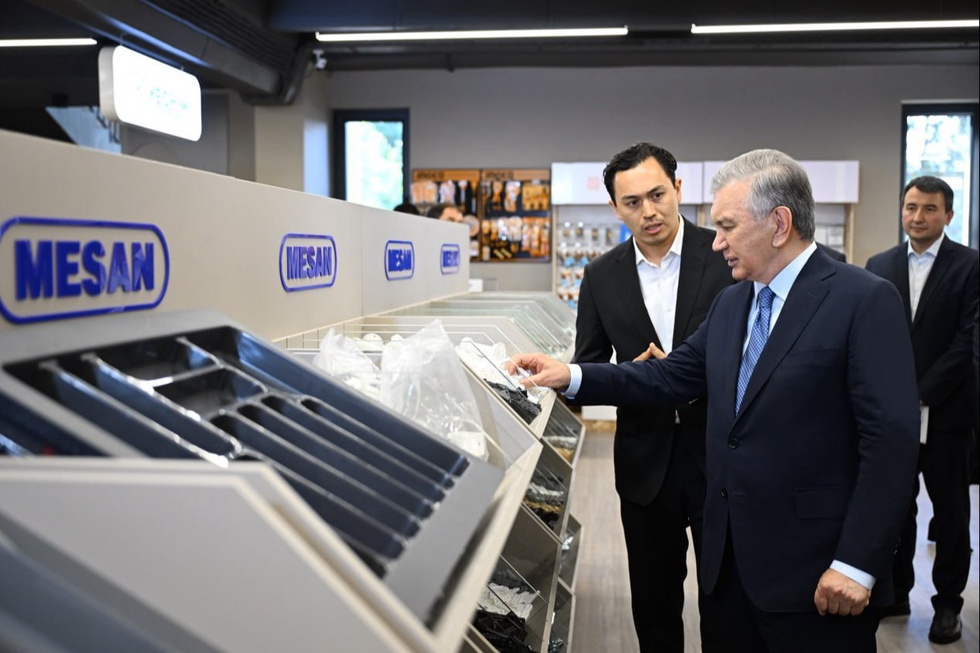
A showroom has also been opened on the premises of the complex, where branded products of the capital’s manufacturers are displayed. This system provides convenience for both sellers and service companies as well as for customers.
The Head of State became familiar with the production process and spoke with specialists. He emphasized that the furniture industry still holds significant untapped potential for localization and the creation of high-value-added products.
Information was also presented on the activities of the Reform Headquarters, which was established in Chilanzar district. New proposals aimed at ensuring employment and reducing poverty, along with the expected outcomes, were reviewed.
It was noted that while the poverty rate in the district exceeded 7 percent at the beginning of the year, by the end of the first half of the year it had decreased to 2.2 percent. Within the framework of a targeted plan, the goal is to eliminate poverty and unemployment in the district by the end of the year. To achieve this, measures are being implemented to identify family potential, support micro-projects, create new business entities, and legalize informal jobs.
The President reaffirmed his ongoing support for initiatives aimed at increasing employment. He emphasized the need to attract investments actively, turn opportunities into concrete projects, and expand the activities of small businesses. Those responsible for the economy and investments were instructed to meet regularly with entrepreneurs, address their issues, and assist in implementing their proposals.