
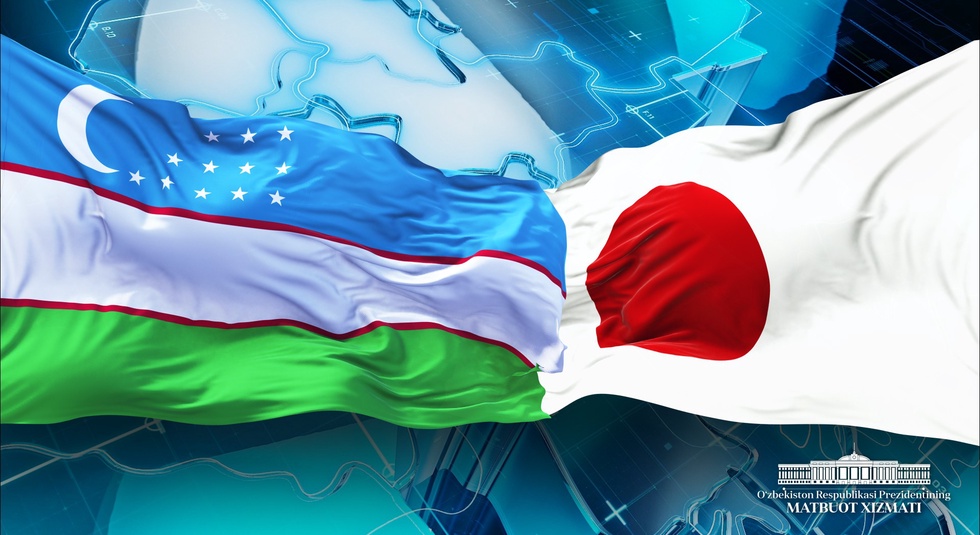
This process is clearly reflected in the trade and economic relations between the two countries, particularly in cooperation in the mining industry and geology. Joint geological research, projects for the development of mineral deposits involving Japanese companies, as well as the introduction of modern technologies contribute to unlocking Uzbekistan’s mineral resource potential, expanding export geography and increasing the share of products with high added value.
Over the past decade, the investment portfolio in this area has increased several times, while the growth rates of investment directed to the mining sector have significantly exceeded the national average. The fact that in 2024 investment in fixed capital in the mining industry reached its highest level over the past four years confirms the priority nature of this sector.
Cooperation between Uzbekistan and Japan in the mining industry and geology has been developing steadily since the early 2000s. While at the initial stage the focus was mainly on raw material supplies and export contracts, the current concept of interaction has been substantially updated and has acquired a comprehensive character, covering long-term investments, joint ventures, pilot industrial sites and research components. Thus, since the start of natural uranium exports to Japanese companies in 2006 up to the present, products totalling approximately USD 3 billion have been exported, while for the period from 2026 to 2037 agreements have been reached on supplies exceeding USD 5 billion.
In regions with high mining potential, joint geological exploration works, pilot industrial programmes and infrastructure projects are being implemented in stages. At all stages — from initial geological exploration to industrial development of deposits — bilateral partnership mechanisms are applied. Of particular importance are projects implemented jointly with public and private institutions of Japan in major mining regions of the country, which make it possible to carry out joint planning, distribute risks and test innovative solutions.
The current stage of Uzbek–Japanese partnership in the mining industry and geology is characterised by a portfolio of joint projects with high capital intensity, long-term offtake contracts for raw materials and large-scale geological exploration activities. Under a number of major contracts, commitments have been made to supply hundreds of thousands of tonnes of various categories of products by 2030, while the value of this portfolio has increased several times compared to the early 2000s.
In recent years, important decisions have been taken to revise equity structures in joint ventures, attract new participants and optimise management models. As a result, in certain projects the Japanese side has increased its share in authorised capital, while simultaneously introducing modern corporate governance standards, ESG approaches and advanced practices for the rational use of resources.
The growth of investment flows is not limited to individual deposits or enterprises. Japanese investments also cover geological exploration, infrastructure development (roads and power transmission lines), environmental monitoring, modernisation of laboratory facilities and the introduction of digital modelling systems. In recent years, capital investment in Uzbekistan’s mining industry has demonstrated growth rates of 30–40 per cent, once again confirming the priority status of this sector in the national investment agenda.
One of the key aspects of cooperation between Uzbekistan and Japan is not only the attraction of financial resources, but also the transfer of advanced technologies, engineering expertise and management culture. Within joint projects, cutting-edge technologies for deep drilling, geophysical surveys, automation of sampling and laboratory analysis, groundwater monitoring and environmental impact assessment are widely applied.
As a result of pilot industrial works at individual geological sites, hundreds of kilometres of exploratory trenches have been completed, tens of thousands of metres of drilling carried out, and hundreds and thousands of samples sent to internationally accredited laboratories. Methodologies developed with the participation of Japanese specialists effectively serve as a practical training ground for domestic geologists, mining engineers and environmental specialists.
In addition, within joint projects, technically and technologically complex infrastructure elements — high-voltage power transmission lines, roads, water supply systems and environmental monitoring facilities — are being modernised in stages. This infrastructure serves not only the needs of individual deposits or sites, but also contributes to increasing the economic activity of entire regions.
Cooperation in the mining industry and geology is an integral part of the political dialogue and strategic partnership between the two countries. Japan views Uzbekistan as a reliable partner in Central Asia, actively promoting initiatives aimed at ensuring regional stability and constructive interaction. In turn, Uzbekistan perceives Japanese experience as a dependable foundation for the development of high-tech industry, energy, environmental protection, the digital economy and infrastructure.
Against the backdrop of transformations in global energy markets, as well as the transition to green energy and the concept of “clean fuel”, the relevance of Uzbek–Japanese cooperation continues to increase. Strategic documents adopted in the country, aimed at diversifying the mining industry, expanding deep processing capacities, ensuring rational use of resources and strengthening environmental requirements, objectively require the application of high technologies and the attraction of long-term investments. The participation of Japanese partners facilitates the phased implementation of these objectives.
In the short- and medium-term perspective, further deepening of cooperation between Uzbekistan and Japan in the mining industry and geology is expected across several priority areas:
– Expansion of joint geological research. It is planned to increase the scope of geological exploration works in new prospective areas and to continue programmes aimed at at least doubling the resource base of existing deposits.
– Development of processing and downstream stages. Alongside raw material exports, increasing the share of semi-finished and finished products remains relevant, including the establishment of joint processing capacities and expansion of production in line with international standards.
– Human capital development and scientific cooperation. The expansion of joint educational programmes, internships and research projects in geology, mining, ecology and digital technologies, as well as the creation of practical training schools for young specialists, will contribute to the sustainability of the partnership.
– ESG and environmental standards. The introduction of advanced approaches to reducing environmental impact, efficient use of water and land resources, and waste management will continue in line with Uzbekistan’s sustainable development goals.
Overall, the current stage of cooperation between Uzbekistan and Japan is characterised by a high level of mutual trust, mutual benefit and long-term strategic vision. The established portfolio of joint projects in the mining industry and geology provides not only an economic effect, but also contributes to technological modernisation, enhancement of human capital and strengthening of regional stability. The consistent implementation of these initiatives will undoubtedly continue to elevate Uzbek–Japanese cooperation to a qualitatively new level.