

This is reported by the Yonhap news agency with reference to the company.
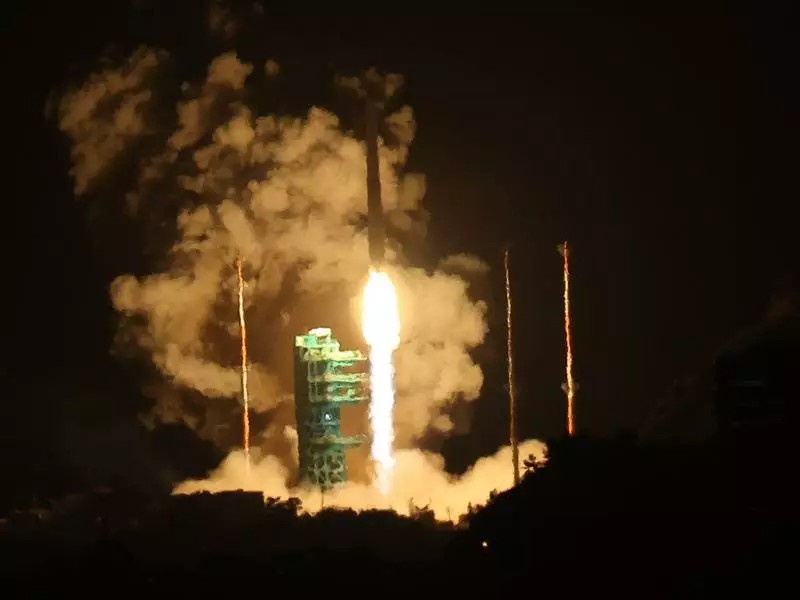
The Hanbit-Nano was launched at about 10.13 a.m. Seoul time (4.13 a.m. Moscow time) from the Alcantara cosmodrome in Brazil.
During the rocket's climb, it became clear that the flight was not going according to plan. An inscription appeared on the screens stating that an anomaly had been detected.
According to Innospace, the device fell to the ground 30 seconds after launch.
"The missile landed within the ground safety zone, there were no reports of casualties or additional damage," Yonhap writes.
It is reported that the rocket carried a payload, including five satellites, which were to be launched into a low orbit at an altitude of 300 kilometers. If successful, Innospace would become the first private South Korean company to launch a customer's satellite into orbit.
The two-stage rocket used a hybrid engine with a thrust of 25 tons, which powered the first stage, while the second stage was powered by liquid methane and oxygen.
Earlier, the launch of Hanbit-Nano was postponed three times due to technical issues. ria.ru.