

The
Tashkent City Council of People's Deputies has put forward a draft bill to
change the tariffs for public discussion. A final decision on it has not yet
been made.
According
to the draft, starting from October 1, the following tariffs are proposed:
electronic
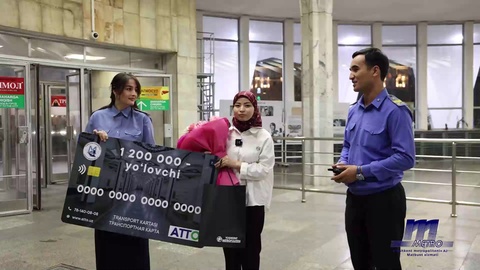
payment for one trip on a bus or metro — 2,500 sums instead of the
current 1,700 sums;
cash
payment — 3,000 sums, unchanged;
carriage of
luggage — 4,000 sums.
All prices
are inclusive of VAT. The project also provides the introduction of new passes
for regular passengers and separate transfer fares when switching from one type
of public transport to another.
The
Ministry of Transport noted that any change in the fare directly affects the
daily expenses of the population. Therefore, it is important to understand what
the costs of maintaining public transport consist of and what service
conditions should be provided to passengers.
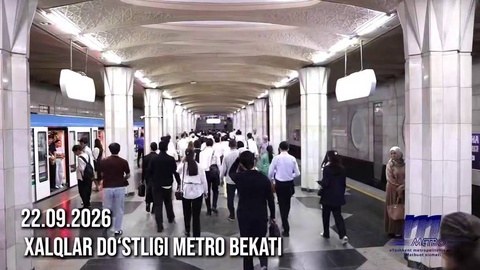
Today, the
capital’s public transport serves about 2.5 million passengers daily. Tashkent
is expanding, and the residents’ need for regular and convenient transport
services is growing every year.
In recent
years, the city has carried out significant work to develop its public
transport system. The network of metro lines has been expanded and integrated
with the route network of surface transport. At the same time, special
attention is being paid to modernizing the transport infrastructure.
As a result
of the reforms, the rolling stock has nearly doubled, and the number of buses
has approached 1,900 units. The average interval between their departures has
decreased from 30 to 15 minutes. The route network continues to expand to
include new residential areas and territories adjacent to the capital.
At the same
time, as the explanation emphasizes, purchasing rolling stock is only part of
the necessary expenses. It is important to ensure that transport is put on the
routes daily and that it is in good technical condition.
The
expenses include the salaries of train drivers, drivers, and technical staff,
fuel and electricity costs, spare parts and tires, maintenance and repair of
rolling stock, maintenance of depots and charging infrastructure, cleaning of
passenger compartments, as well as the operation of dispatch and navigation
systems and the electronic payment system.
The current
tariff covers only part of these expenses. The main burden of financing
transportation remains on the state budget.
A possible
change in the tariff, as noted by the Ministry of Transport, should be
considered simultaneously with the establishment of specific requirements for
carriers.
We are
talking about the regularity of traffic, compliance with established intervals,
the technical condition and cleanliness of vehicles, passenger safety, service
culture, as well as the further expansion of the route network.
The draft
tariff changes have been posted for open public discussion. Until September 19,
citizens can familiarize themselves with the document and send their
suggestions and comments through the portal for discussing draft regulations.
All
suggestions and comments received will be considered when preparing the final
decision. No decision on tariff changes has been made until the completion of
the public discussion.