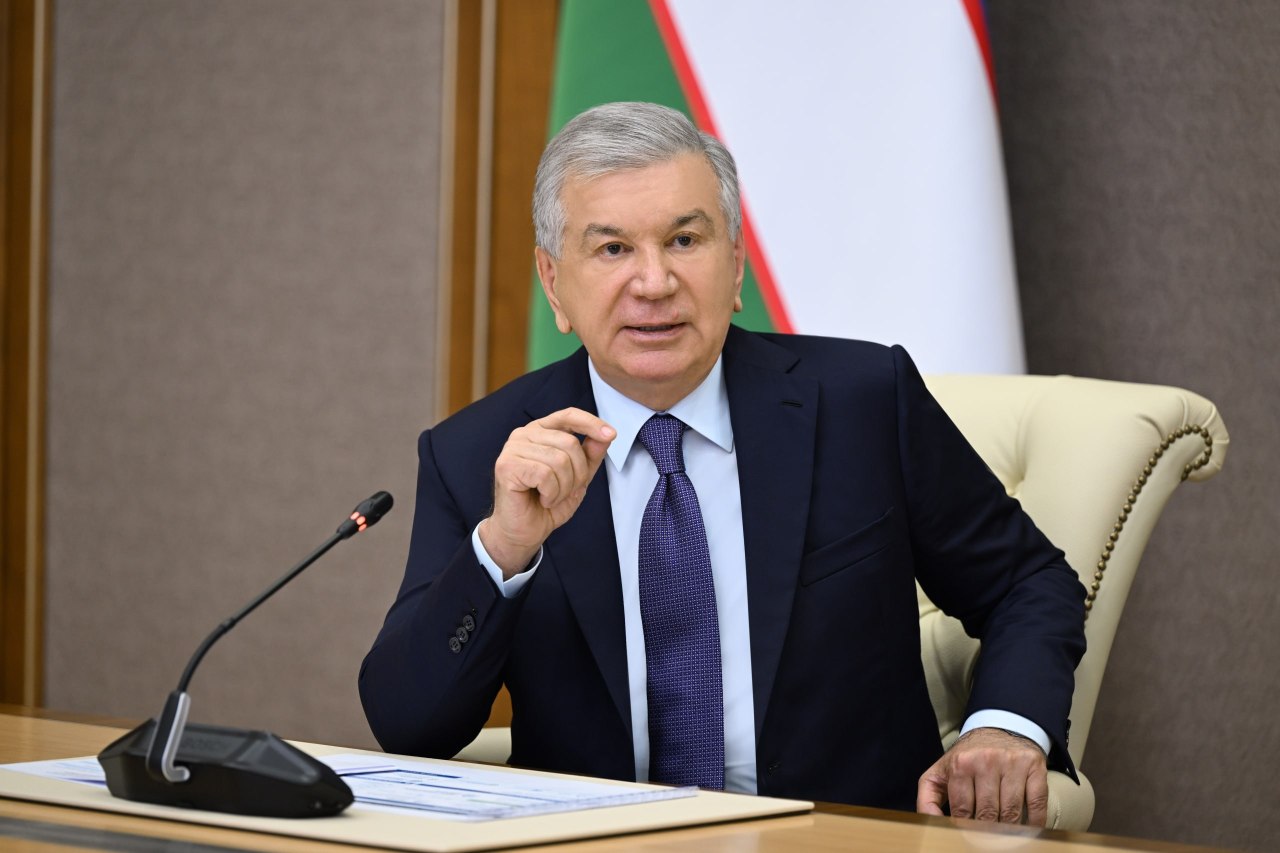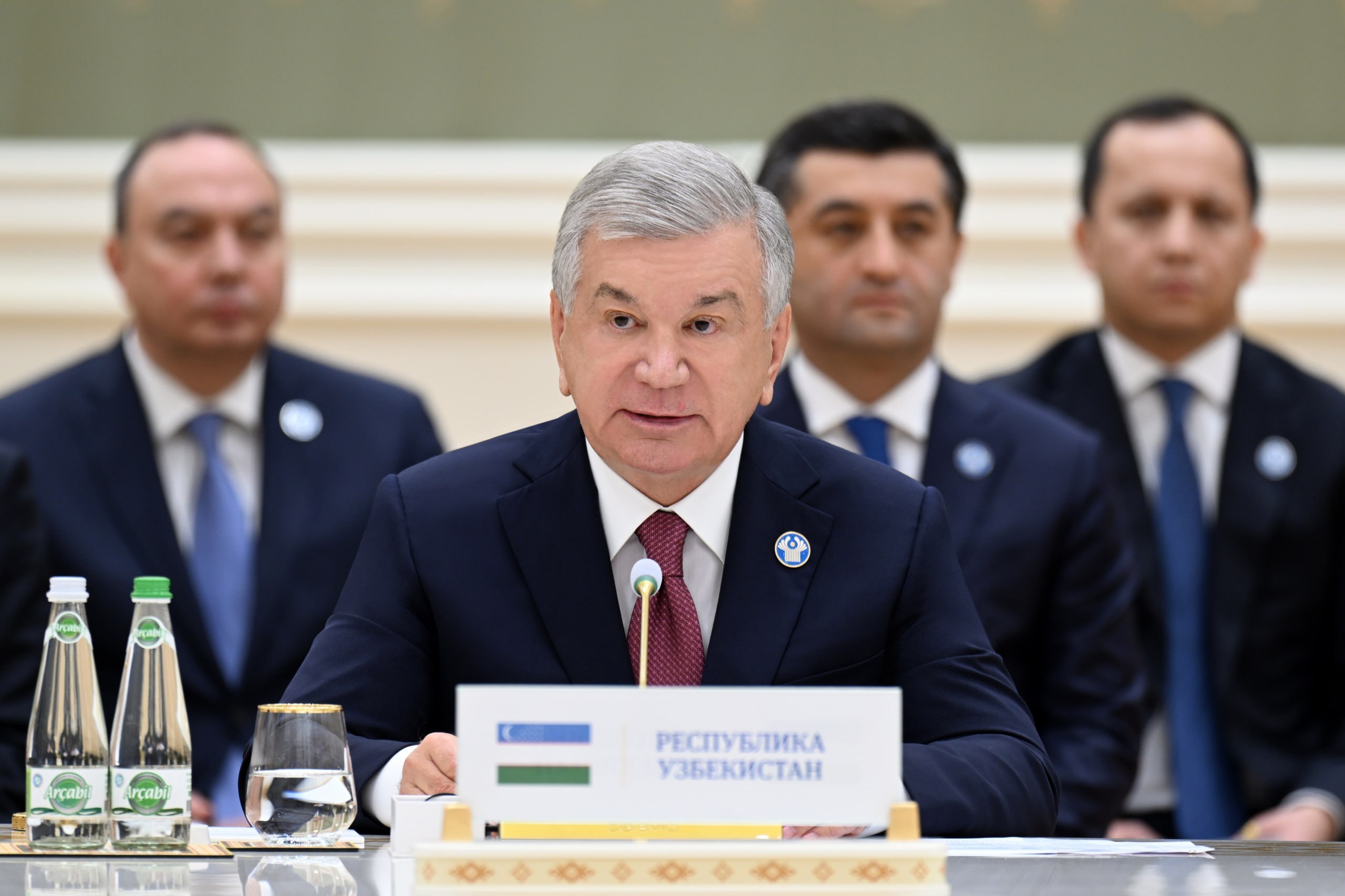

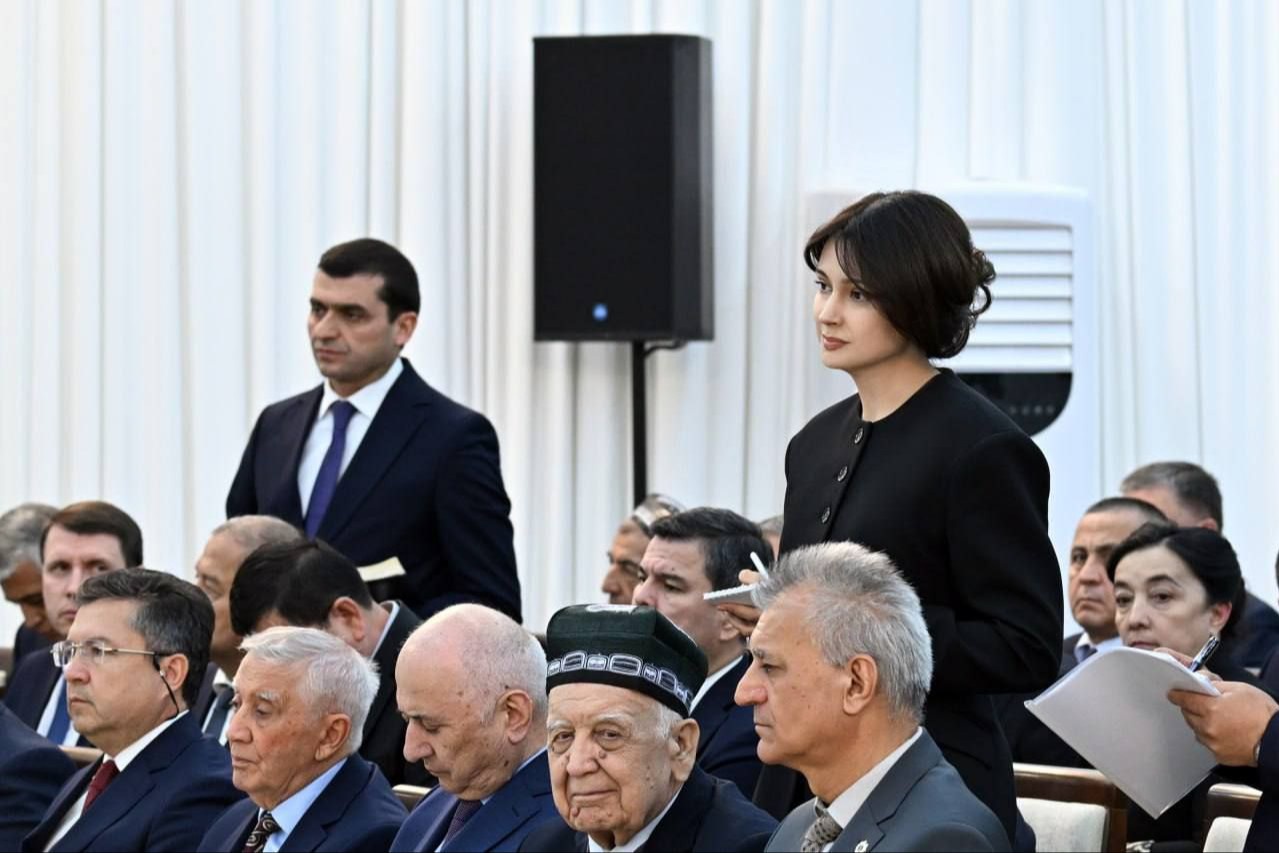
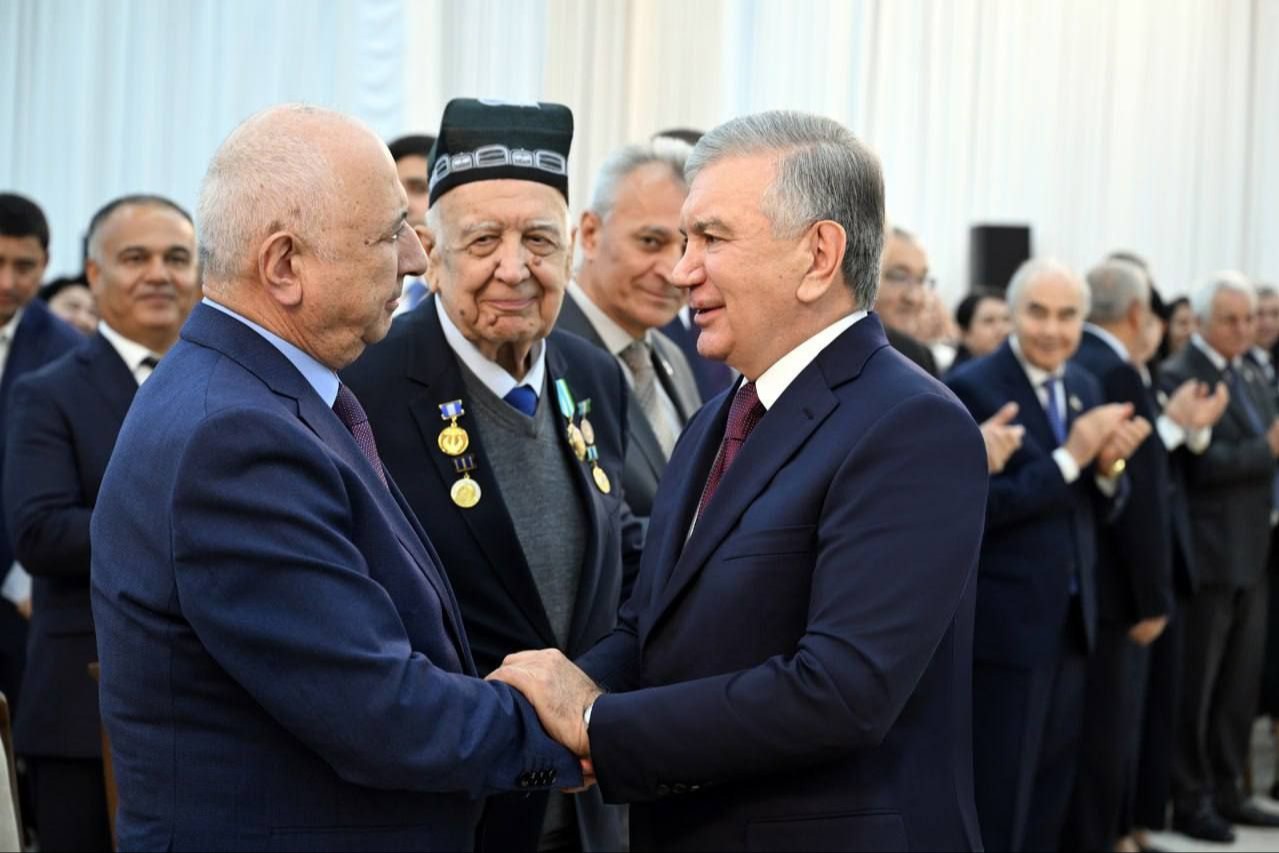
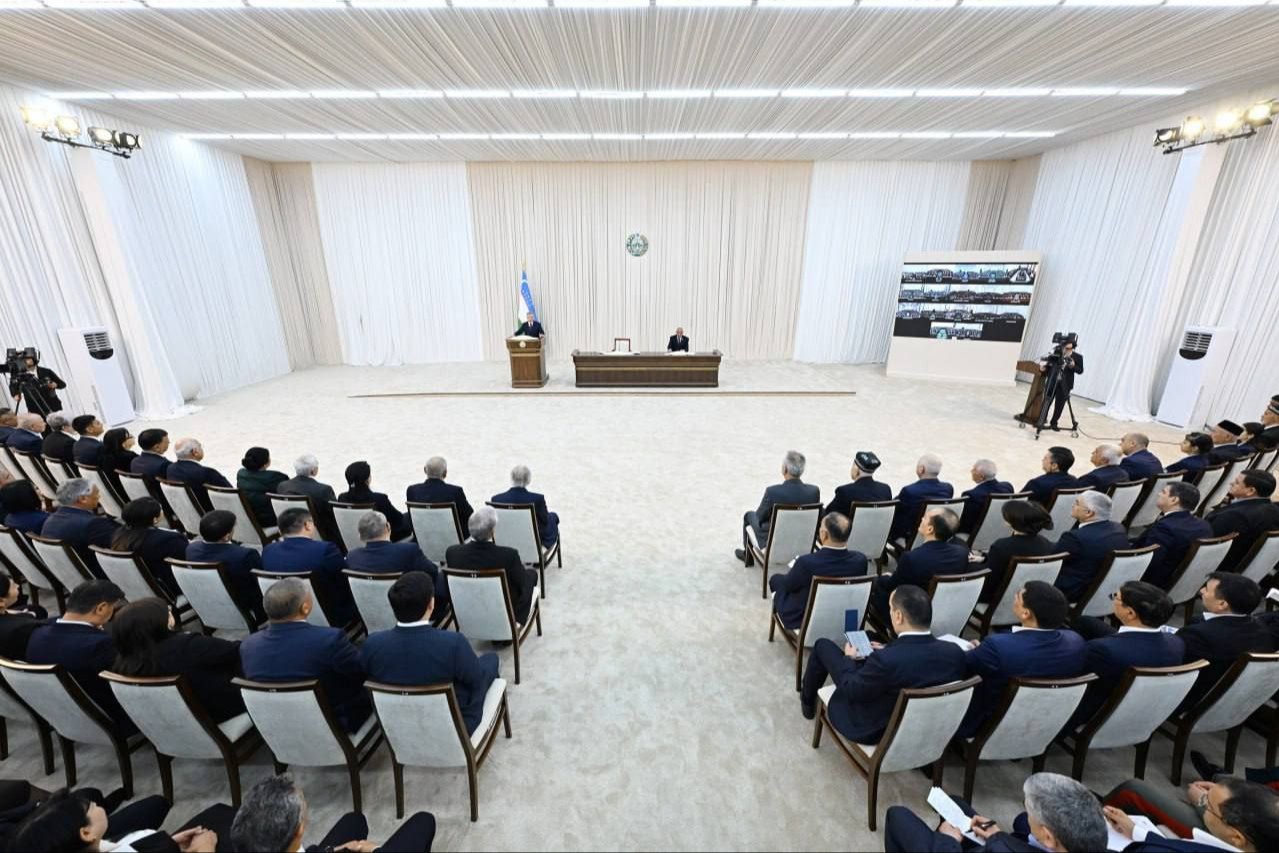
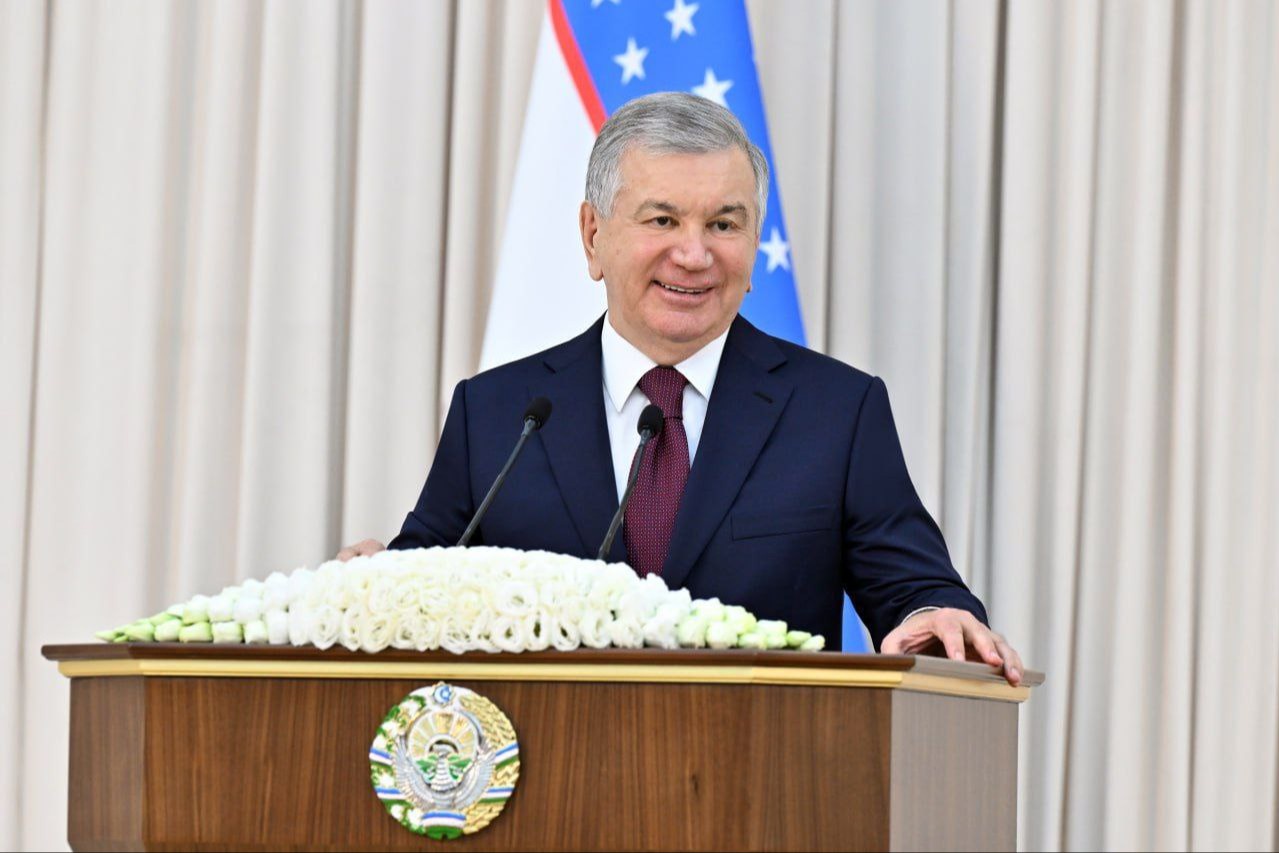
At the beginning of his address, the Head of State expressed satisfaction with his meeting with the region’s public and noted the results achieved and the opportunities that still lie ahead.
“Samarkand, which has absorbed millennia of history and the richest traditions, is transforming day by day thanks to modern architectural approaches and strengthening its place in world civilization”, the President said.
In particular, the creation of the Eternal City Complex, the improvement of more than 40 sacred sites, the construction of the new Samarkand International Airport, and the commissioning of dozens of hotels of international brands have elevated the region’s tourism potential to a new level.
Over the past few years, Samarkand has become a political, economic, and business center, as well as a tourist destination, and a venue for numerous international events, forums, and conferences. This year alone, more than 40 prestigious international events were held here, and the recent 43rd session of the UNESCO General Conference was truly historic.
A total of $1 billion in investments has been attracted to the tourism sector and related industries. As a result, tourist flows to the region have increased sevenfold compared to 2016, and the export of tourism services has reached $600 million.
Today, Samarkand is attracting not only tourists but also investors and entrepreneurs, thanks to its enormous potential in industry, agriculture, and the service sector.
Over the past eight years, the region has attracted $12 billion in investments, created 600,000 permanent jobs, and doubled the number of entrepreneurs. The number of manufacturing enterprises has increased 1.5 times, and industrial output has grown 1.7 times. The number of enterprises with an annual turnover exceeding 100 billion UZS has reached 81. Investors from 55 countries have begun operating in the region, and the number of enterprises with foreign participation has approached 700.
The services sector has been growing by 15 percent annually, and this year its volume will reach 75 trillion UZS.
In addition, in 2024 and over the past ten months, 15 million square meters of housing and commercial facilities have been constructed. Samarkand’s construction companies build 4.5 million square meters of buildings and structures across the country each year.
The region’s gross regional product has increased from 23 trillion UZS in 2016 to 120 trillion UZS this year.
Residents note that, thanks to the work carried out, significant positive changes have occurred in family life.
For example, during this period, 3,200 kilometers of water supply and sewage networks have been constructed for 2 trillion UZS.
The President emphasized that Samarkand has been transformed into an attractive area for residents, entrepreneurs, tourists, and investors.
Urgut district, the most densely populated in the country, is home to more than 600,000 people.
For many years, this district has been a leader in agriculture within the region. The establishment of the Urgut Free Economic Zone on hilly, rocky terrain, and the implementation of 74 projects worth $860 million have transformed the district into an industrially developed area.
Industrial growth has provided a substantial boost to trade and services. Today, Urgut ranks third in the region in industry and fourth in services.
Another historic event took place in Urgut today – the commissioning of a 55-kilometer railway line. Electrification work on the line will be completed next year. This will create additional conveniences for the population and open new opportunities in industry, agriculture, and the service sector.
It was noted that the district’s residents have long awaited solutions to issues related to housing, sewage systems, drinking water, schools, kindergartens, medical facilities, and business infrastructure. In this regard, the President signed a resolution to transform Urgut into one of the most modern and attractive cities in the country, in the spirit of the New Uzbekistan.
On a 90-hectare area adjacent to the Quyi Kamangaron mahalla, a modern eco-city for 100,000 residents will be built. Fifty million dollars will be allocated for the construction of roads, drinking water and sewage systems, power grids, schools, kindergartens, medical facilities, and other infrastructure.
On a 3-hectare site, a unified administrative center will be built to accommodate 35 district organizations. The buildings vacated will be offered to the private sector.
Another significant development is that 17.5 thousand hectares of land in Oqdaryo, Payariq, Pastdargom, Toyloq, and Samarkand districts will be incorporated into the city of Samarkand. As a result, the city’s population will increase from 604,000 to 882,000 people.
In this regard, to meet the growing demand for modern housing, three major residential areas have been designated within Samarkand: housing for 180,000 people will be built in Shirin neighborhood, for 100,000 in Temiryul Orti, and for 30,000 in Qorasuv-2.
More than 700 modern apartment buildings, schools, kindergartens, a higher education institution, a hospital, modern business and shopping centers, hotels, and recreational zones will be constructed here. In cooperation with Spanish investors, the sewage system of these areas will be modernized through a public-private partnership.
To reduce freight movement through the city, four logistics centers will be built along the highway running through Oqdaryo, Toyloq, and Samarkand districts.
Using Urgut as an example, the Head of State analyzed the region’s potential and assigned specific tasks to ministers and hokims for the coming year.
An organizational matter was also reviewed during the session.
The President noted that the country has set ambitious goals – elevating human dignity, ensuring sustainable economic growth, and improving the well-being of the population. To accomplish these tasks, the region needs a leader with modern thinking, capable of systematically analyzing problems and proposing innovative solutions.
The President proposed the candidacy of Adiz Boboyev, currently serving as Acting Hokim of Samarkand region, for the position of regional hokim.
After hearing the regional leadership’s opinions, the matter was put to a vote. Based on the results, Adiz Boboyev was approved as the hokim of the region.
Following the session, the Head of State heard reports and plans from responsible officials.