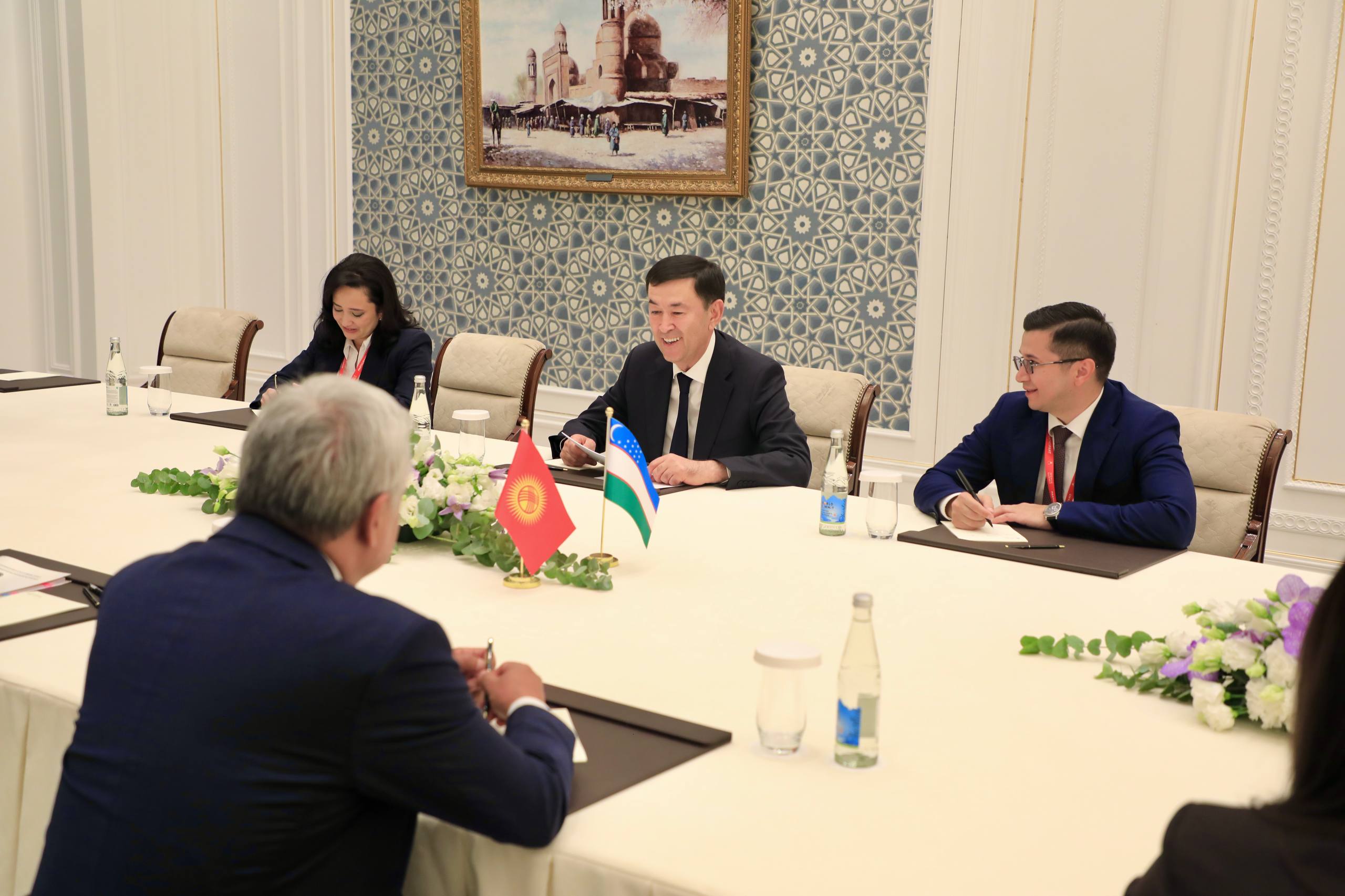

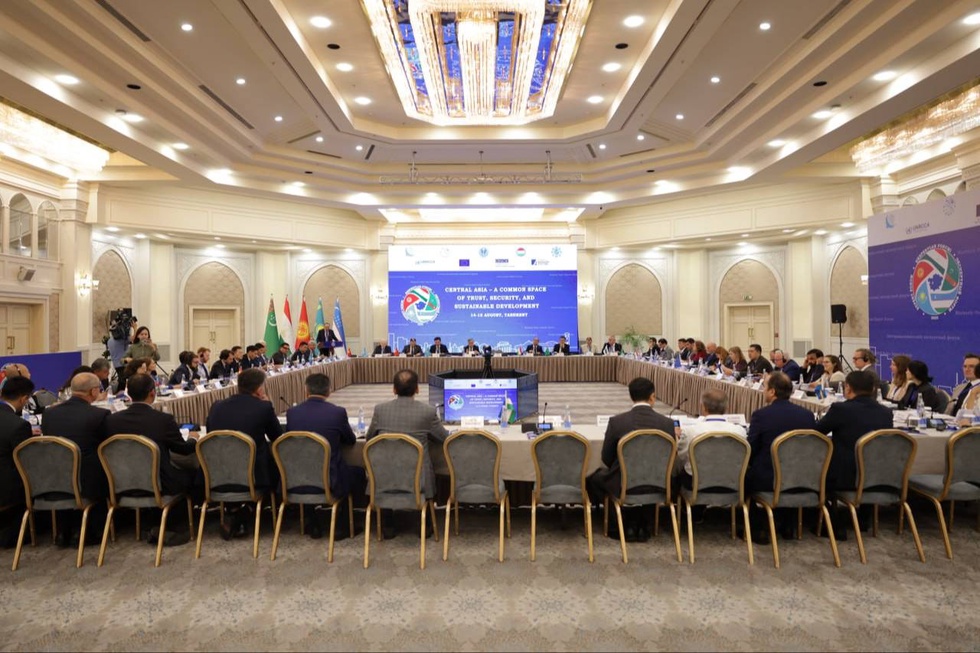
Director of the Institute for Strategic and Interregional Studies under the President of the Republic of Uzbekistan (ISMI) Eldor Aripov delivered a welcoming speech at the opening of the forum. He noted that "the CAEF is turning into a laboratory for generating new ideas and proposals designed to strengthen the vector and architecture of regional cooperation."
Continuing his speech, the Director of ISMI shared his vision of the current processes in Central Asia. "I think you will agree that our countries have already come a long way on the path of regional rapprochement and consolidation," he stressed.
According to him, a stable, in many ways unique model of interstate cooperation has been formed in the region, which makes it possible to maintain stability, security and sustainable development. "Against the background of global turbulence, Central Asia is one of the few successful examples of effective regional cooperation in the world," said Eldor Aripov.
In this context, he noted the importance of the Consultative Meeting of the Heads of State of Central Asia, initiated by President of Uzbekistan Shavkat Mirziyoyev in 2017. According to him, this format has become a reliable mechanism for strengthening the institutional and legal framework of regional cooperation.
"More than twenty significant conceptual documents have already been adopted, including those of a long-term nature, defining the priorities and mechanisms of our cooperation in key areas," the speaker added.
The expert also highlighted the historical significance of the Khujand Declaration on Eternal Friendship signed in March by the Presidents of Uzbekistan, Kyrgyzstan and Tajikistan. "It symbolically left behind all disputed territorial issues and marked a new era of openness, dialogue and good-neighborliness in interstate relations," the director of ISMI emphasized.
According to him, the establishment of the Institute of the Council of National Coordinators for Consultative Meetings of the Heads of State of Central Asia has become a big step forward.
As a result, E.Aripov emphasized, all the countries of the region, without exception, have become beneficiaries of regional cooperation. "No matter what area we take, we have quite good results," the representative of the ISMI is convinced.
At the same time, according to him, in order to move forward, it is important to focus on improving existing mechanisms and institutions, as well as on the implementation of agreements reached at the summits of the heads of state of Central Asia.
In addition, he expressed hope for the successful completion of the process of agreeing by all countries on the Treaty of Friendship, Good-Neighborliness and Cooperation, stressing its importance for the future of regional integration.
Eldor Aripov also noted that the issue of enhancing the economic benefits of regional cooperation is coming to the fore.
"Our mutual trade is growing, but it still remains at a low level - the share of intraregional transactions is just over 8% of the total trade volume," said the director of ISMI.
According to him, the key barriers are limited markets and logistical dependence. In this context, he recalled the words of President of Uzbekistan Shavkat Mirziyoyev: "Our strategic goal is to form a single regional market in the long term."
For this, E.Aripov believes, it is necessary to eliminate trade barriers and digitalize logistics. In this regard, he mentioned the initiative of the President of Uzbekistan to launch the Economic Council of Central Asia, a regular meeting at the level of deputy prime ministers of the region.
He also stressed the importance of forming his own financial instruments to support cooperation, recalling the proposal of the President of Uzbekistan to establish the Central Asian Investment Council and the Bank for Innovative Development of the region.
The expert paid special attention to cooperation in the field of security. According to him, it is important to develop a common vision and approaches in this area.
"The basis may be the initiative of the President of Uzbekistan to develop and adopt a concept of regional security and stability in Central Asia. The draft of the relevant document has already been presented during the second meeting of the secretaries of the Security Councils of the Central Asian countries, held in April this year," said the director of the ISMI.
And finally, as E.Aripov noted, the most important task is to intensify cultural and humanitarian cooperation. According to him, the long-term sustainability of regional integration is largely determined by a solid social base formed through humanitarian and youth initiatives. In this regard, he stressed the importance of the proposals of the President of Uzbekistan on the development of a Central Asian program of educational and academic exchanges, the conclusion of an agreement on the mutual recognition of diplomas from leading universities in the region, as well as on the allocation of mutual scholarships for the education of gifted students.
"I am deeply convinced that it is precisely such initiatives that create an integration foundation at the societal level, ensuring support for the regional agenda in the long term, regardless of the political situation," concluded E. Aripov.
In this context, the importance of strengthening regional identity was also noted. According to the director of the ISMI, further prospects for regional cooperation will depend on "our ability to form a common value foundation for integration, to identify ourselves not only as citizens of our countries, but also as representatives of our common Central Asian home."
It should be recalled that the CAEF is organized by ISMI. The event's partners are the Regional Center for Preventive Diplomacy in Central Asia, the Representative Offices of the European Union in Uzbekistan and the Organization for Security and Co-operation in Europe (OSCE), and the Konrad Adenauer Foundation.
Central Asia will traditionally be represented at the Forum by heads and specialists of strategic institutes, research centers and academic circles of the region's states. For the first time, prominent experts from the EU, ASEAN, the Nordic Council, as well as researchers from Russia, the United States, Great Britain, Switzerland, and Azerbaijan were invited to participate in its work in order to share their experience in regionalism.