
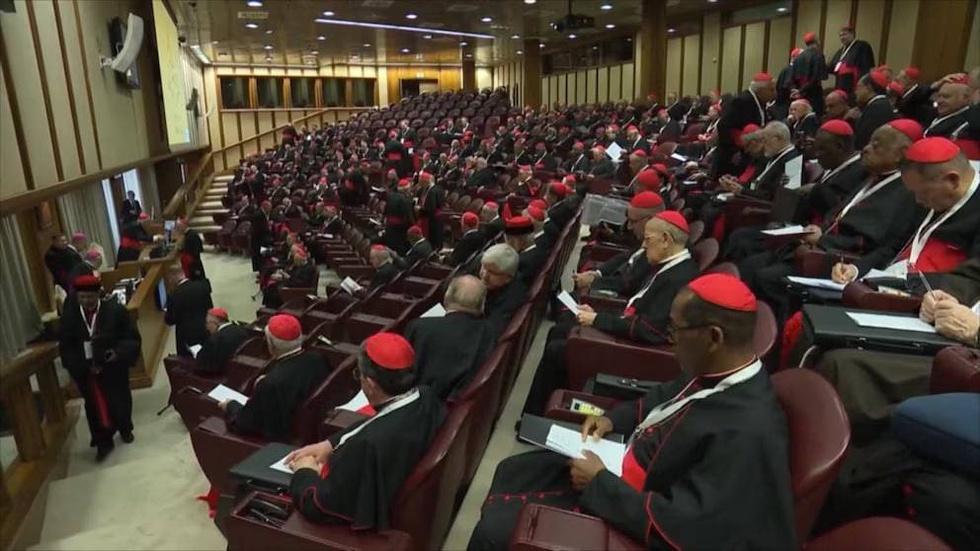
The conclave is held in high secrecy. The cardinals' decision will remain strictly confidential until the voting is completed, and the new pope will be chosen by a majority vote - the candidate must gain two thirds.
The conclave begins with morning Mass at St. Peter's Cathedral. Its completion and the election of a new pontiff will be announced by white smoke from the chimney above the Sistine Chapel. Earlier, a pipe was installed over the chapel before the elections.
The Vatican Gardens, the ancient Roman necropolis on Via Triumfalis and the Sistine Chapel itself will be closed to visitors during the conclave. It is not yet known when it will reopen to tourists, as the meeting will last as long as it takes to elect the pontiff.
The Italian La Stampa noted that for the first time, the majority of cardinals admitted to the election of a new pope will not represent Europe, but Latin American, Asian and African countries.
The last Pope Francis was the first Argentine to head the Holy See, he changed the geographical balance in the church and appointed more than 20 cardinals from countries that had not previously been represented at such a level. Among them were Rwanda, Cape Verde, Myanmar, Mongolia and South Sudan. In total, Francis appointed 108 of the 138 cardinals who have the right to vote, that is, almost 80% of the conclave.
Security measures have been tightened in the Vatican: security checks have been organized at the entrances to popular tourist areas, as well as mobile communications have been turned off to ensure complete secrecy of the process.
Pope Francis died on April 21 at the age of 88, the cause of death was a stroke. The day before, he delivered his last address to the faithful on the occasion of Easter. The pope was buried in Rome, where on April 26 the coffin with the body of the pontiff was placed in the crypt in the Basilica of Santa Maria Maggiore.