
Modern trigeneration technology enables a city to supply both heating and cooling while consuming half as much energy as traditional systems. In conventional heat plants or cooling systems, production processes are carried out separately. In trigeneration, all of them are combined within a single technological chain.
Construction of the main buildings and station facilities using such technologies is underway in New Tashkent. The project’s equipment fully complies with international energy-efficiency requirements.
The project’s first phase envisions the creation of 75 megawatts of heating capacity and 100 megawatts of cooling capacity. Generation of 17 megawatts of electricity will also be organized.
The first substation in New Tashkent has a capacity of 100 megawatts, which is sufficient to meet the initial needs of the city. The project is being implemented through a public-private partnership, with participation from the Chinese company Haocheng Industry Group Limited.
It is noteworthy that this is the first enclosed substation in Uzbekistan.
Such facilities offer several advantages over traditional open substations. First, they are designed to fit into the urban environment and are located so as not to disrupt the architectural appearance. In addition, the noise level at such substations is half that of traditional ones. Moreover, they take up three times less space than open-type facilities. This is a massive advantage for a city with a complex engineering concept, such as New Tashkent, which is currently under construction.
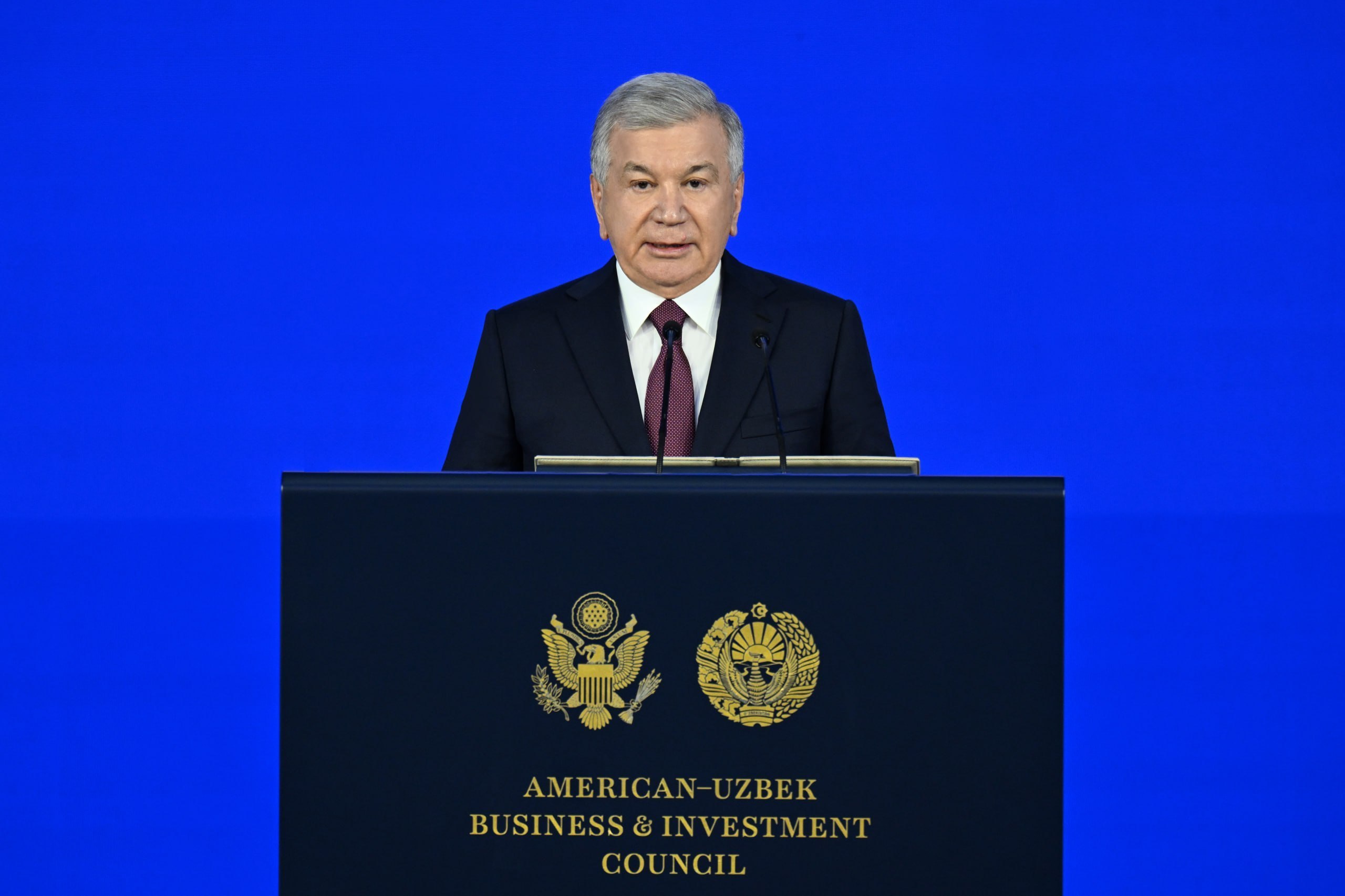
During his tour of these facilities, the President emphasized their technical capabilities, economic efficiency, and strategic importance to New Tashkent, and offered recommendations to organize work further and to implement the following stages quickly and with high quality.