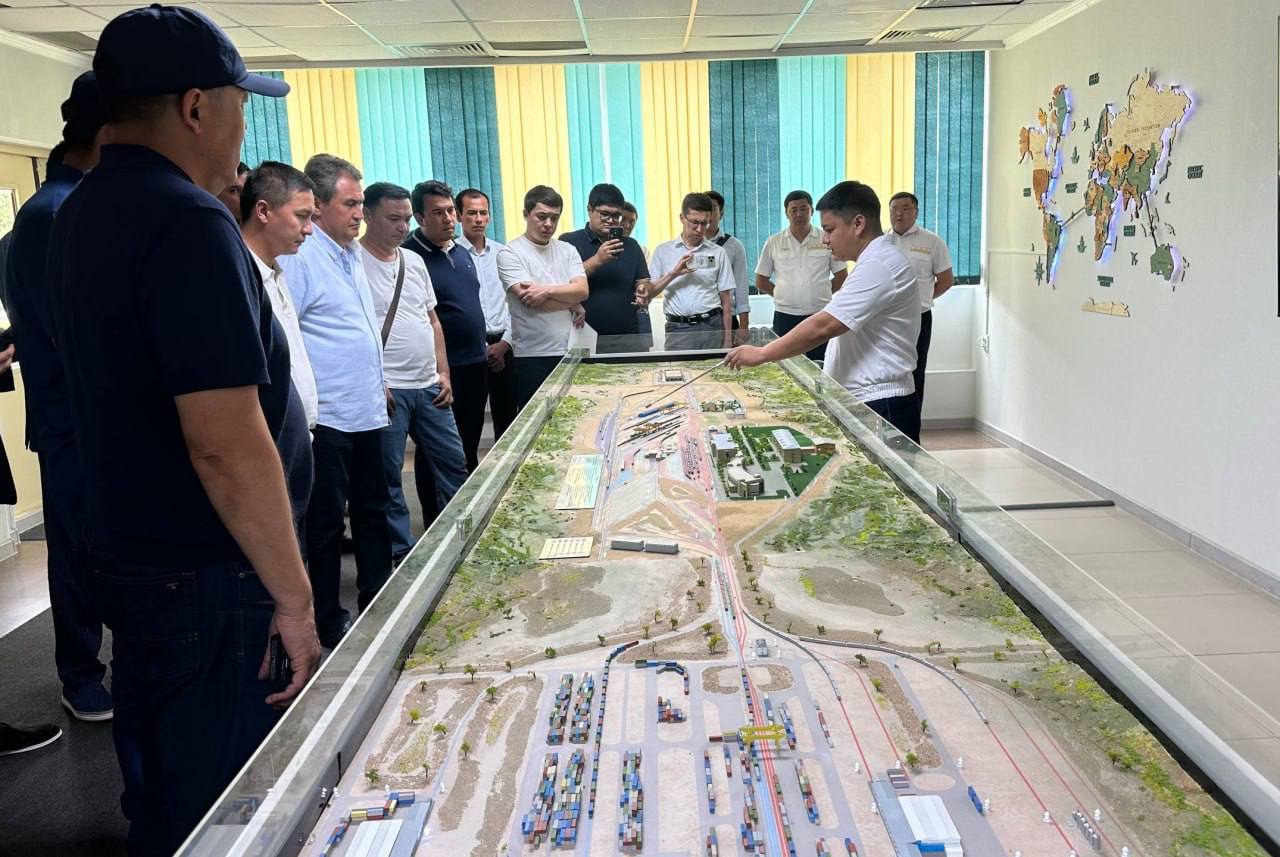

The event
was organized by the Institute for Strategic and Interregional Studies under
the President of the Republic of Uzbekistan (ISMI), the Institute for Advanced
International Studies at the University of World Economy and Diplomacy, and the
James Martin Center for Nonproliferation Studies at the Middlebury Institute of
International Studies in Monterey (USA).
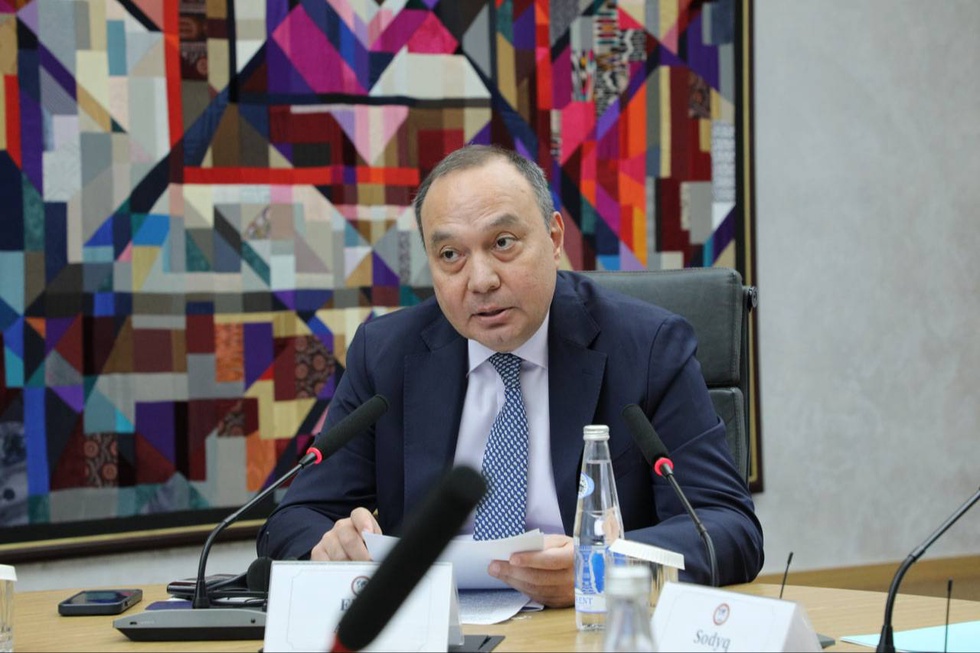
Opening the
forum, E. Aripov, Director of the Institute for Strategic and Interregional
Studies under the President of the Republic of Uzbekistan (ISMI), presented an
assessment of the development of the Central Asian Nuclear-Weapon-Free Zone
(NWFZ), noting key achievements, current challenges and priorities for further
strengthening regional security.
He stressed
that over the past two decades, the NWFZ has proven its effectiveness as a
mechanism for ensuring regional security, strategic predictability and trust
between the Central Asian states. According to him, it has become an example of
successful cooperation between the countries of the region, which have managed
to build a sustainable model of interaction based on common commitments.
E.Aripov
recalled that the initiative to create a nuclear-weapon-free zone was put
forward by Uzbekistan in 1993 at the UN General Assembly. Its practical
implementation was the signing of the Semipalatinsk Treaty in 2006, which
consolidated the commitment of the States of the region to the principles of
peace, stability and good neighborliness.
According
to the director of the ISMI, the special importance of the CAC is determined by
its unique status. This is the world's first nuclear-weapon-free zone located
entirely in the Northern Hemisphere and bordering two nuclear powers at once.
The receipt by the States of the region of guarantees of non-use and non-threat
of use of nuclear weapons has strengthened the strategic stability of Central
Asia.
At the same
time, the head of the ISMI stressed that the anniversary of the NWFZN should be
not only an occasion to summarize the results, but also an opportunity to
rethink the new realities of international security. Today, the arms control
system is experiencing a deep crisis: the Treaty on the Elimination of
Intermediate-Range and Shorter-Range Missiles has been terminated, uncertainty
remains around the future of START III, and NPT review conferences are
increasingly ending without final documents.
"The
world around us has not become more predictable. On the contrary, geopolitical
tensions have increased, nuclear rhetoric has intensified, and the level of
trust between the leading powers has noticeably decreased," Aripov said.
According to him, it is in these conditions that the role of regional security
mechanisms is increasing, ensuring predictability, legal guarantees and trust.
The head of
the ISMI stated that today the nuclear-weapon-free status should be considered
not only as an international legal obligation, but also as an element of the
strategic identity of Central Asia. Its sustainability depends on the practical
implementation of the commitments made through cooperation with the IAEA,
training of specialists, development of national regulatory mechanisms, as well
as ensuring transparency and verification.
Special
attention was paid in the speech to the development of peaceful nuclear energy.
Uzbekistan is implementing a program to create a nuclear industry, Kazakhstan
retains its position as one of the world's largest uranium producers, and
Central Asia is becoming an important transport and logistics hub in Eurasia.
At the same time, radiological, infrastructural and environmental risks are
increasing.
"That
is why today it is necessary to move from the traditional nonproliferation
agenda to effective risk management," the Director of ISMI emphasized.
Among the priorities, he named physical protection of facilities, cross-border
information exchange, personnel training and improvement of monitoring and
response mechanisms. At the same time, verification and transparency remain the
foundation of long-term stability.
Summing up,
E. Aripov noted that Central Asia has already gone from a nuclear testing
region to a nuclear-weapon-free zone. The next strategic stage should be the
formation of a full-fledged nuclear safety culture. He expressed confidence
that the dialogue would make it possible to develop practical recommendations
for further strengthening regional security and developing cooperation in the
field of peaceful uses of atomic energy.
The forum
was attended by over 50 representatives of Uzbekistan and the United States.
Among them are heads and leading experts of government agencies, analytical
centers, as well as specialists from research organizations in the field of
nuclear safety, non-proliferation and peaceful uses of atomic energy.
In
particular, former representatives of the Presidential Administration and the
National Security Council of the United States, scientists and analysts in the
field of international relations from such leading universities as Harvard,
Yale, Princeton, Berkeley, Oxford and Cambridge were invited.
The Uzbek
side was represented by the leadership and experts of the Committee on
Industrial, Radiation and Nuclear Safety under the Cabinet of Ministers, the
Institute of Nuclear Physics of the Academy of Sciences, the National Committee
on Ecology and Climate Change, ISMI, CEIR, IMRI, CVPI, MICA, HSE, UMED.