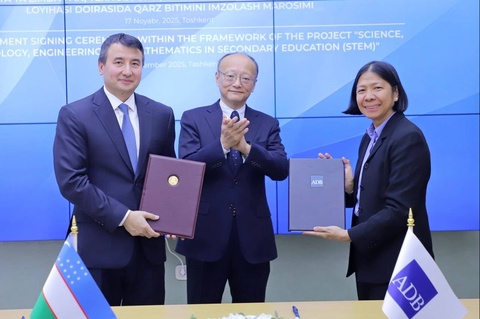

The project "Science, Technology, Engineering and Mathematics in Secondary Education" aims to provide young people with modern innovative skills necessary for the sustainable and inclusive development of the country. The implementation of the initiative will contribute to achieving Uzbekistan's strategic goal of becoming one of the countries with an above-average income by 2030.
"This project reflects Uzbekistan's commitment to investing in human capital and empowering youth," said Kanokpan Lao-Araya, Director of the ADB Permanent Mission in Uzbekistan. - "By strengthening STEM education, Uzbekistan forms the foundation for a more inclusive, sustainable and competitive future."
The project plans to modernize 200 secondary schools across the country, which will be transformed into resource centers for neighboring educational institutions. The improvements will cover the equipping of modern laboratories, the development of information and communication technology (ICT) infrastructure, the introduction of solar energy systems, as well as the creation of inclusive conditions for students with special needs.
In addition, large-scale teacher training in six STEM subjects will be organized, as well as interdisciplinary training using educational technologies. Special attention is paid to promoting the participation of girls in STEM - motivational campaigns and individual career counseling programs are provided for this purpose.
The project is in line with the goals of the Uzbekistan Development Strategy for 2022-2026 and the priorities of the ADB Strategy 2030, including digital transformation, gender equality and sustainable development. It also complements the bank's other initiatives aimed at developing human capital and supporting vocational education in the green economy.
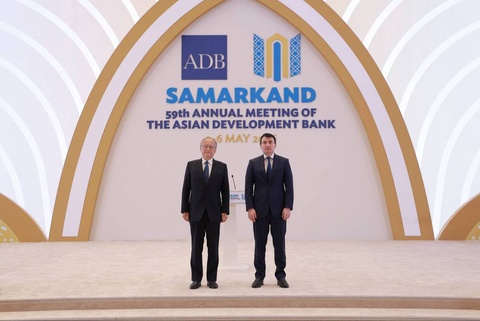
2025 marks the 30th anniversary of cooperation between the ADB and the Republic of Uzbekistan. Since the country joined the bank in 1995, the ADB has provided loans, grants and technical assistance totaling USD 14.6 billion to Uzbekistan.
The ADB, founded in 1966, is a leading multilateral development institution bringing together 69 countries, 50 of which belong to the Asia-Pacific region. The Bank promotes sustainable and inclusive growth by applying innovative financial solutions and strengthening partnerships to improve the quality of life and preserve the planet.