
British aerospace engine maker Rolls-Royce wants India to be more than just a buyer of its engines, proposing to treat the country as a “home market” by building, designing and developing aircraft engines locally rather than simply selling them from abroad.
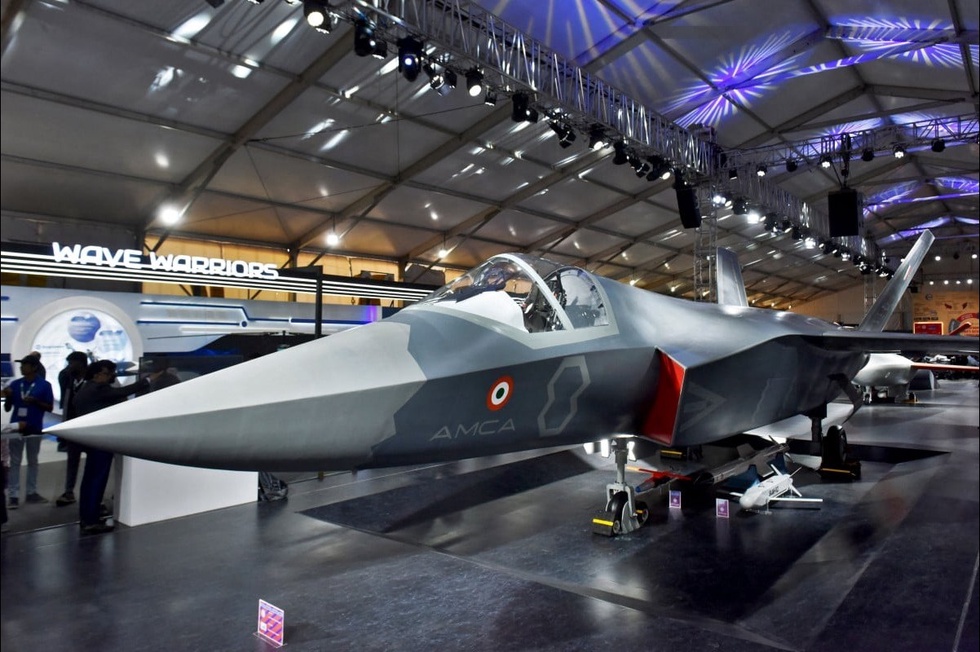
Analysts said such a shift could provide a significant lift to New Delhi’s effort to build a fifth-generation stealth fighter under the Advanced Medium Combat Aircraft (AMCA) programme, while forcing rival engine makers to offer deeper technology transfers to stay competitive.
In an interview with the Press Trust of India late last month, Sashi Mukandan, executive vice-president of Rolls-Royce India, said developing a next-generation engine in the country was a priority to power future Indian combat jets, including the AMCA.
“If India is thinking about next-generation engines, Rolls-Royce is probably the best partner,” Mukandan said. “We have the capability, the experience both in India and globally, and we have repeatedly demonstrated that we can do it.”
Mukandan said the AMCA engine core could be adapted for use as a naval marine engine and even for electric propulsion, noting that Rolls-Royce was among the few engine makers globally with the capability to convert an aircraft engine for marine use.
India’s defence ministry approved the development of an AMCA prototype in May last year to enhance the Indian Air Force’s deep strike capabilities, shortly after indigenous defence systems were credited with playing a key role during a four-day military skirmish with Pakistan.
Srinivaasan Balakrishnan, director for strategic engagements and partnerships at the Delhi-based Indic Researchers Forum think tank, said Rolls-Royce designating India as a home market marked a decisive shift in the bilateral defence relationship.
“By promising joint ownership of intellectual property for the AMCA engine, this proposal directly addresses the critical need for propulsion sovereignty and technological independence in Delhi,” he said.
Such investments would integrate air and naval supply chains while ensuring India’s future security infrastructure was built and upgraded domestically, Balakrishnan added.
India has faced major, persistent challenges in developing advanced fighter aircraft engines, marked by decades of setbacks stemming from technical complexity and a lack of ecosystem and expertise hampering its indigenous capabilities.
The urgency to acquire a new generation of aircraft comes as India faces a shortfall in air combat capacity with only 31 operationally ready fighter squadrons instead of 42 as approved by the government, which translates to 200 fewer fighter jets than planned.
“By moving beyond simple licensing to joint IP [intellectual property] ownership, Rolls-Royce is effectively handing India the keys to the technology rather than just the finished product. This eliminates the risk of future sanctions grounding our fleet,” Balakrishnan said.
At the same time, Indian scientists could work on upgrading the propulsion system independently to deal with new threats, he added.
India has been working to bolster its air power capability, with the AMCA for its future needs and Tejas light combat aircraft for more immediate requirements, with both set to be the mainstays of its air force.
India’s current fighter aircraft are mostly Russian in origin or from the Soviet era, but analysts say Russia’s war with Ukraine in 2022 has heightened equipment supply uncertainty for India as Moscow will have to prioritise its own needs.
The Indian Air Force also operates 36 Rafale fighters. India signed a deal in April with France – its second-largest arms supplier – to buy 26 naval versions of the jets for US$7 billion, which are expected to be delivered by 2030.
Competition brewing
The maker of Rafale planes, Dassault Aviation, plans to increase local production in India, focusing on fuselage manufacturing with India’s Tata group and establishing maintenance, repair and overhaul facilities for engines, sensors and weapons, with some reports mentioning potential engine assembly in Hyderabad.
According to Balakrishnan, Rolls-Royce’s move has effectively thrown down the gauntlet and created a strategic dilemma for rivals including US-based GE Aerospace and France’s Safran, which can no longer rely on standard licensing agreements to win contracts in India.
“I anticipate a fierce counter bidding war where competitors will be forced to deepen their technology transfer offers and localise manufacturing to remain relevant in the world’s largest open defence market,” he said.
India has increasingly been focusing on co-production with external partners and building its indigenous capabilities to avoid potential risk of disruption amid rising global tensions, though it has remained open to plugging gaps with imports of sophisticated weapons and technology.
Chris Blackburn, a British political and security analyst, said Rolls-Royce making India a home base for aircraft engines would mark a major shift from assembly to genuine manufacturing and skills development, thereby increasing India’s longer-term self-reliance in defence.
“Serious engine investment will attract other global aerospace and defence firms into India’s industrial ecosystem. Europe is looking for partners. They see India as being on the same wavelength,” he said.
Securing leadership with India would depend on who offered deeper technology transfer and long-term commitment to the country, Blackburn said, noting that European governments were also looking for lasting partnerships.
“Aircraft engines could become a cornerstone of a broader and more strategic India-UK defence partnership. I wouldn’t be surprised if other Europeans come on board too. India is becoming a major democratic superpower. Alliances with like-minded nations make sense,” he said.
India signed a landmark free-trade agreement with Britain last year, where both sides agreed to reduce tariffs and market access to create jobs and boost investments. Defence partnership was seen as an integral part of the pact.