
In contemporary investment relations, however, the availability of commercially attractive projects is not sufficient. Investors also assess the stability of the applicable law, the protection of property, the possibility of capital repatriation, the quality of financial regulation and the effectiveness of dispute-resolution mechanisms.
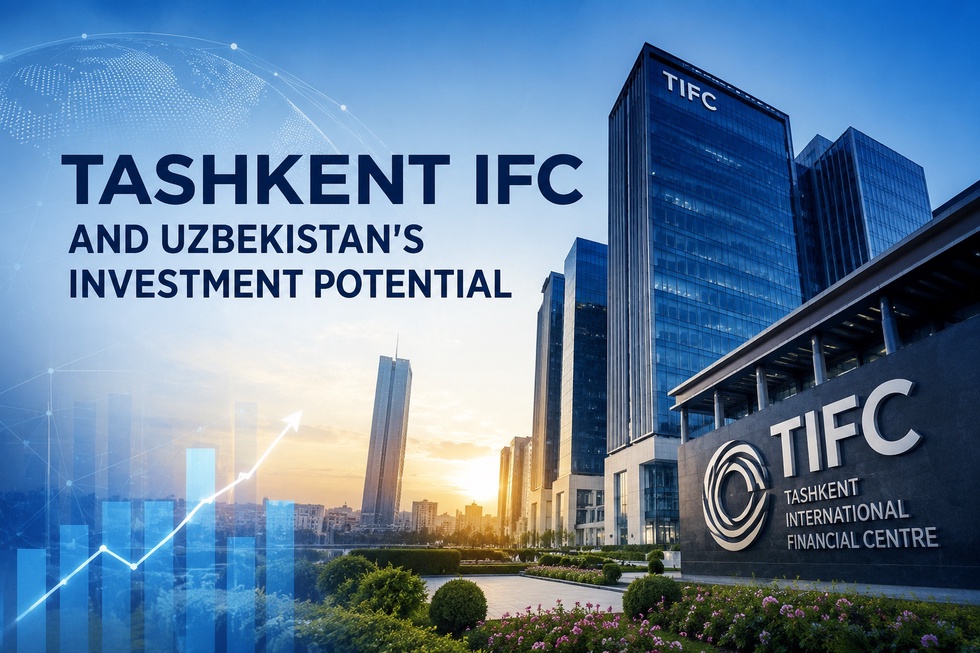
Article 67 of the Constitution of the Republic of Uzbekistan obliges the State to ensure a favourable investment and business climate. The establishment of the Tashkent International Financial Centre (TIFC) represents an institutional development of this constitutional obligation. The Constitutional Law No. LRU-1158 of 13 July 2026 establishes the status of the TIFC as a designated territory with a special legal regime and defines the legal foundations of its operation.
The purpose of this article is to determine the principal legal mechanisms through which the TIFC may influence the investment potential of Uzbekistan. For the purposes of the study, investment potential is understood as the capacity of the national economy to attract, retain and efficiently allocate domestic and foreign capital.
Materials and Methods
The research is based on the Constitutional Law on the TIFC, the Constitution of Uzbekistan and Presidential Decree No. UP-48 of 30 March 2026. Formal legal, systemic, functional and comparative methods were applied. The formal legal method was used to interpret the provisions of the Constitutional Law, while the systemic method made it possible to examine the interaction between legal guarantees, financial regulation and judicial protection. The functional method was employed to identify the influence of particular legal institutions on investment decisions.
Results and Discussion
1. The TIFC as a specialised investment jurisdiction
The legal status of the TIFC distinguishes it from an ordinary special economic zone. Article 3 of the Constitutional Law defines the Centre not merely as a geographical territory, but also as a legal, regulatory and institutional framework. Its purpose is to support the sustainable development, diversification and international competitiveness of the economy of Uzbekistan.
This approach is important because investment potential depends not only on material infrastructure, but also on the quality of institutions. The TIFC combines four principal bodies: the TIFC Board, the TIFC Authority, the Tashkent Financial Services Authority and the Tashkent International Commercial Court. The separation of strategic governance, administration, financial supervision and adjudication creates an institutional system capable of addressing the principal legal needs of international investors.
The Centre is guided by the principles of efficiency, transparency, integrity and professionalism. Furthermore, Article 3 expressly requires legal certainty, regulatory predictability, judicial independence and investor protection. These provisions establish a legally defined standard against which subsequent TIFC acts and institutional practices must be assessed.
2. Legal certainty and protection of investments
One of the most significant features of the TIFC is its hierarchy of applicable law. Under Article 8, the Constitution and the Constitutional Law retain the highest legal authority. They are followed by relevant acts of the President, TIFC acts, and the principles and rules of the common law and equity of England and Wales, insofar as they are consistent with the Constitution, the Constitutional Law and TIFC acts.
The application of common law principles may increase the accessibility of the jurisdiction for international financial institutions and investors accustomed to widely used contractual concepts and commercial remedies. The official use of English within the Centre further reduces translation costs and the risk of discrepancies between contractual and regulatory documents.
Legal predictability is also supported by mandatory publication of TIFC acts in a publicly accessible digital register. Significant regulatory acts are generally subject to public consultation. The competent body must publish the proposed act, explain its policy rationale, consider the responses received and state how relevant comments were reflected in the final text. This mechanism introduces elements of participatory and evidence-based regulation.
Article 6 provides enhanced protection for funds, assets, property and rights constituted under TIFC law. As a general rule, they may not be confiscated, nationalised, expropriated, frozen or restricted without a final and binding judgment or order of the Tashkent International Commercial Court, subject to legitimate measures relating to anti-money laundering, sanctions, criminal proceeds or insolvency. Any restrictive measure must be lawful, proportionate, consistent with due process and subject to judicial review. These guarantees transform general principles of property protection into specific procedural safeguards applicable within the Centre.
3. Development of financial instruments and capital mobilization
The Constitutional Law authorises a broad range of regulated financial services, including banking, lending, insurance, asset management, securities trading, payment services, Islamic finance, green finance and crowdfunding. It also provides for clearing, settlement, custody, depository services and other elements of financial-market infrastructure.
The inclusion of Islamic finance is particularly important for broadening the sources of investment capital and developing instruments responsive to the needs of investors from Muslim-majority jurisdictions. Green finance may support renewable energy, energy efficiency and environmentally sustainable infrastructure. Crowdfunding and financial technologies can facilitate access to capital for innovative enterprises that may not satisfy the traditional requirements of bank financing.
Digital asset activities are separately recognised and include issuance, listing, trading, custody, settlement, digital asset funds and operation of trading platforms. Their inclusion within a licensed and supervised environment is capable of directing technological innovation into a legally regulated market. The role of the Tashkent Financial Services Authority is therefore essential. Its regulatory competence covers licensing, prudential supervision, corporate governance, risk management, market conduct and investor protection.
The Centre may also host holding companies, special-purpose vehicles, treasury companies, trusts and other fiduciary structures. These instruments can facilitate project financing, public-private partnerships, syndicated lending and the structuring of investment in infrastructure, energy and strategic enterprises. Consequently, the TIFC may perform an intermediary function between international capital and investment projects located throughout Uzbekistan.
4. Currency, tax and human-capital advantages
The currency regime of the TIFC is based on free capital repatriation and currency convertibility. General requirements concerning the registration of currency contracts, notification of capital-flow transactions and maintenance of foreign bank accounts do not apply to TIFC transactions unless otherwise provided by special TIFC acts adopted in consultation with the Central Bank. This framework reduces administrative costs and provides investors with greater flexibility in structuring cross-border transactions.
Article 18 establishes tax incentives until 1 January 2076. Qualified TIFC participants may receive income-tax and social-tax exemptions in respect of income derived from financial services. The benefits are conditional upon adequate economic substance and compliance with governance, anti-money-laundering, cybersecurity and other regulatory requirements. This is a balanced approach: incentives are directed towards genuine economic activity rather than nominal registration.
The Constitutional Law also addresses the mobility of professional personnel. Foreign specialists may receive visas for periods of up to five years, while TIFC bodies and participants may employ qualified foreign personnel without ordinary work-permit requirements. These provisions are likely to facilitate the transfer of professional knowledge in finance, law, compliance, auditing and financial technology. In the longer term, cooperation between international specialists and national professionals may strengthen Uzbekistan’s human capital and create highly qualified employment.
5. Judicial protection and dispute resolution
The Tashkent International Commercial Court is a central element of the investment architecture. The Constitutional Law guarantees its financial, administrative and operational autonomy and prohibits interference with its judicial activities. The Court has jurisdiction over disputes involving TIFC persons, transactions governed by TIFC acts, matters submitted by agreement of the parties and certain proceedings connected with international arbitration.
Final judgments of the Court are recognised throughout Uzbekistan and enforced on the same terms as judicial acts of other courts of the Republic. The Court may also recognise and enforce international arbitral awards. Publication of judgments, including their legal reasoning, is required, which may gradually produce a transparent and consistent body of commercial jurisprudence.
The availability of an independent English-language commercial court reduces the perceived risk associated with contract enforcement. It may also strengthen Tashkent’s position as a regional forum for the resolution of financial, corporate and investment-related disputes.
Conclusion
The Tashkent International Financial Centre constitutes a major development in the legal policy of Uzbekistan. Its prospective influence on investment potential results from the combined operation of several mechanisms: a predictable legal regime, enhanced property protection, autonomous financial regulation, modern financial instruments, capital mobility, long-term tax incentives and independent commercial justice.
The principal value of the TIFC therefore lies not in individual preferences considered separately, but in their integration within a coherent institutional system. The Centre can connect international capital with strategic, infrastructure, energy and technological projects in Uzbekistan while simultaneously stimulating the development of national professional expertise.
At the same time, the Constitutional Law correctly distinguishes its entry into force from the operational activation of the Centre. The preparation of detailed TIFC acts, establishment of institutions and confirmation of regulatory readiness are necessary stages of implementation. Consistent application of transparency, proportionality, regulatory cooperation and judicial independence will allow the TIFC to become an effective instrument of investment policy and strengthen the position of Uzbekistan as a reliable regional financial jurisdiction.
Shokhrukh Khamidov
Ministry of Justice, Department on Legal Protection of the Interests of the Republic of Uzbekistan