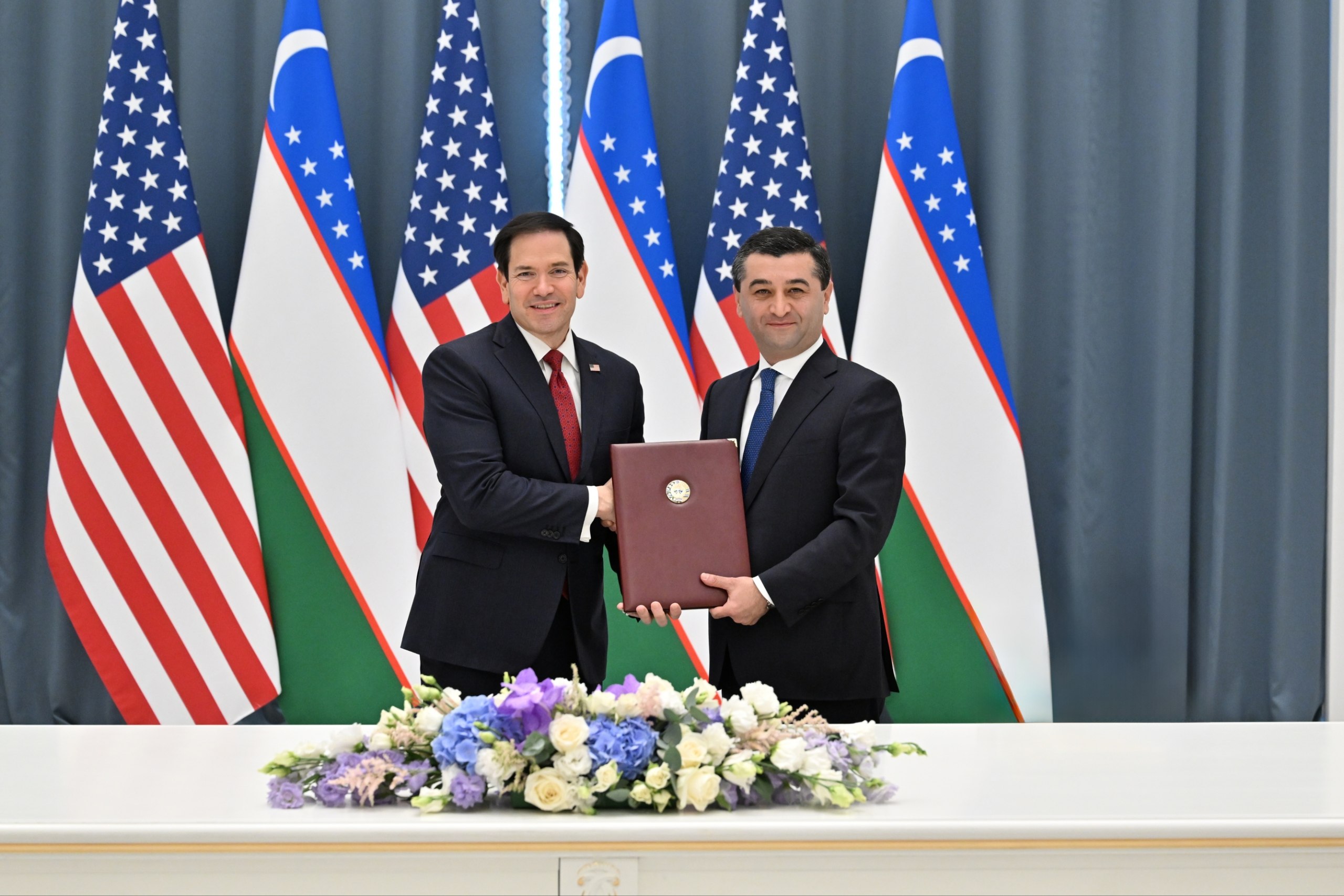

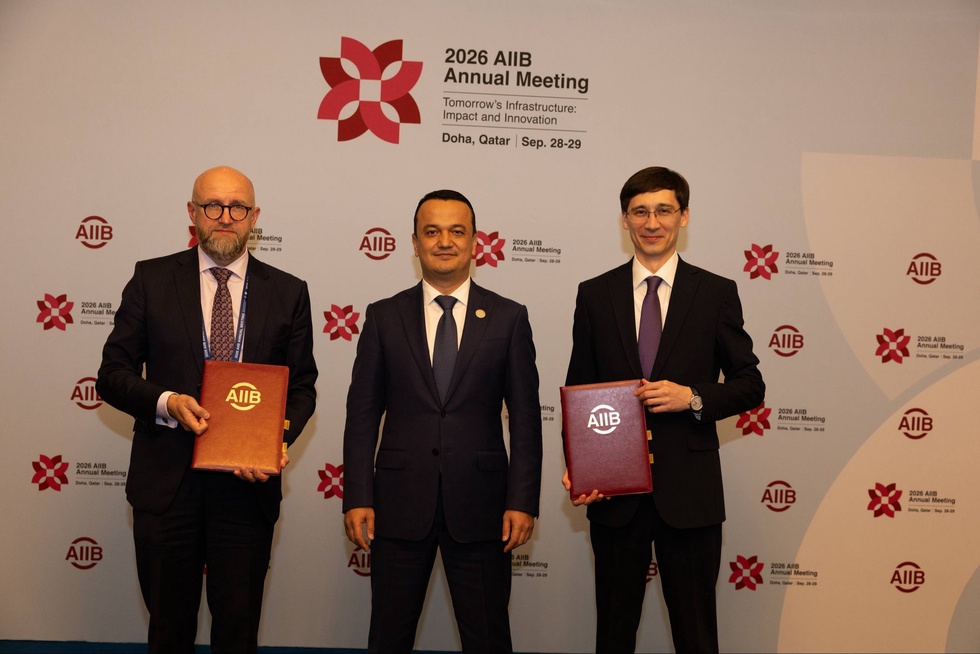
The documents were signed on the sidelines
of the 11th Annual Meeting of the AIIB in Doha.
The updated program includes
infrastructure projects worth up to $5 billion, which AIIB may finance in
Uzbekistan between 2026 and 2029. The program identifies priority areas where
the two sides plan to develop cooperation in the coming years.
The documents were signed by Konstantin
Limitovsky, AIIB’s Head of the Investment Banking Department for the Public
Sector, Region 2, and Global Clients Project and Corporate Finance, and
Shokhrukh Gulamov, Deputy Minister of Investment, Industry and Trade of
Uzbekistan.
The signing ceremony was attended by Laziz
Kudratov, Minister of Investment, Industry and Trade of Uzbekistan and
Uzbekistan’s Governor on the AIIB Board.
Under the second agreement, AIIB will
provide a $1.5 million grant to prepare the project “Improving the Resilience
of Uzbekistan’s Electricity Transmission System.”
The funds will be used for technical
studies and other preparatory work. The results will form the basis for a
future investment project aimed at increasing the capacity of Uzbekistan’s
electricity networks and making them more reliable and resilient to climate
change.
The project will focus on priority parts
of the country’s electricity network, including the southern corridor between
Surkhandarya and Samarkand regions and the Fergana Valley.
The project will also help assess
investment needs and climate risks, improve technical solutions, expand
opportunities to connect renewable energy sources, and prepare the project for
possible future financing.
By 2030, Uzbekistan plans to increase the
share of renewable energy in electricity production from around 30% to 54%.
Achieving this goal will require significant modernization and expansion of the
country’s electricity transmission networks.
Both agreements are based on the growing
partnership between AIIB and Uzbekistan in infrastructure. They provide a
foundation for further cooperation in preparing and financing sustainable
infrastructure projects that support the country’s development priorities.