
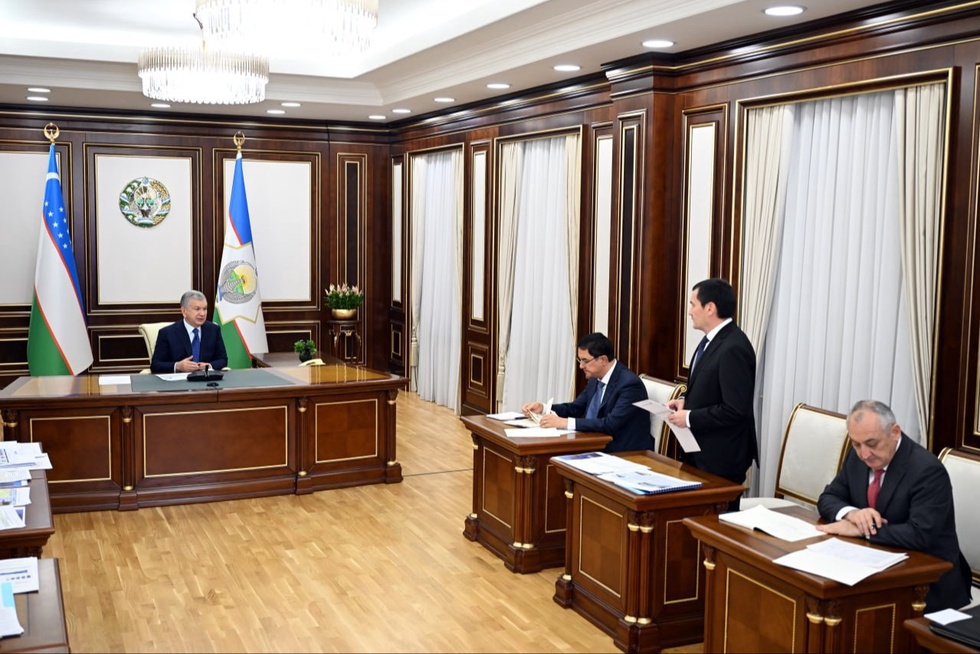
The large-scale transformation processes launched in the railway sector are already yielding positive results. For the first time, the industry ended last year with a net profit, and in the first nine months of the current year, net profit exceeded 800 billion UZS. Transit and passenger transportation, exports, and investments continue to grow.
During the presentation, it was emphasized that efforts should not be limited to these results, but should also improve the quality and volume of railway transport services in line with population and economic growth, and continue reducing costs in the sector.
In particular, it was noted that implementing AI-based control across all stages, from transportation accounting to traffic flow management, cost analysis, and potential loss identification, will reduce production costs by 20 percent.
It was highlighted that in 2026-2030, the volume of passenger and freight transportation must be increased at least twofold.
To achieve this goal, plans include the construction of 151 kilometers of new railway lines, the electrification of 182 kilometers of existing tracks, and the modernization of 27 current stations and 1,000 kilometers of railways.
In particular, new electrified railway lines will be built along the routes “Nurafshon – Pskent – Buka – Bekabad – Bayavut – Yangiyer” and “Khawast – Dashtabad”. Electrification is planned for the routes “Kumkurgan – Quduqli”, “Samarkand – Urgut”, and “Baytqurgan – Parkent”, as well as increasing the capacity of the routes “Tashkent – Samarkand”, “Tuqimachi – Angren”, and “Angren – Pap”.
To enhance suburban rail services, 15 new routes are proposed in addition to the existing 40.
In particular, establishing suburban connections on routes such as “Tashkent – Nurafshon – Akhangaran – Angren”, “Navoi – Zarafshan – Uchquduq”, “Kagan – Namangan – Andijan – Margilan”, “Termez – Kumkurgan – Baysun – Darband”, “Nukus – Shavat – Urgench – Khiva”, “Jizzakh – Dustlik – Aydar-Arnasay”, and “Karshi – Shakhrisabz” will create favorable conditions for residents’ daily travel.
The issue of expanding the high-speed rail network was also reviewed at the meeting. Instructions were given to accelerate the commissioning of the 102-kilometer Navoi – Bukhara railway line. It was noted that the launch of this line will significantly reduce time and costs for both freight and passenger transportation.
Plans were also outlined to expand the fleet of locomotives and railcars for new and developing routes in the coming years.
In particular, it is planned to purchase 38 mainline locomotives from China, as well as 50 shunting and hybrid shunting locomotives. Jointly with the Korean company Hyundai Rotem, six high-speed electric trains are to be delivered, with the first scheduled to be introduced next year on the “Tashkent – Urgench – Khiva” route. This is expected to reduce travel time from the current 14 hours to 7.5 hours.
In addition, passenger transport capacity will be enhanced through the production of 250 modern passenger cars and the acquisition of 23 intercity electric trains. Tasks have also been set to manufacture 10,000 freight cars, restore more than 6,000 freight cars, and carry out major repairs on 12 electric locomotives.
The need to expand public-private partnership projects in the railway sector was also highlighted.
In addition, the meeting reviewed progress on the construction of the China – Kyrgyzstan – Uzbekistan railway.
The President, noting the strategic importance of this railway in enhancing transport connectivity in Central Asia and strengthening the country’s transit potential, issued instructions to ensure the quality of construction works.
In conclusion, responsible officials were given specific directives to ensure the timely and high-quality implementation of projects for the modernization and expansion of the railway network, the broad use of digital technologies and artificial intelligence, cost optimization, and the creation of a more comfortable, safe, and reliable environment for passengers and businesses in the sector.