
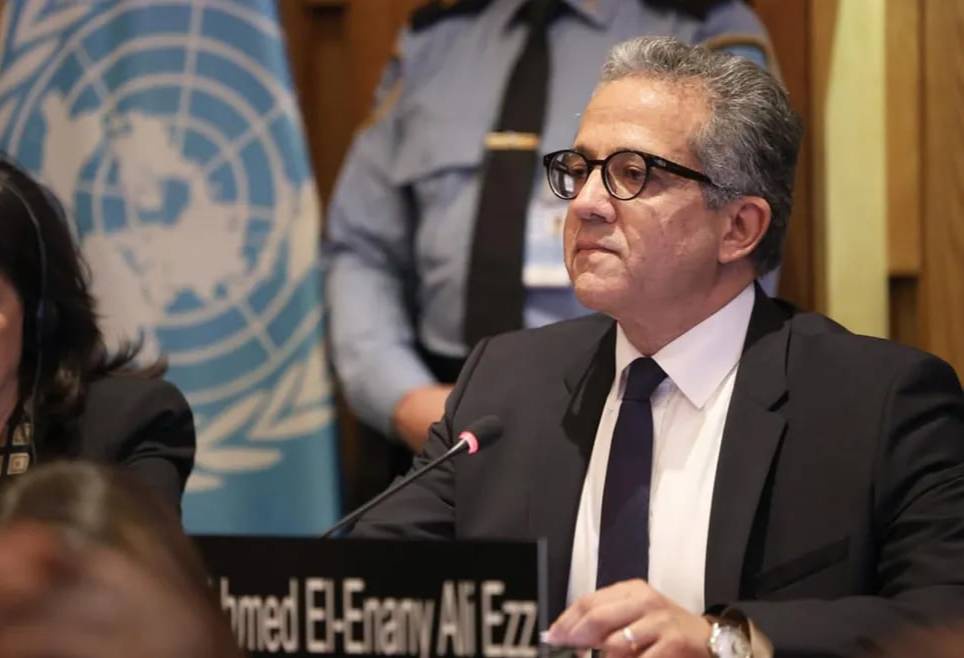
Khaled Ahmed El-Enani Ali Ezz was born in 1971. He is a renowned Egyptologist and professor of Egyptology at Helwan University, where he has been teaching for over 30 years. Over the years, he held the positions of Deputy Dean of the Faculty of Tourism and Hospitality, Director of the Open Learning Center and head of the Department of Guides. El-Enani defended his doctoral thesis in Egyptology at the Paul Valery - Montpellier III University in France, where he has repeatedly acted as a visiting professor.
In 2014-2016, he headed the National Museum of Egyptian Civilization, as well as the Egyptian Museum in Cairo. From 2016 to 2022, he served as Minister of Antiquities, and then Minister of Tourism and Antiquities of the Arab Republic of Egypt. His work has received wide international recognition: in November 2024, the World Tourism Organization appointed him a special ambassador for cultural tourism, and subsequently he became a patron of the African World Heritage Foundation. El-Enani is a member of several international scientific societies, speaks Arabic, French and English, and has been awarded several international awards.
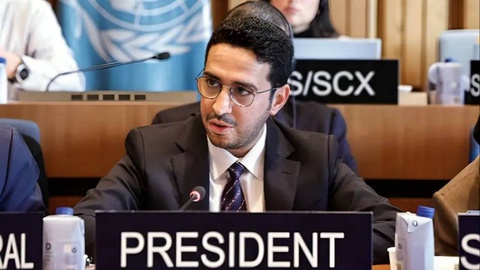
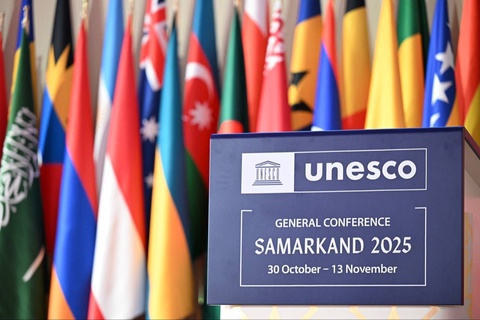
Khaled El-Enani became the 12th Director General of UNESCO. He is the first head of the organization from an Arab country and the second representative of Africa in this post after Amadou–Mahtar Mbou from Senegal, who held the position from 1974 to 1987. The new head of UNESCO will assume his duties on November 15, 2025 for a four-year term.
UNESCO unites 194 member States and plays a key role in strengthening peace and security by developing international cooperation in the fields of education, science, culture, communication and information. The organization, which is headquartered in Paris, has 54 regional offices and employs more than 2,300 people.
UNESCO oversees more than 2,000 World Heritage sites, biosphere reserves, and global geoparks, supports networks of creative, educational, inclusive, and sustainable cities, as well as more than 13,000 associated schools, university departments, and research centers. Its structure includes 200 national commissions.
As the constitution of the organization says: "Since wars begin in the minds of people, it is in the minds of people that the defenses of peace must be erected" (UNESCO, 1945).