
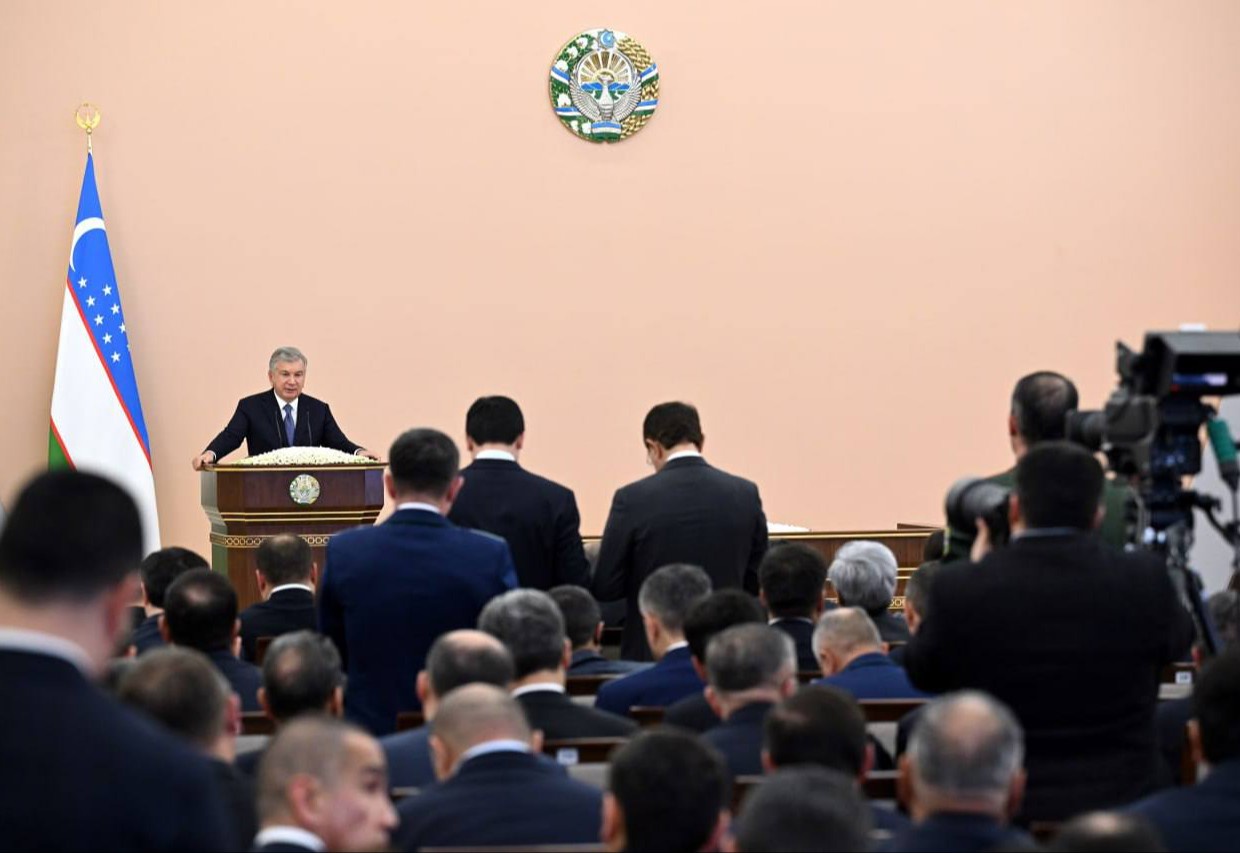
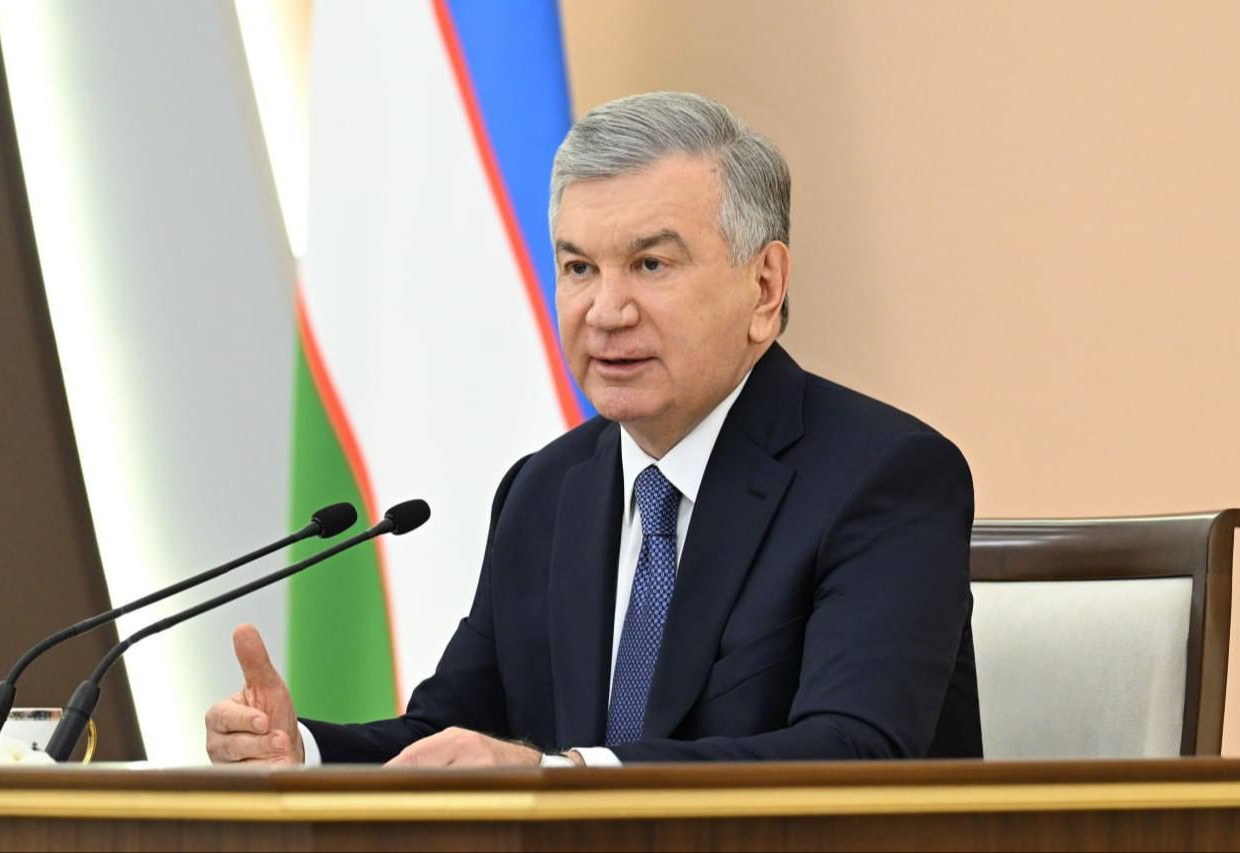
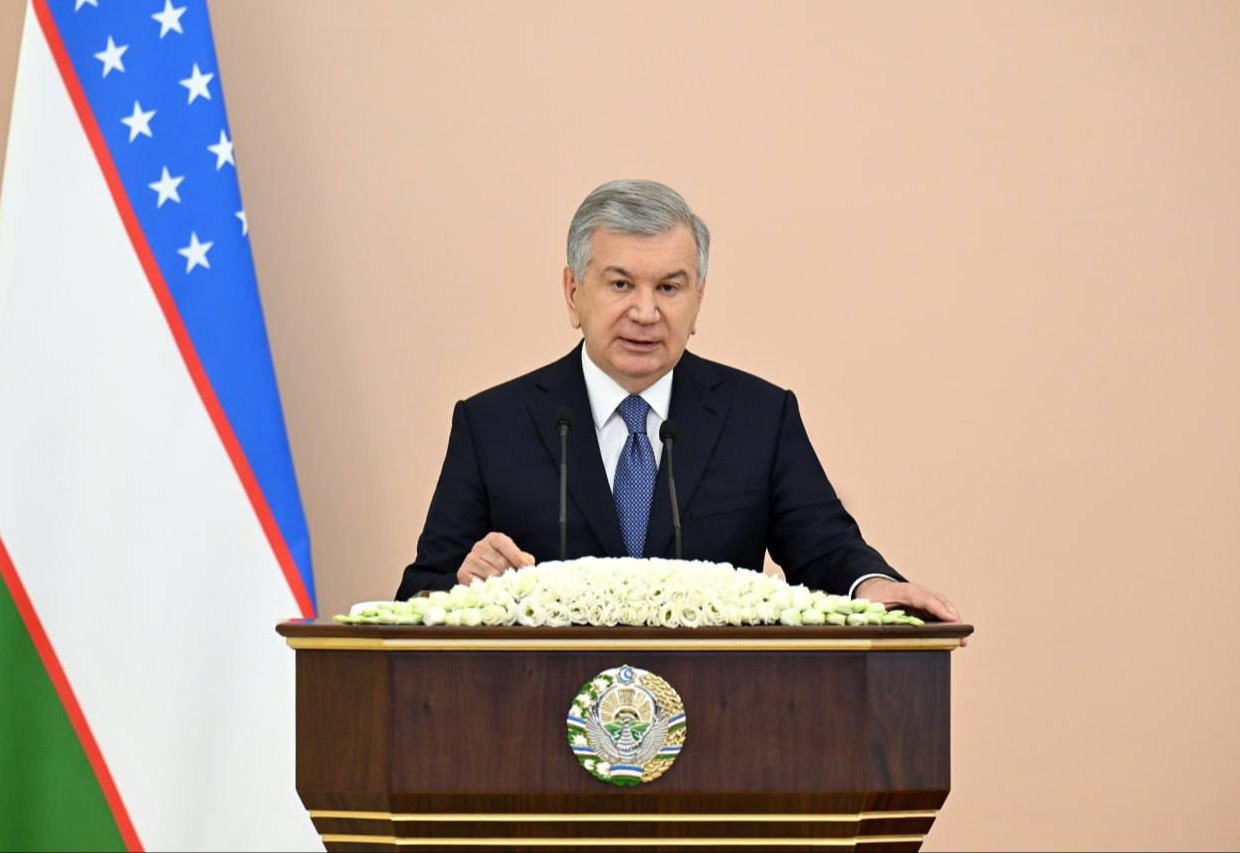
At the beginning of the meeting, macroeconomic indicators for the past year were reviewed. The country’s gross domestic product grew by 7.7 percent, exceeding $147 billion. More than half of the economic growth was driven by the services sector. In agriculture, the average income per hectare increased from $4,500 to $5,000, and labor productivity rose by 4.7 percent.
As a result of introducing advanced, energy-efficient technologies into the economy and increasing the number of high-value-added projects, the energy required to generate one dollar of added value fell by 15 percent over the year.
Addressing the targets set for 2026, the President emphasized that the plan to increase gross domestic product to $167 billion, with an expected economic growth rate of 6.6 percent, is based on a conservative forecast given the current geopolitical situation and external economic volatility.
It was also noted that there are ample opportunities to ensure even higher economic growth rates if each minister, hokim, and sector head introduces new management approaches within their sphere, ensures efficient use of resources, opens new export directions without limiting themselves to traditional markets, attracts specialists in digitalization and artificial intelligence to drive innovation, and establishes startup clubs with the active participation of youth.
At the meeting, issues related to improving the efficiency of strategic enterprises and reducing costs were comprehensively discussed.
It was noted that, according to an analysis by Franklin Templeton, which manages the National Investment Fund, there is significant untapped potential to strengthen corporate culture, optimize logistics, digitize operations, and improve energy efficiency. The heads of 19 strategic enterprises were instructed to take decisive measures in procurement, logistics, digitalization, and energy efficiency, and to reduce production costs by 10-15 percent.
“Savings must be achieved not by reducing production, but by lowering the cost per unit of output”, the President said.
In addition, the importance of integrating strategic enterprises into the “Unified Treasury” information system and eliminating inefficient expenditures by classifying purchases based on risk analysis was emphasized.
Shortcomings in the development of the regional industry were sharply criticized. Although the country’s industrial sector has grown by 21 percent over the past three years, growth in many districts has not exceeded 10 percent, and in some regions, increases in credit resources and investment have not had a proportional impact on industrial development.
Deputy hokims of the regions were tasked with working directly on-site within 12 districts over a month, revitalizing enterprises with declining production and ensuring industrial growth in these districts.
It was decided to approve regional and provincial plans to ensure nationwide industrial growth of at least 8.5 percent, and to assess officials’ performance based on identified problems and their solutions following the first quarter.
It was noted that four major enterprises with a combined annual production capacity of 650,000 vehicles operate in the country. This year, it is necessary to begin production of an additional 763 components through cooperation with more than 300 local enterprises and increase vehicle output to 510,000 units. To stimulate demand among the population, measures were instructed to reduce interest rates and increase the volume of auto loans.
New management approaches have been defined to attract investment and ensure the effective implementation of projects.
It was emphasized that $50 billion in foreign investment is planned to be attracted this year, and that new projects must primarily contribute to the production of export-oriented goods with high added value, ensure efficient use of resources, and create high-income jobs.
Ministers and hokims were instructed to conduct a comprehensive analysis of each project in the 2026 investment program, assessing market conditions, export potential, added value, and job creation.
From now on, strict control will be established over investment projects not only at the launch stage, but also over their full-scale operation, the creation of high added value, and the entry of products into foreign markets. For this purpose, a “Unified National Project Management” platform will be created to monitor each project included in the program for three years after its launch.
Noting that 55 major projects were postponed last year due to various organizational issues, it was decided to place 377 strategic projects worth $165 billion under special supervision this year.
It was noted that agreements worth $135 billion were reached during foreign visits. This year alone, investment agreements totaling $9 billion were signed with Türkiye and $1.428 billion with Pakistan.
A task was set to increase construction volumes through expanded investment. Responsible officials were instructed to increase this year’s construction volume to 400 trillion UZS, ensuring the sector grows by at least 17 percent. It was noted that 40 trillion UZS allocated from the budget for social and industrial infrastructure contributes to the development of a large market for construction, metallurgical, and electrical engineering enterprises, as well as for construction materials manufacturers.
At the same time, the need to strengthen oversight of the “Single Customer Service” engineering companies in the regions was emphasized, as was the need to involve the private sector in customer service functions in Karakalpakstan, Samarkand, and Fergana on a pilot basis.
Specific instructions were also provided to improve energy efficiency.
Given the high annual energy consumption of small and medium-sized enterprises, it was decided to introduce a new energy-efficiency system and develop a three-year program for this category of businesses. The importance of taking measures in 2026 to save 100 million cubic meters of gas and 500 million kilowatt-hours of electricity at small and medium-sized enterprises was underscored.
In addition, it was noted that 917,000 streetlights across the country consume 330 million kilowatt-hours of electricity annually, with some remaining on during the daytime. It was instructed to begin installing small solar panels, batteries, and sensors on streetlight poles that automatically switch the lights on and off depending on daylight conditions.
Special attention was also paid at the meeting to increasing the share of domestic producers in public procurement.
As noted, although the share of locally produced goods in public procurement totaling 300 trillion UZS has reached 68 percent, this figure does not even reach 40 percent within the systems of the Almalyk Mining and Metallurgical Complex, the joint-stock companies Uztransgaz, National Electric Grids, Uzbekistan Airports, and Uzbekistan Airways. Entrepreneurs also point to numerous bureaucratic procedures in public procurement, expert review, and certification processes, while some managers still hold the outdated view that “foreign products are of higher quality”.
From now on, ministers, sector heads, and hokims will be personally responsible for increasing the share of locally produced goods at all stages of projects – from negotiations and tenders to construction and the supply of raw materials.
Particular attention at the meeting was also given to ensuring economic growth through external markets.
The President emphasized that it is impossible to achieve high economic growth solely through domestic demand. It was noted that the primary task of ministers, sector leaders, and hokims should be to promote new products in new markets.
It was pointed out, with specific examples, that although exports increased by 22 percent last year to $24 billion, many officials have not yet abandoned outdated methods in this area. From now on, export requirements will concern not only volume, but also the introduction of new products and entry into new markets.
Tasks were also set to ensure price stability in the domestic market, identify inflationary factors early, and develop practical solutions.
It was noted that annual inflation was 7.2 percent in January, with 45 percent attributed to food products, including 13 percent due to rising meat prices.
The Center for the Study of Sectoral Markets and Labor Productivity in Production under the Ministry of Economy and Finance was instructed to identify internal and external inflation risks in advance, conduct weekly analyses of district and city markets, forecast demand, and develop quarterly balances for key food products.
Noting that, starting next week, with the onset of the holy month of Ramadan, ensuring price stability in the domestic market becomes especially important. It was instructed to organize fairs offering discounted food products at dehkan markets and in major shopping complexes.
Tasks related to ensuring price stability and increasing household incomes were also outlined in the agricultural sector.
It was noted that reducing dependence on meat imports requires strengthening the feed base. As an example, citing the introduction of 5,000 hectares of land into circulation and the launch of corn planting in Mubarek district, it was instructed to organize similar activities on an additional 60,000 hectares this year. This will make it possible to create a guaranteed feed base for an additional 350,000 head of livestock.
Given that 772,000 tons of potatoes were imported last year, the potato harvest must reach 4.5 million tons this year.
Ahead of the holy month of Ramadan, which begins next week, instructions were given to open food fairs offering discounted products at dehkan markets and in major shopping complexes.
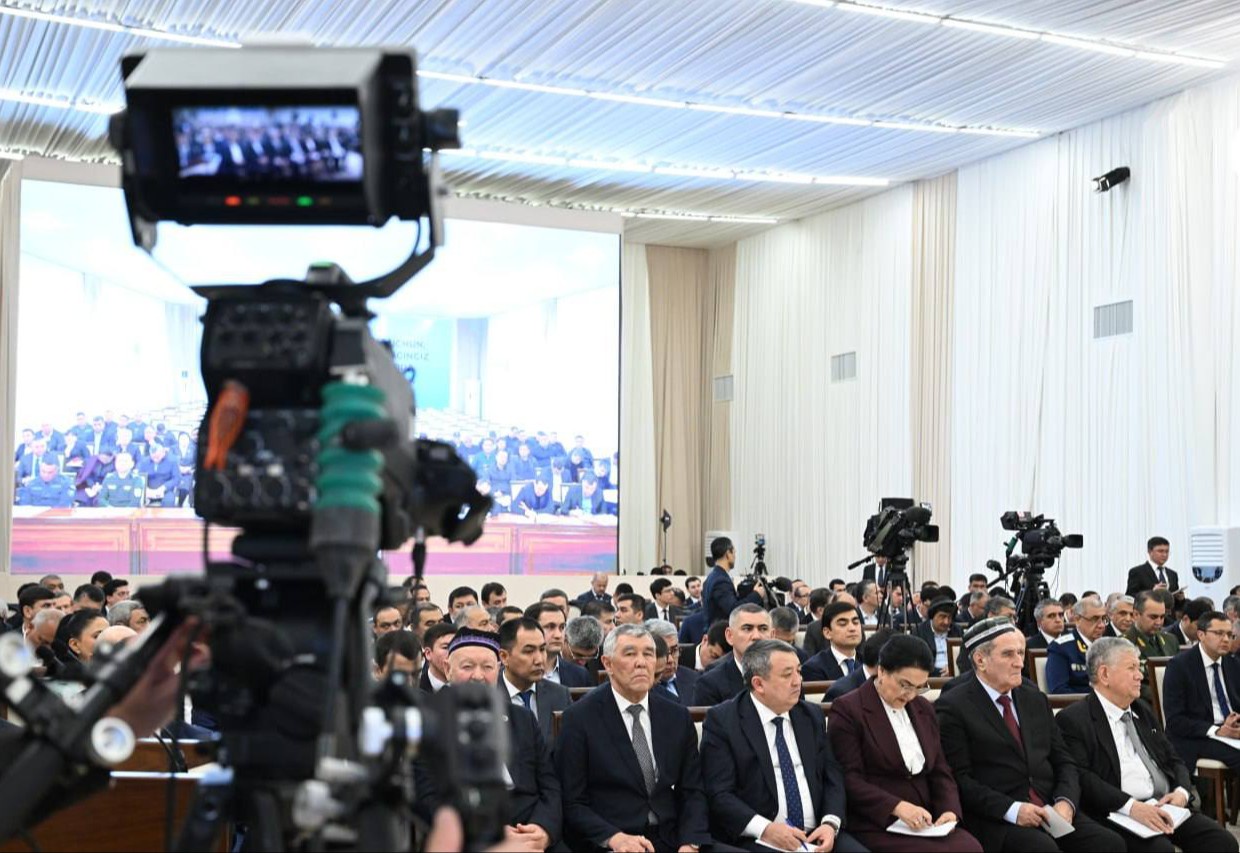
Reports by sectoral and regional leaders were heard at the meeting.